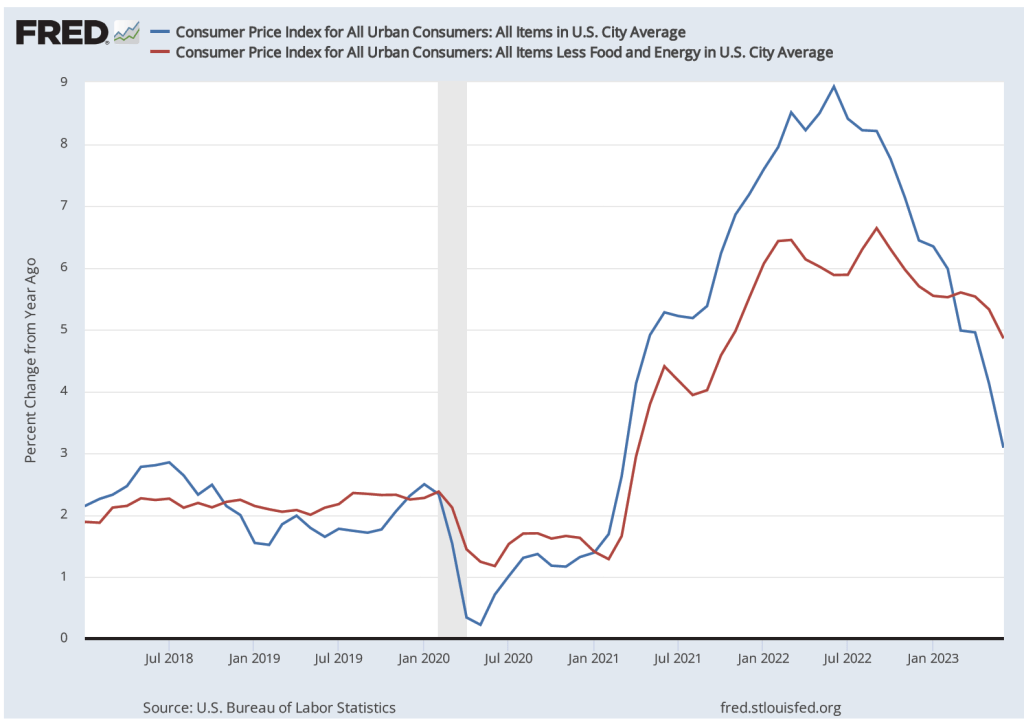
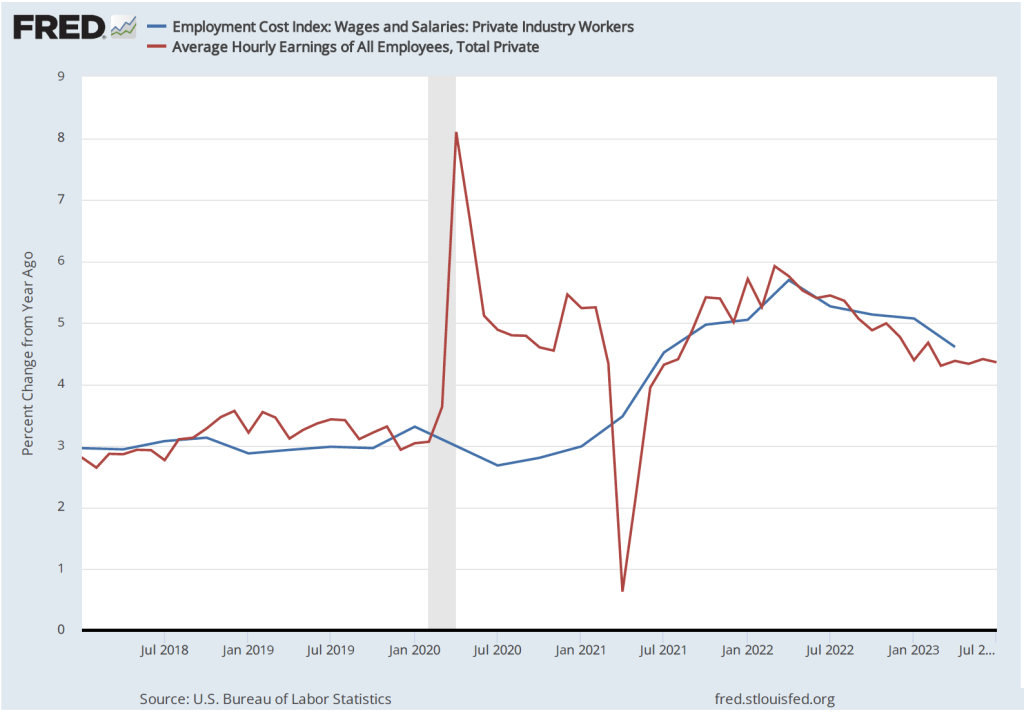
Lawrence Summers, professor of economics at Harvard University and secretary of the Treasury under President Bill Clinton, has been outspoken in arguing that monetary and fiscal have been too expansionary. In February 2021, just before Congress passed the American Rescure Plan, which increased federal government spending by $1.9 trillion, Summers cautioned that “there is a chance that macroeconomic stimulus on a scale closer to World War II levels than normal recession levels will set off inflationary pressures of a kind we have not seen in a generation, with consequences for the value of the dollar and financial stability.”
In a brief CNN interview found at this LINK, Summers indicates that he remains concerned that inflation may persist at high levels for a longer period than many other economists, including policymakers at the Federal Reserve, believe.
Source for quote: Lawrence H. Summers, “The Biden Stimulus Is Admirably Ambitious. But It Brings Some Big Risks, Too,” Washington Post, February 4, 2021.
According to the Federal Reserve Act, the Fed must conduct monetary policy “so as to promote effectively the goals of maximum employment, stable prices, and moderate long-term interest rates.” Neither “maximum employment” nor “stable prices” are defined in the act.
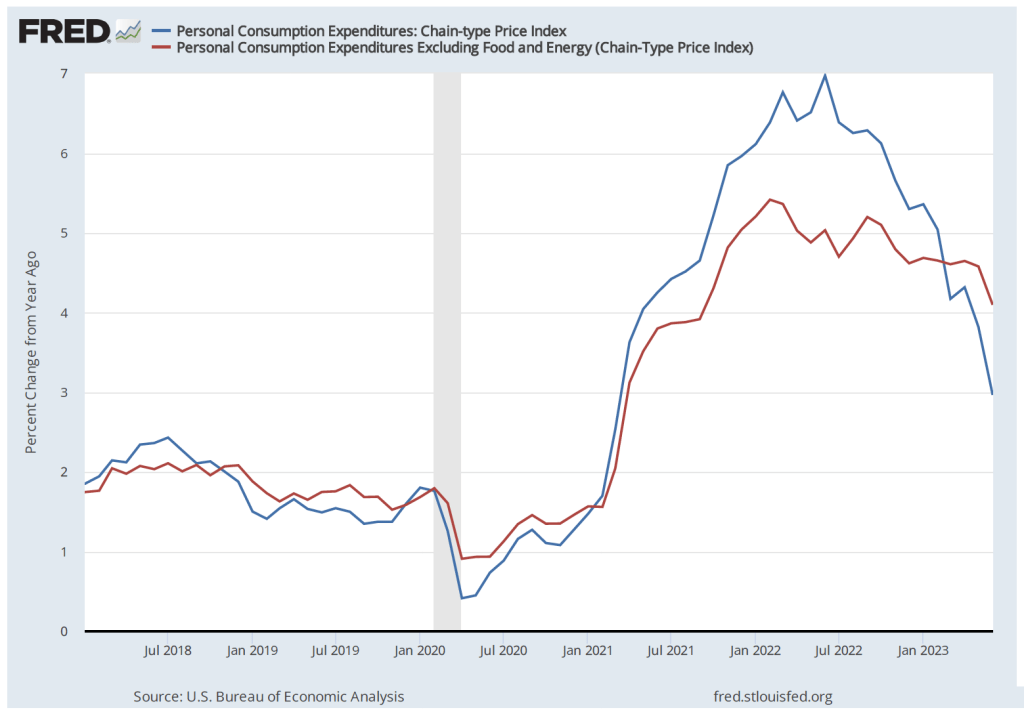
The Fed has interpreted “stable prices” to mean a low rate of inflation. Since 2012, the Fed has had an explicit inflation target of 2 percent. When the Fed announced its new monetary policy strategy in August 2020, it modified its inflation target by stating that it would attempt to achieve an average inflation rate of 2 percent over time. As Fed Chair Jerome Powell stated: “Our approach can be described as a flexible form of average inflation targeting.” (Note that although the consumer price index (CPI) is the focus of many media stories on inflation, the Fed’s preferred measure of inflation is changes in the core personal consumption expenditures (PCE) price index. The PCE is a broader measure of the price level than is the CPI because it includes the prices of all the goods and services included in consumption category of GDP. “Core” means that the index excludes food and energy prices. For a further discussion see, Economics, Chapter 25, Section 15.5 and Macroeconomics, Chapter 15, Section 15.5.)
There is more ambiguity about how to determine whether the economy is at maximum employment. For many years, a majority of members of the Federal Open Market Committee (FOMC) focused on the natural rate of unemployment (also called the non-accelerating rate of unemployment (NAIRU)) as the best gauge of when the U.S. economy had attained maximum employment. The lesson many economists and policymakers had taken from the experience of the Great Inflation that lasted from the late 1960s to the early 1980s was if the unemployment rate was persistently below the natural rate of unemployment, inflation would begin to accelerate. Because monetary policy affects the economy with a lag, many policymakers believed it was important for the Fed to react before inflation begins to significantly increase and a higher inflation rate becomes embedded in the economy.
At least until the end of 2018, speeches and other statements by some members of the FOMC indicated that they continued to believe that the Fed should pay close attention to the relationship between the natural rate of unemployment and the actual rate of unemployment. But by that time some members of the FOMC had concluded that their decision to begin raising the target for the federal funds rate in December 2015 and continuing raising it through December 2018 may have been a mistake because their forecasts of the natural rate of unemployment may have been too high. For instance, Atlanta Fed President Raphael Bostic noted in a speech that: “If estimates of the NAIRU are actually too conservative, as many would argue they have been … unemployment could have averaged one to two percentage points lower” than it actually did.
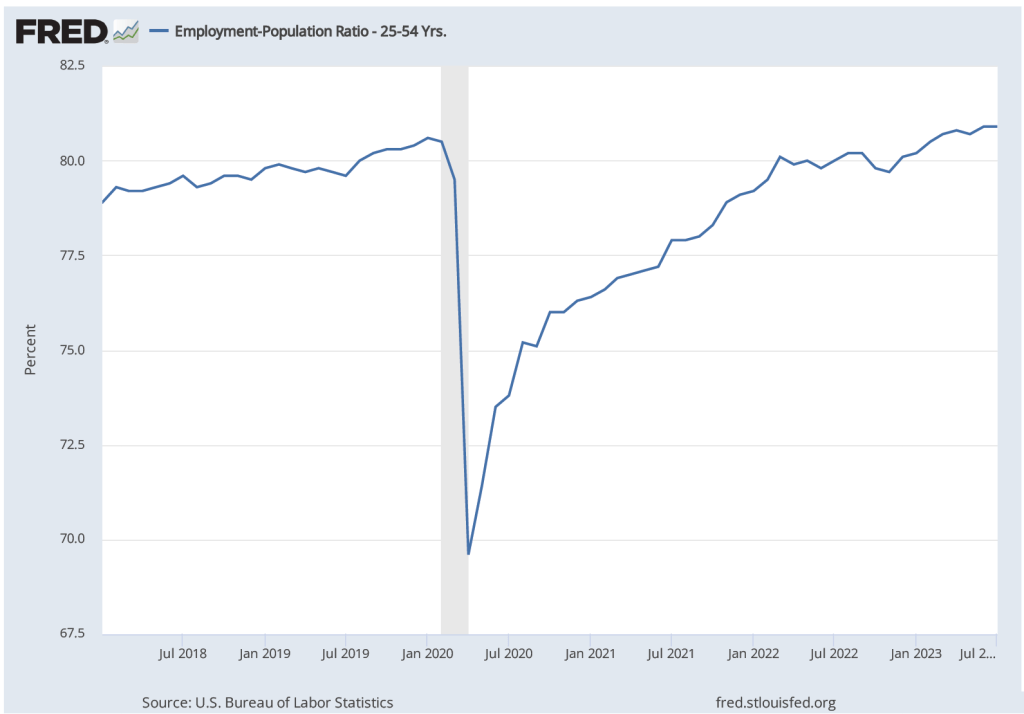
Accordingly, when the Fed announced its new monetary policy strategy in August 2020, it indicated that it would consider a wider range of data—such as the employment-population ratio—when determining whether the labor market had reached maximum employment. At the time, Fed Chair Powell noted that: “the maximum level of employment is not directly measurable and [it] changes over time for reasons unrelated to monetary policy. The significant shifts in estimates of the natural rate of unemployment over the past decade reinforce this point.”
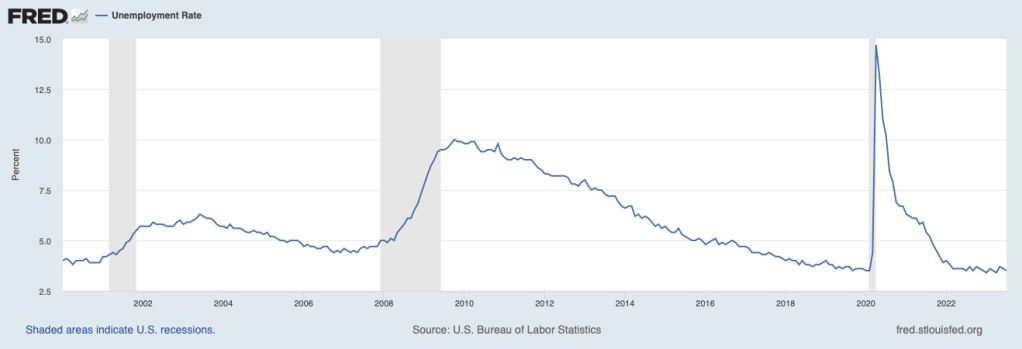
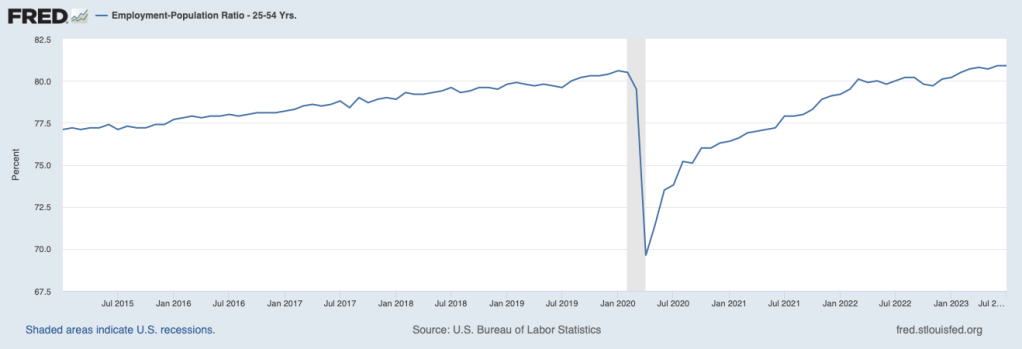
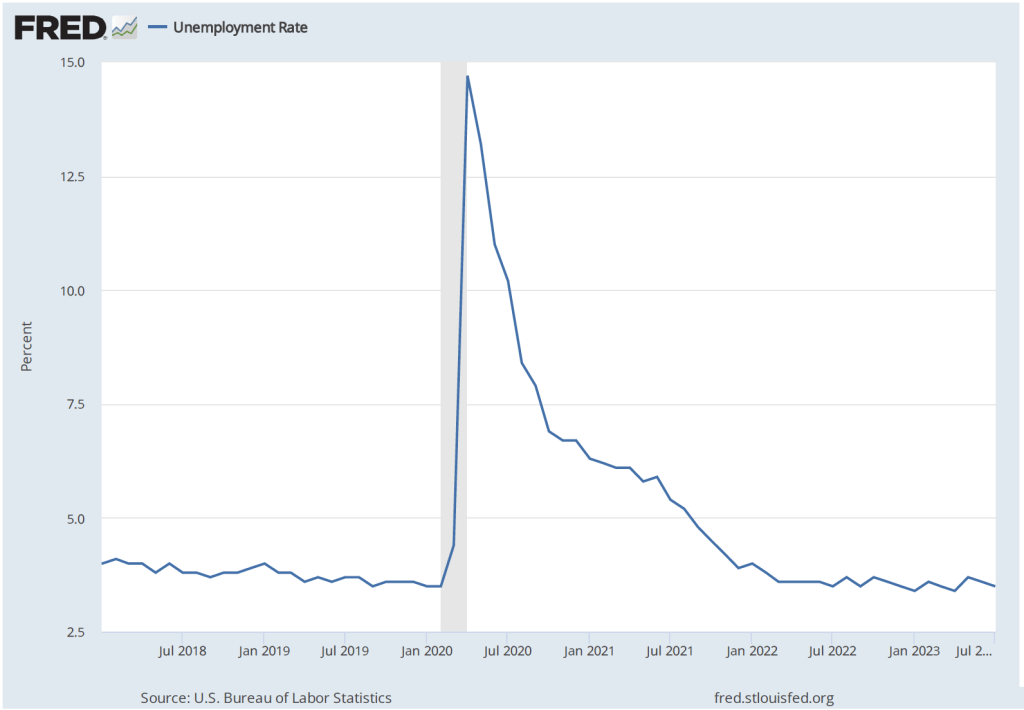
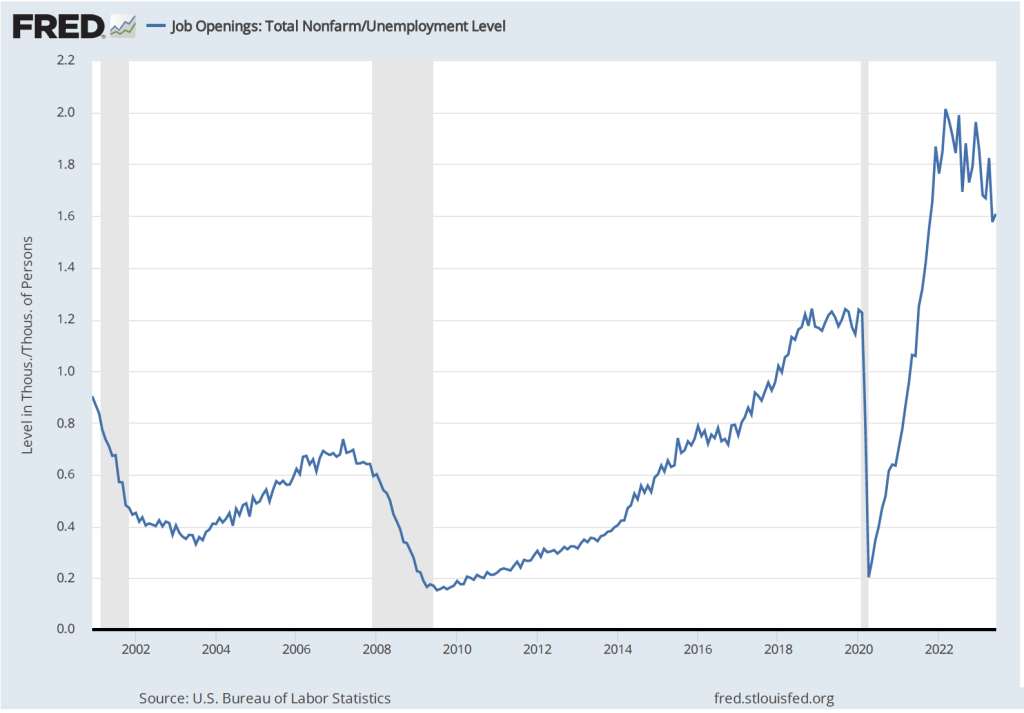
As the economy recovered from the effects of the Covid-19 pandemic, the Fed faced particular difficulty in assessing the state of the labor market. Some labor market indicators appeared to show that the economy was close to maximum employment while other indicators showed that the labor market recovery was not complete. For instance, in December 2021, the unemployment rate was 3.9 percent, slightly below the average of the FOMC members estimates of the natural rate of unemployment, which was 4.0 percent. Similarly, as the first figure below shows, job vacancy rates were very high at the end of 2021. (The BLS calculates job vacancy rates, also called job opening rates, by dividing the number of unfilled job openings by the sum of total employment plus job openings.) As the second figure below shows, job quit rates were also unusually high, indicating that workers saw the job market as being tight enough that if they quit their current job they could find easily another job. (The BLS calculates job quit rates by dividing the number of people quitting jobs by total employment.) By those measures, the labor market seemed close to maximum employment.
But as the first figure below shows, total employment in December 2021 was still 3.5 million below its level of early 2020, just before the U.S. economy began to experience the effects of the pandemic. Some of the decline in employment can be accounted for by older workers retiring, but as the second figure below indicates, employment of prime-age workers (those between the ages of 25 and 54), had not recovered to pre-pandemic levels.
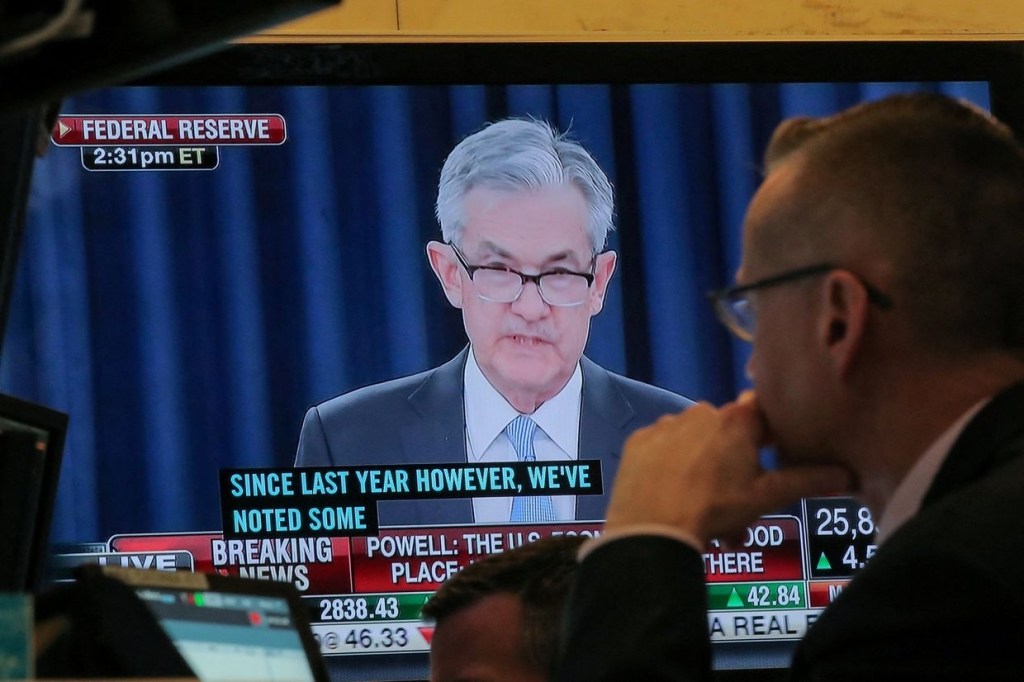
How to reconcile these conflicting labor market indicators? In January 2022, Fed Chair Powell testified before the Senate Banking Committee as the Senate considered his nomination for a second four-year term as chair. In discussing the state of the economy he offered the opinion that: “We’re very rapidly approaching or at maximum employment.” He noted that inflation as measured by changes in the CPI had been running above 5 percent since June 2021: “If these high levels of inflation get entrenched in our economy, and in people’s thinking, then inevitably that will lead to much tighter monetary policy from us, and it could lead to a recession.” In that sense, “high inflation is a severe threat to the achievement of maximum employment.”
At the time of Powell’s testimony, the FOMC had already announced that it was moving to a less expansionary monetary policy by reducing its purchases of Treasury bonds and mortgage-backed securities and by increasing its target for the federal funds rate in the near future. He argued that these actions would help the Fed achieve its dual mandate by reducing the inflation rate, thereby heading off the need for larger increases in the federal funds rate that might trigger a recession. Avoiding a recession would help achieve the goal of maximum employment.
Powell’s remarks did not make explicit which labor market indicators the Fed would focus on in determining whether the goal of maximum employment had been obtained. It did make clear that the Fed’s new policy of average inflation targeting did not mean that the Fed would accept inflation rates as high as those of the second half of 2021 without raising its target for the federal funds rate. In that sense, the Fed’s monetary policy of 2022 seemed consistent with its decades-long commitment to heading off increases in inflation before they lead to a significant increase in the inflation rate expected by households, businesses, and investors.
Note: For a discussion of the background to Fed policy, see Economics, Chapter 25, Section 25.5 and Chapter 27, Section 17.4, and Macroeconomics, Chapter 15, Section 15.5 and Chapter 17, Section 17.4.
Sources: Jeanna Smialek, “Jerome Powell Says the Fed is Prepared to Raise Rates to Tame Inflation,” New York Times, January 11, 2022; Nick Timiraos, “Fed’s Powell Says Economy No Longer Needs Aggressive Stimulus,” Wall Street Journal, January 11, 2022; and Federal Open Market Committee, “Meeting Calendars, Statements, and Minutes,” federalreserve.gov, January 5, 2022.
Authors Glenn Hubbard and Tony O’Brien discuss the economic impact of the recent infrastructure bill and what role fiscal policy plays in determining shovel-ready projects. Also, they explore the vast impact of the economy-wide supply-chain issues and the challenges companies face. Until the pandemic, we had a very efficient supply chain but now we’re seeing companies employ the “just-in-case” inventory method vs. “just-in-time”!
It’s customary for textbook authors to note that “much has happened in the economy” since the last edition of their book appeared. To say that much has happened since we prepared our last edition in 2019 would be a major understatement. Never in the lifetimes of today’s students and instructors have events like those of 2020 and 2021 occurred. The U.S. and world economies had experienced nothing like the Covid-19 pandemic since the influenza pandemic of 1918. In the spring of 2020, the U.S. economy suffered an unprecedented decline in the supply of goods and services as a majority of businesses in the country shut down to reduce spread of the virus. Many businesses remained closed or operated at greatly reduced capacity well into 2021. Most schools, including most colleges, switched to remote learning, which disrupted the lives of many students and their parents.
During the worst of the pandemic, total spending in the economy declined as the unemployment rate soared to levels not seen since the Great Depression of the 1930s. Reduced spending and closed businesses resulted in by far the largest decline in total production in such a short period in the history of the U.S. economy. Congress, the Trump and Biden administrations, and the Federal Reserve responded with fiscal and monetary policies that were also unprecedented.
Our updated Eighth Edition covers all of these developments as well as the policy debates they initiated. As with previous editions, we rely on extensive digital resources, including: author-created application videos and audio recordings of the chapter openers and Apply the Concept features; figure animation videos; interactive real-time data graphs animations; and Solved Problem whiteboard videos.
Glenn and Tony discuss the updated edition in this video:
Sample chapters will be available by October 15.
The full Macroeconomics text will available in early to mid December.
The full Microeconomics text will be available in mid to late December.
If you would like to view the sample chapters or are considering adopting the updated Eighth Edition for the spring semester, please contact your local Pearson representative. You can use this LINK to find and contact your representative.
Authors Glenn Hubbard and Tony O’Brien discuss the recent jobs report falling short of expectations. They also discuss the comments of Fed Chairman Powell’s comments at the Federal Reserve’s recent Jackson Hole conference. They also get to some of the recommendations of a Brookings Task Force, co-chaired by Glenn Hubbard, on ways to address financial stability. Use the links below to see more information about these timely topics: Powell’s Jackson Hole speech:
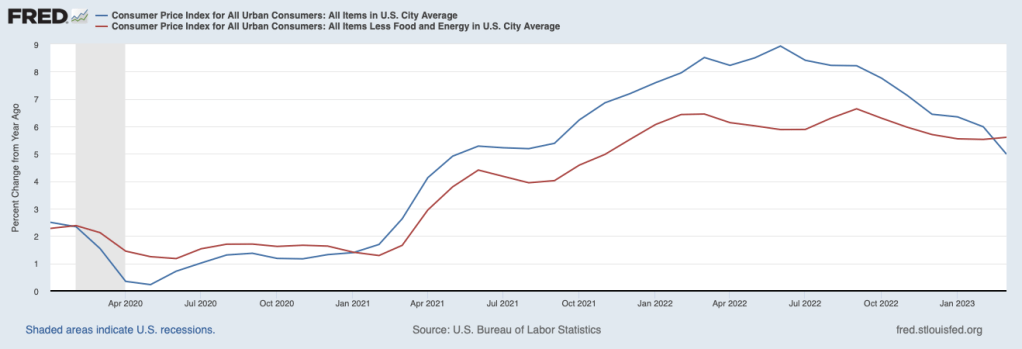
The U.S. inflation rate has accelerated. As the following figure shows, in mid-2021, inflation, measured as the percentage change in the CPI from the same month in the previous year (the blue line), rose above 5 percent for the first time since the summer of 2008.
As we discuss in an Apply the Concept in Chapter 25, Section 25.5 (Chapter 15, Section 15.5 of Macroeconomics), the Fed prefers to measure inflation using the personal consumption expenditures (PCE) price index. The PCE price index is a measure of the price level similar to the GDP deflator, except it includes only the prices of goods and services from the consumption category of GDP. Because the PCE price index includes more goods and services than the CPI, it is a broader measure of inflation. As the red line in the figure shows, inflation as measured by the PCE price index is generally lower than inflation measured by the CPI. The difference is particularly large during periods in which CPI inflation is especially high, as it was during 2008, 2011, and 2021.
Prices of food and energy are particularly volatile, so the measure of inflation the Fed focuses on most closely is the PCE price index, excluding food and energy prices (the green line in figure). The figure shows that this measure of inflation is more stable than either of the other two measures. For instance, during June 2021, measured by the CPI, inflation was 5.3 percent, but was 3.5 percent when measured by the PCE, excluding food and energy.
In the summer of 2021, even inflation measured by the PCE, excluding food and energy, is running well above the Fed’s long-run target rate of 2 percent. Why is inflation increasing? Most economists and policymakers believe that two sets of factors are responsible:
Increases in aggregate demand. Consumption spending (see the first figure below) has increased as the economy has reopened and people have returned to eating in restaurants, going to the movies, working out in gyms, and spending at other businesses that were closed or operating at reduced capacity. Households have been able to sharply increase their spending because household saving (see the second figure below) soared during the pandemic in response to payments from the federal government, including supplemental unemployment insurance payments and checks sent directly to most households. The increase in federal government expenditures that helped fuel the increase in aggregate demand is shown in the third figure below.
Fed policy has also been strongly expansionary, with the target for the federal funds kept near zero and the Fed continuing its substantial purchases of Treasury notes and mortgage-backed securities. The continuing expansion of the Fed’s balance sheet through the summer of 2021 is shown in the last of the figures below. The Fed’s asset purchases have help keep interest rates low and provided banks with ample funds to loan to households and firms.
2. Reductions in aggregate supply. The pandemic disrupted global supply chains, reducing the goods available to consumers. In the summer of 2021, not all of these supply chain issues had been resolved. In particular, a shortage of computer chips had reduced output of motor vehicles. New cars, trucks, SUVs, and minivans were often selling above their sticker prices. High prices for new vehicles led many consumers to increase their demand for used vehicles, driving up their prices. Between July 2020 and July 2021, prices of new vehicles rose 6.4 percent and prices for used vehicles rose an extraordinary 41.7 percent.
Supply issues also exist in some service industries, such as restaurants and hotels, that have had difficulty hiring enough workers to fully reopen.
Economists and policymakers differ as to whether high inflation rates are transitory or whether the U.S. economy might be entering a prolonged period of higher inflation. Most Federal Reserve policymakers argue that the higher inflation rates in mid-2021 are transitory. For instance, in a statement following its July 28, 2021 meeting, the Federal Open Market Committee noted that: “Inflation has risen, largely reflecting transitory factors.” Although the statement also noted that inflation is “on track to moderately exceed 2 percent for some time.”
In a speech at the end of July, Fed Governor Lael Brainard expanded on the Fed’s reasoning:
“Recent high inflation readings reflect supply–demand mismatches in a handful of sectors that are likely to prove transitory…. I am attentive to the risk that inflation pressures could broaden or prove persistent, perhaps as a result of wage pressures, persistent increases in rent, or businesses passing on a larger fraction of cost increases rather than reducing markups, as in recent recoveries. I am particularly attentive to any signs that currently high inflation readings are pushing longer-term inflation expectations above our 2 percent objective.”
“Currently, I do not see such signs. Most measures of survey- and market-based expectations suggest that the current high inflation pressures are transitory, and underlying trend inflation remains near its pre-COVID trend…. Many of the forces currently leading to outsized gains in prices are likely to dissipate by this time next year. Current tailwinds from fiscal support and pent-up consumption are likely to shift to headwinds, and some of the outsized price increases associated with acute supply bottlenecks may ease or partially reverse as those bottlenecks are resolved.”
Brainard’s remarks highlight a point that we make in Chapter 27, Section 27.1 (Chapter 17, Section 17.1 of Macroeconomics): The expectations of households and firms of future inflation play an important part in determining current inflation. Inflation can rise above and fall below the expected inflation rate in response to changes in the labor market—which affect the wages firms pay and, therefore, the firms’ costs—as well as in response to fluctuations in aggregate supply resulting from positive or negative supply shocks—such as the pandemic’s negative effects on aggregate supply. Fed Chair Jerome Powell has argued that with households and firms’ expectations still well-anchored at around 2 percent, inflation was unlikely to remain above that level in the long run.
Some economists are less convinced that households and firms will continue to expect 2 percent inflation if they experience higher inflation rates through the end of 2021. The Wall Street Journal’s editorial board summed up this view: “One risk for the Fed is that more months of these price increases will become what consumers and businesses come to expect. To use the Fed jargon, prices would no longer be ‘well-anchored.’ That may be happening.”
As we discuss in Chapter 27, Sections 27.2 and 27.3 (Macroeconomics, Chapter 17, Sections 17.2 and 17.3), during the late 1960s and early 1970s, higher rates of inflation eventually increased households and firms’ expectations of the inflation rate, leading to an acceleration of inflation that was difficult for the Fed to reverse.
Earlier this year, Olivier Blanchard of the Peterson Institute for International Economics, formerly a professor of economics at MIT and director of research at the International Monetary Fund, raised the possibility that overly expansionary monetary and fiscal policies might result in the Fed facing conditions similar to those in the 1970s. The Fed would then be forced to choose between two undesirable policies:
“If inflation were to take off, there would be two scenarios: one in which the Fed would let inflation increase, perhaps substantially, and another—more likely—in which the Fed would tighten monetary policy, perhaps again substantially. Neither of these two scenarios is ideal. In the first, inflation expectations would likely become deanchored, cancelling one of the major accomplishments of monetary policy in the last 20 years and making monetary policy more difficult to use in the future. In the second, the increase in interest rates might have to be very large, leading to problems in financial markets. I would rather not go there.”
In a recent interview, Lawrence Summers of Harvard University, who served as secretary of the Treasury in the Clinton administration, made similar points:
“We have inflation that since the beginning of the year has been running at a 5 percent annual rate. …. Starting at high inflation, we’ve got an economy that’s going to grow at extremely high rates for the next quarter or two. … I think we’re going to find ourselves with a new normal of inflation above 3 percent. Then the Fed is either going to have to be inconsistent with all the promises and commitments it’s made [to maintain a target inflation rate of 2 percent] or it’s going to have to attempt the task of slowing down the economy, which is rarely a controlled process.”
Clearly the pandemic and the resulting policy responses have left the Fed in a challenging situation.
Sources: Federal Reserve Open Market Committee, “Federal Reserve Press Release,” federalreserve.gov, July 28, 2021; Lael Brainard, “Assessing Progress as the Economy Moves from Reopening to Recovery,” speech at “Rebuilding the Post-Pandemic Economy” 2021 Annual Meeting of the Aspen Economic Strategy Group, Aspen, Colorado, federalreserve.gov, July 30, 2021; Wall Street Journal editorial board, “Powell Gets His Inflation,” Wall Street Journal, July 13, 2021; Olivier Blanchard, “In Defense of Concerns over the $1.9 Trillion Relief Plan,” piie.com, February 21, 2012; “Former Treasury Secretary on Consumer Prices, U.S. Role in Global Pandemic, Efforts,” wbur.org, August 22, 2021; and Federal Reserve Bank of St. Louis, https://fred.stlouisfed.org.
Glenn co-chairs the Task Force on Financial Stability with Donald Kohn, now a fellow at the Brookings Institution and formerly vice-chair of the Board of Governors of the Federal Reserve. The Task Force on Financial Stability was formed by the Initiative on Global Markets at the University of Chicago and the Hutchins Center on Fiscal & Monetary Policy at the Brookings Institution to make recommendations intended to increase the stability of the U.S. financial system.
On June 29, 2021, the Task Force issued a report, which can be found HERE. Glenn and Donald Kohn discuss the reports findings in an opinion column published on bloomberg. com.
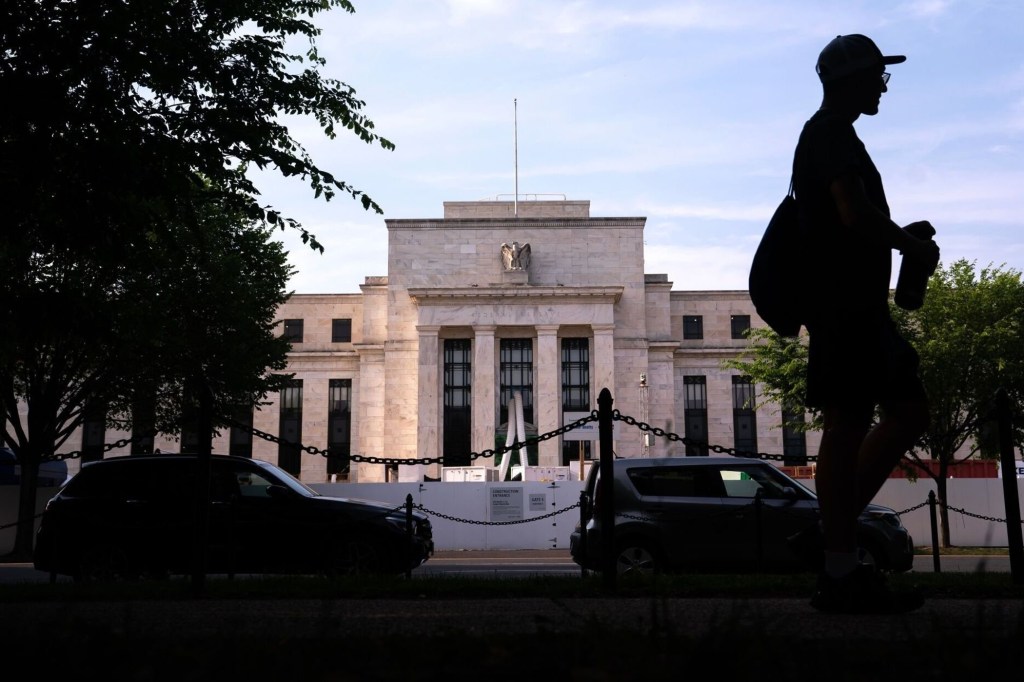
The Federal Reserve building in Washington, D.C.
Our Financial Early Warning System Is Broken
The U.S. financial system emerged from the reforms that followed the 2008 global crisis stronger than it had been going in. But the onset of the pandemic in March 2020 demonstrated how much was left undone: Although banks weathered the storm well, financial disruptions elsewhere — in money market funds, in the Treasury market — necessitated extraordinary measures to prevent an even greater economic disaster.
A group that we co-chair, the Task Force on Financial Stability, has just released a report on how to make the system more resilient. Among other things, we see the need for a structural change: Overhaul the agencies tasked with identifying and addressing threats outside traditional banks.
The Dodd-Frank financial reform of 2010 created two new entities focused on systemic risk. The Financial Stability Oversight Council, which included the Treasury Secretary and the heads of all the major financial regulatory agencies, was supposed to foster collaboration in finding and fixing dangerous buildups, wherever they might arise. And the Office of Financial Research, formed within Treasury and equipped with subpoena power, was supposed to provide the FSOC with the data and analysis needed to do the job well.
This financial early warning system didn’t operate as intended. The FSOC’s efforts to impose special scrutiny on certain systemically important non-bank institutions, such as insurance companies, ran into legal and political headwinds. Its member agencies often proved reluctant to encroach on one another’s turf, and the FSOC lacked the power to compel action. The OFR never subpoenaed anything, for fear of making enemies. Ultimately, the Trump administration deemphasized and defunded the whole apparatus.
As a result, the U.S. was much less prepared for the shock of the pandemic than it could have been. A rush to cash triggered runs on certain money-market mutual funds, threatened the flow of credit to everyone from homebuyers to municipalities, and — in a troubling departure from the usual “flight to quality” — caused the prices of Treasury securities to fall sharply. The Treasury and the Federal Reserve had to go to extreme lengths and pledge trillions of dollars to restore stability.
Regulators’ objective should not be merely to put out fires once they see smoke, but to prevent the dangerous accumulation of combustible material. New threats will emerge in unexpected ways; solutions will prompt unanticipated responses. So regulation must be dynamic, requiring an ongoing assessment process, not just periodic changes. To meet that challenge, we urge a restructuring of the FSOC and the OFR.
Congress should give each FSOC member agency an explicit financial stability mandate, and require each to establish a similarly focused office to inform its rule making. This would force agencies such as the Securities and Exchange Commission, the Commodities Futures Trading Commission, and the Consumer Financial Protection Bureau to consider systemic-risk issues that they can otherwise too often neglect.
Only the Treasury Secretary should issue the FSOC’s annual report, avoiding the consensus-building process among member agencies that can weaken identification of risks and accountability for dealing with them. While each agency would write a separate appendix, the Secretary would bear ultimate responsibility. The report should include a look back at what risks were missed, why, and how they will be addressed. To ensure the subject gets adequate attention, a new under-secretary for financial stability should act as the secretary’s point person.
The OFR should receive a clear new mandate to gather the data that policymakers need (and, today, often lack). To underscore its importance, it should be renamed the Comptroller for Data and Resilience — echoing the stature of the Comptroller of the Currency — and its head should have a voting seat at the FSOC, a level of authority that would help the government recruit talent and experience to the post.
As the pandemic begins to recede, concern over financial stability should not. We don’t know what major shock will next hit the economy and financial system. But a process to scan for risks and adapt to them should be front and center.
Authors Glenn Hubbard and Tony O’Brien follow up on last week’s fiscal policy podcast by discussing monetary policy in today’s world. The Fed’s role has changed significantly since it was first introduced. They keep an eye on inflation and employment but aren’t clear on which is their priority. The tools and models used by economists even a decade ago seem outdated in a world where these concepts of a previous generation may be outdated. But, are they? LIsten to Glenn & Tony discuss these issues in some depth as we navigate our way through a difficult financial time.
Just search Hubbard O’Brien Economics on Apple iTunes or any other Podcast provider and subscribe! Today’s episode is appropriate for Principles of Economics and/or Money & Banking!
On Thursday, December 3, Christopher Waller, executive vice president and research director at the Federal Reserve Bank of St. Louis, was confirmed by the Senate as a member of the Federal Reserve’s Board of Governors. The Board of Governors has seven members and, under the Federal Reserve Act, is responsible for the monetary policy of the United States and for overseeing the operation of the Federal Reserve System.
Board members are appointed by the president and confirmed by the Senate to 14-year nonrenewable terms. The terms are staggered so that one expires every other January 31. Members frequently leave the Board before their terms expire to return to their previous occupations or to accept other positions in the government. The following table shows the current Board members, when their terms will expire, and which president appointed them. Note that one seat on the Board is vacant. President Trump nominated Judy Shelton to fill this seat but it appears unlikely that she will be confirmed by the Senate before the change in administration takes place on January 20.
Name
Year Term Ends
Appointed to the Board by
Jerome Powell, Chair
As Chair: 2022 As Board member: 2028
As Chair: President Trump As Board member: President Obama
Richard Clarida, Vice Chair
As Vice Chair and as Board member: 2022
President Trump
Randal Quarles, Vice Chair for Supervision
As Vice Chair for Supervision: 2021; As Board member: 2032
President Trump
Michelle Bowman
2034
President Trump
Lael Brainard
2026
President Obama
Christopher Waller
2030
President Trump
Vacant
Information on the history and structure of the Board of Governors and on the backgrounds of current members can be found HERE on the Fed’s website. An announcement of Waller’s confirmation can be found HERE on the website of the St. Louis Fed. A news story discussing Waller’s confirmation and the likely outcome of Shelton’s nomination, as well as some of the politics involved with current Fed nominations can be found HERE (those with a subscription to the Wall Street Journal may also want to read the article HERE).
Federal Reserve Board and Federal Reserve Education (FRE) will welcome students nationwide via webcast to discuss career opportunities and diversity in economics and to learn about career paths within the Federal Reserve System. Opening Remarks by Governor Lael Brainard, administrative governor of the US Federal Reserve.
The event takes place beginning at 1 p.m. ET on Tuesday November 17, 2020.