Coming Attractions: Hubbard and O’Brien Principles of Economics Updated

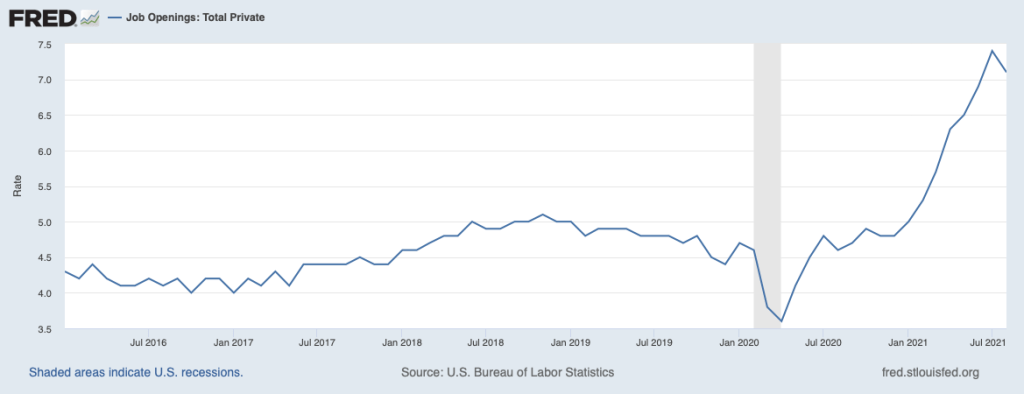
It’s customary for textbook authors to note that “much has happened in the economy” since the last edition of their book appeared. To say that much has happened since we prepared our last edition in 2019 would be a major understatement. Never in the lifetimes of today’s students and instructors have events like those of 2020 and 2021 occurred. The U.S. and world economies had experienced nothing like the Covid-19 pandemic since the influenza pandemic of 1918. In the spring of 2020, the U.S. economy suffered an unprecedented decline in the supply of goods and services as a majority of businesses in the country shut down to reduce spread of the virus. Many businesses remained closed or operated at greatly reduced capacity well into 2021. Most schools, including most colleges, switched to remote learning, which disrupted the lives of many students and their parents.

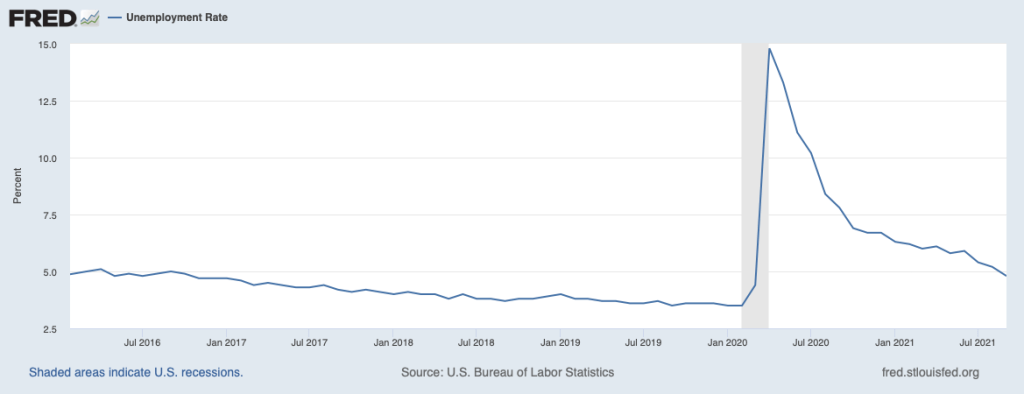
During the worst of the pandemic, total spending in the economy declined as the unemployment rate soared to levels not seen since the Great Depression of the 1930s. Reduced spending and closed businesses resulted in by far the largest decline in total production in such a short period in the history of the U.S. economy. Congress, the Trump and Biden administrations, and the Federal Reserve responded with fiscal and monetary policies that were also unprecedented.

Our updated Eighth Edition covers all of these developments as well as the policy debates they initiated. As with previous editions, we rely on extensive digital resources, including: author-created application videos and audio recordings of the chapter openers and Apply the Concept features; figure animation videos; interactive real-time data graphs animations; and Solved Problem whiteboard videos.

Glenn and Tony discuss the updated edition in this video:

Sample chapters will be available by October 15.

The full Macroeconomics text will available in early to mid December.

The full Microeconomics text will be available in mid to late December.

If you would like to view the sample chapters or are considering adopting the updated Eighth Edition for the spring semester, please contact your local Pearson representative. You can use this LINK to find and contact your representative.

New 09/03/21 Podcast – Authors Glenn Hubbard & Tony O’Brien discuss the recent jobs report, Fed comments, and financial stability!

Authors Glenn Hubbard and Tony O’Brien discuss the recent jobs report falling short of expectations. They also discuss the comments of Fed Chairman Powell’s comments at the Federal Reserve’s recent Jackson Hole conference. They also get to some of the recommendations of a Brookings Task Force, co-chaired by Glenn Hubbard, on ways to address financial stability. Use the links below to see more information about these timely topics:
Powell’s Jackson Hole speech: 

https://www.federalreserve.gov/newsevents/speech/files/powell20210827a.pdf 

The report of Glenn’s task force: 

https://www.brookings.edu/wp-content/uploads/2021/06/financial-stability_report.pdf 

The most recent economic forecasts of the FOMC: 

https://www.federalreserve.gov/monetarypolicy/files/fomcprojtabl20210616.pdf

WELCOME BACK! New 08/20/21 Podcast – Authors Glenn Hubbard & Tony O’Brien return to discuss delta variant & inflation!

Join authors Glenn Hubbard and Tony O’Brien as they return for a new academic year! The issues have evolved but the importance of these issues has not waned. We discuss the impact of closures related to the delta variant has on the economy. The discussion extends to the active fiscal and monetary policy that has reintroduced inflation as a topic facing our economy. Many students have little or no experience with inflation so it is a learning opportunity. Check back regularly where Glenn & Tony will continue to wrestle with these important economic concepts and relate them to the classroom!

What’s Going on with Inflation?

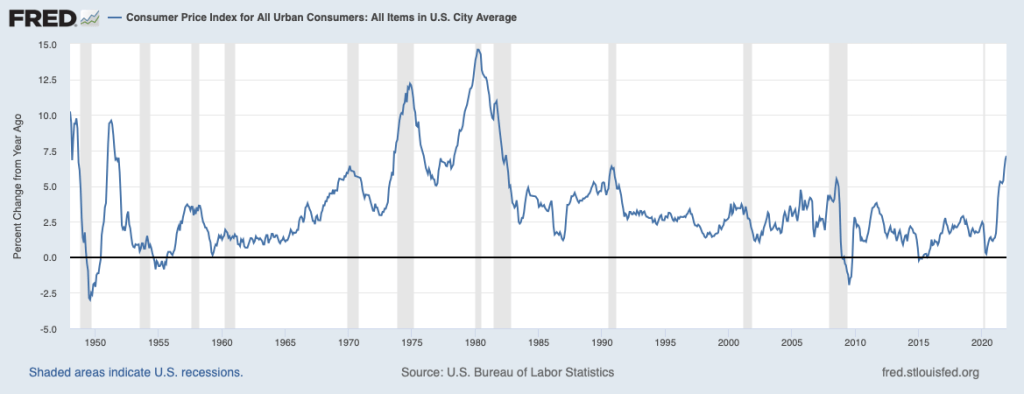
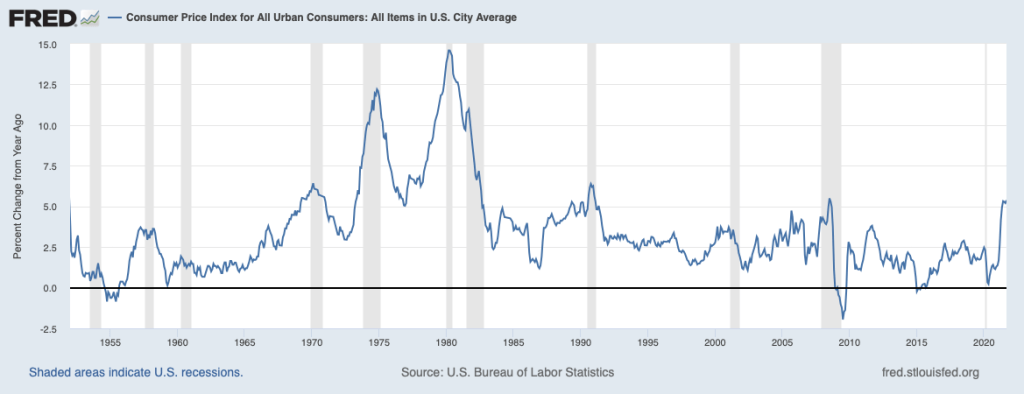
   The U.S. inflation rate has accelerated. As the following figure shows, in mid-2021, inflation, measured as the percentage change in the CPI from the same month in the previous year (the blue line), rose above 5 percent for the first time since the summer of 2008.

As we discuss in an Apply the Concept in Chapter 25, Section 25.5 (Chapter 15, Section 15.5 of Macroeconomics), the Fed prefers to measure inflation using the personal consumption expenditures (PCE) price index. The PCE price index is a measure of the price level similar to the GDP deflator, except it includes only the prices of goods and services from the consumption category of GDP. Because the PCE price index includes more goods and services than the CPI, it is a broader measure of inflation. As the red line in the figure shows, inflation as measured by the PCE price index is generally lower than inflation measured by the CPI. The difference is particularly large during periods in which CPI inflation is especially high, as it was during 2008, 2011, and 2021.

Prices of food and energy are particularly volatile, so the measure of inflation the Fed focuses on most closely is the PCE price index, excluding food and energy prices (the green line in figure). The figure shows that this measure of inflation is more stable than either of the other two measures. For instance, during June 2021, measured by the CPI, inflation was 5.3 percent, but was 3.5 percent when measured by the PCE, excluding food and energy.

In the summer of 2021, even inflation measured by the PCE, excluding food and energy, is running well above the Fed’s long-run target rate of 2 percent. Why is inflation increasing? Most economists and policymakers believe that two sets of factors are responsible:

  1. Increases in aggregate demand. Consumption spending (see the first figure below) has increased as the economy has reopened and people have returned to eating in restaurants, going to the movies, working out in gyms, and spending at other businesses that were closed or operating at reduced capacity. Households have been able to sharply increase their spending because household saving (see the second figure below) soared during the pandemic in response to payments from the federal government, including supplemental unemployment insurance payments and checks sent directly to most households. The increase in federal government expenditures that helped fuel the increase in aggregate demand is shown in the third figure below.

Fed policy has also been strongly expansionary, with the target for the federal funds kept near zero and the Fed continuing its substantial purchases of Treasury notes and mortgage-backed securities. The continuing expansion of the Fed’s balance sheet through the summer of 2021 is shown in the last of the figures below. The Fed’s asset purchases have help keep interest rates low and provided banks with ample funds to loan to households and firms. 

2. Reductions in aggregate supply. The pandemic disrupted global supply chains, reducing the goods available to consumers.  In the summer of 2021, not all of these supply chain issues had been resolved. In particular, a shortage of computer chips had reduced output of motor vehicles. New cars, trucks, SUVs, and minivans were often selling above their sticker prices. High prices for new vehicles led many consumers to increase their demand for used vehicles, driving up their prices. Between July 2020 and July 2021, prices of new vehicles rose 6.4 percent and prices for used vehicles rose an extraordinary 41.7 percent.

Supply issues also exist in some service industries, such as restaurants and hotels, that have had difficulty hiring enough workers to fully reopen. 

Economists and policymakers differ as to whether high inflation rates are transitory or whether the U.S. economy might be entering a prolonged period of higher inflation. Most Federal Reserve policymakers argue that the higher inflation rates in mid-2021 are transitory. For instance, in a statement following its July 28, 2021 meeting, the Federal Open Market Committee noted that: “Inflation has risen, largely reflecting transitory factors.”  Although the statement also noted that inflation is “on track to moderately exceed 2 percent for some time.”

In a speech at the end of July, Fed Governor Lael Brainard expanded on the Fed’s reasoning:

“Recent high inflation readings reflect supply–demand mismatches in a handful of sectors that are likely to prove transitory…. I am attentive to the risk that inflation pressures could broaden or prove persistent, perhaps as a result of wage pressures, persistent increases in rent, or businesses passing on a larger fraction of cost increases rather than reducing markups, as in recent recoveries. I am particularly attentive to any signs that currently high inflation readings are pushing longer-term inflation expectations above our 2 percent objective.”

“Currently, I do not see such signs. Most measures of survey- and market-based expectations suggest that the current high inflation pressures are transitory, and underlying trend inflation remains near its pre-COVID trend…. Many of the forces currently leading to outsized gains in prices are likely to dissipate by this time next year. Current tailwinds from fiscal support and pent-up consumption are likely to shift to headwinds, and some of the outsized price increases associated with acute supply bottlenecks may ease or partially reverse as those bottlenecks are resolved.”

Brainard’s remarks highlight a point that we make in Chapter 27, Section 27.1 (Chapter 17, Section 17.1 of Macroeconomics): The expectations of households and firms of future inflation play an important part in determining current inflation. Inflation can rise above and fall below the expected inflation rate in response to changes in the labor market—which affect the wages firms pay and, therefore, the firms’ costs—as well as in response to fluctuations in aggregate supply resulting from positive or negative supply shocks—such as the pandemic’s negative effects on aggregate supply. Fed Chair Jerome Powell has argued that with households and firms’ expectations still well-anchored at around 2 percent, inflation was unlikely to remain above that level in the long run.

Some economists are less convinced that households and firms will continue to expect 2 percent inflation if they experience higher inflation rates through the end of 2021. The Wall Street Journal’s editorial board summed up this view: “One risk for the Fed is that more months of these price increases will become what consumers and businesses come to expect. To use the Fed jargon, prices would no longer be ‘well-anchored.’ That may be happening.”

As we discuss in Chapter 27, Sections 27.2 and 27.3 (Macroeconomics, Chapter 17, Sections 17.2 and 17.3), during the late 1960s and early 1970s, higher rates of inflation eventually increased households and firms’ expectations of the inflation rate, leading to an acceleration of inflation that was difficult for the Fed to reverse. 

Earlier this year, Olivier Blanchard of the Peterson Institute for International Economics, formerly a professor of economics at MIT and director of research at the International Monetary Fund, raised the possibility that overly expansionary monetary and fiscal policies might result in the Fed facing conditions similar to those in the 1970s. The Fed would then be forced to choose between two undesirable policies:

“If inflation were to take off, there would be two scenarios: one in which the Fed would let inflation increase, perhaps substantially, and another—more likely—in which the Fed would tighten monetary policy, perhaps again substantially. Neither of these two scenarios is ideal. In the first, inflation expectations would likely become deanchored, cancelling one of the major accomplishments of monetary policy in the last 20 years and making monetary policy more difficult to use in the future. In the second, the increase in interest rates might have to be very large, leading to problems in financial markets. I would rather not go there.”

In a recent interview, Lawrence Summers of Harvard University, who served as secretary of the Treasury in the Clinton administration, made similar points: 

“We have inflation that since the beginning of the year has been running at a 5 percent annual rate. …. Starting at high inflation, we’ve got an economy that’s going to grow at extremely high rates for the next quarter or two. … I think we’re going to find ourselves with a new normal of inflation above 3 percent. Then the Fed is either going to have to be inconsistent with all the promises and commitments it’s made [to maintain a target inflation rate of 2 percent] or it’s going to have to attempt the task of slowing down the economy, which is rarely a controlled process.”

Clearly the pandemic and the resulting policy responses have left the Fed in a challenging situation.

Sources: Federal Reserve Open Market Committee, “Federal Reserve Press Release,” federalreserve.gov, July 28, 2021; Lael Brainard, “Assessing Progress as the Economy Moves from Reopening to Recovery,” speech at “Rebuilding the Post-Pandemic Economy” 2021 Annual Meeting of the Aspen Economic Strategy Group, Aspen, Colorado, federalreserve.gov, July 30, 2021; Wall Street Journal editorial board, “Powell Gets His Inflation,” Wall Street Journal, July 13, 2021; Olivier Blanchard, “In Defense of Concerns over the $1.9 Trillion Relief Plan,” piie.com, February 21, 2012; “Former Treasury Secretary on Consumer Prices, U.S. Role in Global Pandemic, Efforts,” wbur.org, August 22, 2021; and Federal Reserve Bank of St. Louis, https://fred.stlouisfed.org.

Glenn and Donald Kohn on the Report of the Task Force on Financial Stability

   Glenn co-chairs the Task Force on Financial Stability with Donald Kohn, now a fellow at the Brookings Institution and formerly vice-chair of the Board of Governors of the Federal Reserve. The Task Force on Financial Stability was formed by the Initiative on Global Markets at the University of Chicago and the Hutchins Center on Fiscal & Monetary Policy at the Brookings Institution to make recommendations intended to increase the stability of the U.S. financial system.

On June 29, 2021, the Task Force issued a report, which can be found HERE. Glenn and Donald Kohn discuss the reports findings in an opinion column published on bloomberg. com.

The Federal Reserve building in Washington, D.C.

Our Financial Early Warning System Is Broken

The U.S. financial system emerged from the reforms that followed the 2008 global crisis stronger than it had been going in. But the onset of the pandemic in March 2020 demonstrated how much was left undone: Although banks weathered the storm well, financial disruptions elsewhere — in money market funds, in the Treasury market — necessitated extraordinary measures to prevent an even greater economic disaster.

A group that we co-chair, the Task Force on Financial Stability, has just released a report on how to make the system more resilient. Among other things, we see the need for a structural change: Overhaul the agencies tasked with identifying and addressing threats outside traditional banks.

The Dodd-Frank financial reform of 2010 created two new entities focused on systemic risk. The Financial Stability Oversight Council, which included the Treasury Secretary and the heads of all the major financial regulatory agencies, was supposed to foster collaboration in finding and fixing dangerous buildups, wherever they might arise. And the Office of Financial Research, formed within Treasury and equipped with subpoena power, was supposed to provide the FSOC with the data and analysis needed to do the job well.

This financial early warning system didn’t operate as intended. The FSOC’s efforts to impose special scrutiny on certain systemically important non-bank institutions, such as insurance companies, ran into legal and political headwinds. Its member agencies often proved reluctant to encroach on one another’s turf, and the FSOC lacked the power to compel action. The OFR never subpoenaed anything, for fear of making enemies. Ultimately, the Trump administration deemphasized and defunded the whole apparatus.

As a result, the U.S. was much less prepared for the shock of the pandemic than it could have been. A rush to cash triggered runs on certain money-market mutual funds, threatened the flow of credit to everyone from homebuyers to municipalities, and — in a troubling departure from the usual “flight to quality” — caused the prices of Treasury securities to fall sharply. The Treasury and the Federal Reserve had to go to extreme lengths and pledge trillions of dollars to restore stability.

Regulators’ objective should not be merely to put out fires once they see smoke, but to prevent the dangerous accumulation of combustible material. New threats will emerge in unexpected ways; solutions will prompt unanticipated responses. So regulation must be dynamic, requiring an ongoing assessment process, not just periodic changes. To meet that challenge, we urge a restructuring of the FSOC and the OFR.

  1. Congress should give each FSOC member agency an explicit financial stability mandate, and require each to establish a similarly focused office to inform its rule making. This would force agencies such as the Securities and Exchange Commission, the Commodities Futures Trading Commission, and the Consumer Financial Protection Bureau to consider systemic-risk issues that they can otherwise too often neglect.
  2. Only the Treasury Secretary should issue the FSOC’s annual report, avoiding the consensus-building process among member agencies that can weaken identification of risks and accountability for dealing with them. While each agency would write a separate appendix, the Secretary would bear ultimate responsibility. The report should include a look back at what risks were missed, why, and how they will be addressed. To ensure the subject gets adequate attention, a new under-secretary for financial stability should act as the secretary’s point person.
  3. The OFR should receive a clear new mandate to gather the data that policymakers need (and, today, often lack). To underscore its importance, it should be renamed the Comptroller for Data and Resilience — echoing the stature of the Comptroller of the Currency — and its head should have a voting seat at the FSOC, a level of authority that would help the government recruit talent and experience to the post.

As the pandemic begins to recede, concern over financial stability should not. We don’t know what major shock will next hit the economy and financial system. But a process to scan for risks and adapt to them should be front and center.

Glenn’s Take on the Proposal at the G7 Meeting to Impose a Minimum Tax on Corporate Profits

   The G7 (or Group of 7) is an organization of seven large economies: Canada, France, Germany, Italy, Japan, the United Kingdom, and the United States. Only democratic countries are included, so China is not a member. At a recent meeting attended by U.S. Treasury Secretary Janet Yellen, the group agreed to adopt a uniform corporate tax rate of at least 15 percent.

Glenn discusses this decision in the following opinion column published in the Financial Times.

U.S. Treasury Secretary Janet Yellen and Paolo Gentiloni, European Commissioner for Economy, at a recent meeting of the G7.

Governments Should Tax Cash Flow, Not Global Corporate Income

From the Biden administration’s inception, US Treasury Secretary Janet Yellen has championed a global minimum tax for corporations. While the US walked back from a request for a 21 per cent rate (which was linked to an objective of raising the current US corporate tax of 21 per cent to between 25 and 28 per cent), it did lock in with G7 finance ministers a rate of at least 15 per cent. Secretary Yellen praised the move: “That global minimum tax would end the race to the bottom in corporate taxation, and ensure fairness for the middle class and working people in the US and around the world.”

It is tough to argue that corporate income shouldn’t pay its “fair share”. But the global minimum tax raises both political and economic questions.

Politics first. Approval in the US is likely to be tough. The minimum tax is estimated by the OECD to raise as much as $50bn-$80bn per year, much of it from successful American firms. Revenue to the US Treasury would be part of this amount, but small relative to the substantial expansion in spending proposed by the Biden administration. Will other governments engage their own political costs to achieve a deal that may be ephemeral if it fails to get US legislative approval? Even if the deal succeeds, might it hand a competitive victory to China? As a non-party to G7 or OECD proposals, could it not use both tax rates and subsidies to draw more investment to China?

But it is on economics that the global minimum tax draws more sensitive questions in two areas. The first is the design of the tax base. The second addresses the foundational question of the problem policymakers are trying to solve and whether the new minimum tax is the best way to do so.

A 15 per cent rate is not particularly useful without an agreement on what the tax base is. Particularly for the US, home to many very profitable technology companies, the concern should arise that countries will use special taxes and subsidies that effectively target certain industries. The US has had a version of a minimum tax of foreign earnings since the Tax Cuts and Jobs Act of 2017 enshrined GILTI (Global Intangible Low-Taxed Income) provision into law. The Biden administration wants to use the new global minimum tax to raise the GILTI rate and expand the tax base by eliminating a GILTI deduction for overseas plant and equipment investments.

For a 15 per cent minimum rate to make sense, countries would need a uniform tax base. Presumably, the goal of the new minimum tax is to limit the benefits to companies of shifting profits to low-tax jurisdictions, not to distort where those firms invest. The combination of a global minimum tax with the broad base advocated by the Biden administration could reduce cross-border investments and reduce the profitability of large multinational firms.

A still deeper economic issue is that of who bears the tax burden. I noted above that projected revenue increases are small compared to G7 government spending levels. It is not corporations who would pay more, but capital owners generally and workers, according to contemporary economic views of who bears the burden of the tax.

There is a better way to achieve what Yellen and her finance minister colleagues are trying to accomplish. To begin with, countries could allow full expensing of investment. That approach would move the tax system away from a corporate income tax toward a cash flow tax, long favoured by economists. In this revision, the minimum tax would not distort new investment decisions. It would also push the tax burden on to economic rents—profits in excess of the normal return to capital—better satisfying the apparent G7 goal of garnering more revenue from the most profitable large companies. And such a system would be simpler to administer, as multinationals would not need to set up different ways to track deductible investment costs over time in different countries.

In the debate leading up to the 2017 US tax law changes, Congress considered a version of this idea in a destination-based cash flow tax. Like a value added tax, this would tax corporate profits based on cash flows in a given country. The reform, which foundered on the political desirability of border adjustments, limits tax biases against investment and boosts tax fairness.

Returning to the numbers: countries with large levels of public spending relative to gross domestic product, as the Biden administration proposes, fund it mainly with value added taxes, not traditional corporate income taxes. A better global tax system is possible, but it starts with a verdict of “not GILTI.”

Glenn on Keynes, Hayek, and What It Will Take to Return to Full Employment

   Glenn wrote the following opinion column for the New York Times.

How to Keep the Economy Booming — And Meet the Demand for Workers

In recent economic news, optimists and pessimists could both find evidence to support their outlooks.

The May jobs report showed a gain of 559,000 jobs in May and a decline in the unemployment rate to 5.8 percent. It also showed a marked improvement from last month’s weaker showing across a number of sectors, and average hourly earnings continued to rise. Ahead of the monthly report, the unemployment insurance weekly claims report on Thursday showed the number of new unemployment insurance claims fell from 405,000 the week before to 385,000 — lower than levels typically indicative of a recession (400,000). This is the first time this has happened since the pandemic-induced closures began. Further wage growth should help draw more workers back to the labor force.

Yet at the same time, the recent jobs report showed a big miss relative to the expected gain of 650,000 jobs. Constraints in supply chains and business reopenings still complicate the return to work. And workers still aren’t out of the woods: Thursday’s report indicated the total number of already unemployed individuals claiming benefits hasn’t dropped since mid-March. If job creation is robust, that contrast between falling new claims and those still on the jobless rolls is odd.

What explains these confounding tensions? To unpack them, consider the legacies of the economists John Maynard Keynes and Friedrich Hayek.

In his day, Keynes argued for boosting aggregate demand during a recession to keep workers afloat — a prescription that has clearly shaped the ultra-stimulative fiscal and monetary policies from both the Trump and the Biden administrations. His influence also resonates in the recent jobs reports: The coming rebound in the consumption of services — restaurant meals, entertainment and travel — will lift demand above its prepandemic level, and reopening and abundant consumer cash, bolstered by policy, will increase the demand for workers.

While Keynes may have lit the path to recovery after last spring’s cataclysmic job loss, he offers little to guide us through the coming labor-supply crunch. If policy actively disincentivizes the unemployed from returning to the fold, as recent reports suggest, there will be no one in place to meet the coming surge in demand, imperiling our economic rehabilitation.

To preserve the still-shaky recovery, we must now turn to Hayek, the godfather of free-market thinking. He argued that policy should allow workers to adjust to changes in the economy. Looking ahead, policymakers must consider curbing elevated unemployment benefits and a focus on old, prepandemic jobs in order to let workers and the economy adjust to new activities and new jobs that are more promising in the postpandemic world. We don’t want unemployed workers to find the postpandemic economy has passed them by.

As demand revives, supply will need to keep pace. Those in some industries, like carmakers, can simply sell off excess inventories, something that is already happening. Tool and machinery makers can increase imports to keep up. But eventually, demand must be met by higher domestic production from workers. Once businesses are freed from pandemic restrictions, we can expect to see some improvements in supply.

But holding back a faster improvement in employment and output are the very challenges Hayek identifies, including slowing down the process of matching dislocated workers to new, postpandemic jobs. That is to say, demand growth with supply constraints won’t produce the sustainable jobs recovery we need.

Many workers are taking their time to find a new job or are choosing to work less, thanks to their generous pandemic unemployment insurance benefits. These benefits provided extra income for those who lost their jobs early in the crisis. As a result, the economy’s adjustment to a postpandemic paradigm will be slow. These benefits also slow future gains in the form of higher wages workers might earn from a new and better job. But as Hayek tells us, the longer it takes for these workers to rejoin the work force, the longer it will take for them to gain these benefits.

In the coming months, we will be able to assess the potency of dealing with these forces of supply and demand by comparing employment gains in the 25 states choosing to end federal pandemic benefit supplements with the 25 states retaining them. While employment is likely to rise quickly as the pandemic fades and extra unemployment insurance benefits fall away, unemployment rates are still likely to remain high relative to prepandemic levels for another year.

If we look ahead, wage gains should be robust for those employed, particularly for lower-skilled service-sector workers — especially if some employees delay returning to work. Those higher real wages are good news for recipients.

A less welcome wild card would be inflationary pressures, fueled by demand outstripping supply. Those pressures could be a brief blip in an adjusting economy. Or they could suggest a reduction in purchasing power from higher inflation for an extended period. Higher recent inflation readings in consumer prices are a cause for concern.

Whether this happens hinges on whether the federal government and the Federal Reserve dial back their extra Keynesian demand support in time to avoid increases in expected inflation. Inflation risks robbing them of purchasing power gains from their higher wages.

The latest jobs report, then, favors a more Hayekian solution — with a nudge: Policy should support returning to work and matching workers to jobs by supporting re-employment and training for new skills, not just boosting demand. That shift offers the best chance for a sustained lift in jobs as well as demand as the pandemic recedes. In the matter Keynes v. Hayek, then: Let Hayek now prevail.

The Debate over Macro Policy

   The current debate over monetary and fiscal policy has been particularly wide-ranging, touching on many of the issues we discuss in the policy chapters of the principles textbook.

Here are links to recent contributions to the debate.

Glenn and Tony discuss fiscal policy in a podcast HERE.

And monetary policy in a podcast HERE.

We discuss the Fed’s new monetary policy strategy HERE.

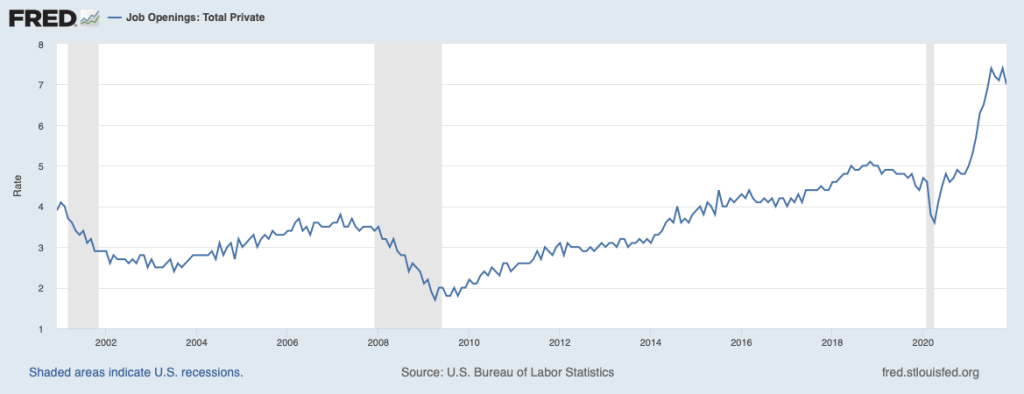
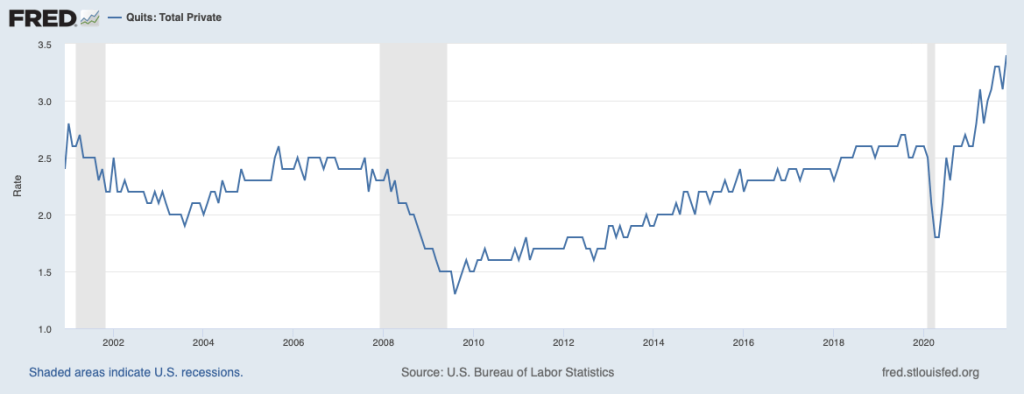
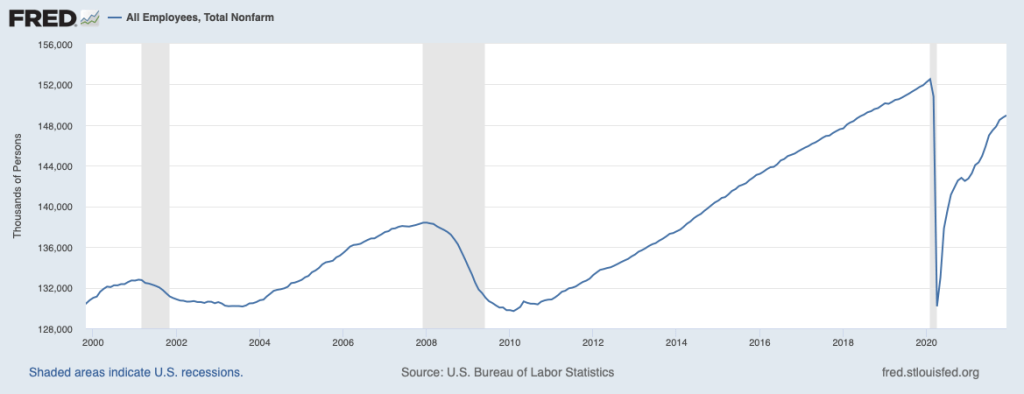
We discuss the current state of the labor market HERE.

The President’s Council of Economic Advisers discusses the need for additional fiscal policy measures in this POST on their blog.

An article on politico.com summarizes the debate HERE.

Harvard economist and former Treasury secretary Larry Summers has argued that fiscal and monetary policy have been too expansionary. A recent op-ed by Summers appears in the Washington Post HERE (subscription may be required).
Jason Furman, who was chair of the Council of Economic Advisers under President Obama gives his take on the division of opinion among academic economists in this Twitter THREAD.

Is the Natural Rate of Unemployment the Best Guide to Monetary Policy? The Fed’s New Monetary Policy Strategy

In response to the 2007-2009 financial crisis, in December 2008, the Federal Open Market Committee effectively cut its target for the federal funds to zero where it remained during the first six years of the recovery. In December 2015, Fed Chair Janet Yellen and the FOMC began the process of normalizing monetary policy by raising the target for the federal funds rate to 0.25 to 0.50 percent.

The FOMC raised the target several more times during the following years (Jerome Powell succeeded Janet Yellen as Fed Chair in February 2018) until it reached 2.25 to 2.50 percent in December 2018. In Chapter 27 of the textbook we discuss the fact that the experience of the Great Inlfation that had lasted from the late 1960s to the early 1980s had convinced many economists inside and outside of the Fed that if the unemployment rate declined below the natural rate of unemployment (also referred to as the nonaccelerating inflation rate of unemployment, or NAIRU), the inflation rate was likely to accelerate unless the FOMC increased its target for the federal funds rate. The actions the FOMC took starting in December 2015 were consistent with this view.

At the December 2015 meeting, the FOMC members gave their estimates of several key economic variables, including the natural rate of unemployment. At the time of the meeting, the unemployment rate was 5.0 percent. The average of the FOMC members’ estimates of the natural rate of unemployment was 4.9 percent. The inflation rate in December 2015 was 1.2 percent—well below the Fed’s target inflation rate of 2 percent. Although it might seem that with such a low inflation rate, the FOMC should not have been increasing the federal funds rate target, doing so was consistent with one of the lessons from the Great Inflation: Because monetary policy affects the economy with a lag, it’s important for the Fed to react before inflation begins to increase and a higher inflation rate becomes embedded in the economy. With many FOMC members believing that the NAIRU had been reached in December 2015, raising the federal funds rate from effectively zero seemed like an appropriate policy.

At least until the end of 2018, some members of the FOMC indicated publicly that they still believed that the Fed should pay close attention to the relationship between the natural rate of unemployment and the actual rate of unemployment. For example, in a speech delivered in December 2018, Raphael Bostic, president of the Federal Reserve Bank of Atlanta, who was serving that year on the FOMC, made the following points:

“[P]eriods of time when the actual unemployment rate fell below what the U.S. Congressional Budget Office now estimates as the so-called natural rate of unemployment … I refer to … as “high-pressure” periods. … Dating back to 1960, every high-pressure period ended in a recession. And all but one recession was preceded by a high-pressure period….

One potential consequence of overheating is that inflationary pressures inevitably build up, leading the central bank to take a much more “muscular” stance of policy at the end of these high-pressure periods to combat rising nominal pressures. Economic weakness follows. You might argue that the simple answer is to not respond so aggressively to building signs of inflation, but that would entail risks that few responsible central bankers would accept. It is true that the Fed and most other advanced-economy central banks have the luxury of solid credibility for achieving and maintaining their price stability goals. But we shouldn’t forget that such credibility was hard won. Inflation expectations are reasonably stable for now, but we know little about how far the scales can tip before it is no longer so.”

Bostic also noted in the speech that “it is very difficult to determine when the economy is actually overheating.” One indication of that difficulty is given by the following table, which shows how the average estimate by FOMC members of the natural rate of unemployment declined each year during the period in which they were raising the target for the federal funds rate. 

December 20154.9%
December 20164.8%
December 20174.7%
December 20184.4%
December 20194.1%
Federal Open Market Committee Forecasts of the Natural Rate of Unemployment, 2015-2019

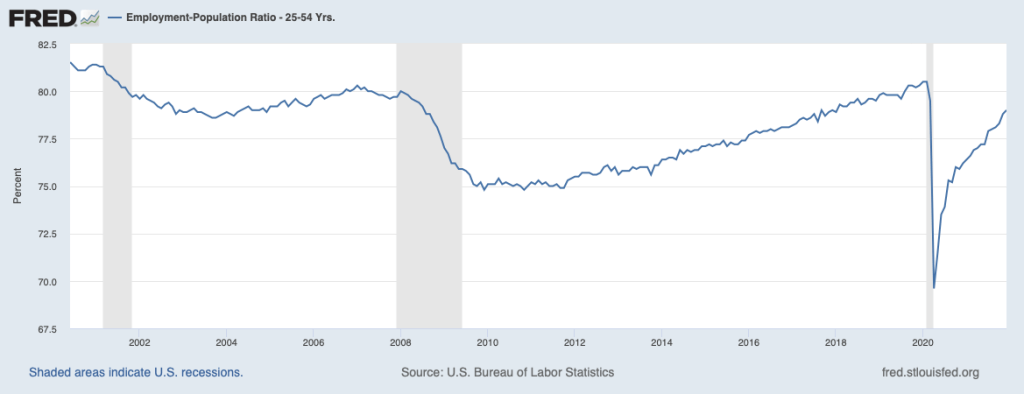
As we discuss in Chapter 19, Section 19.1 of the textbook, because of problems in measuring the actual unemployment rate and in estimating the natural rate of unemployment, some economists inside and outside of the Fed have argued that the employment-population ratio for prime age workers is a better measure of the state of the labor market.  The following shows movements in the employment-population ratio for workers aged 25 to 54 between January 2000, when the ratio was near its post-World War II high, and February 2021. 

Employment-Population Ratio for Worker Aged 25 to 54, 2000-2021

The figure shows that in December 2015, when the Fed began to raise its target for the federal funds rate and when the average estimate of the FOMC members indicated that unemployment was at its natural rate, the employment-population rate was still 4.5 percentage points below its level of early 2000. The FOMC members do not report individual forecasts of the employment-population ratio. If they had focused on that measure rather than on the unemployment rate, they may have concluded that there was more slack in the labor market and, therefore, have been less concerned that inflation might be about to significantly increase.

In 2019, the Fed began to cut its target for the federal funds rate as the growth of real GDP slowed. In March 2020, following the start of the Covid-19 pandemic, the Fed cut the target back to 0 to 0.25 percent. During that time, some members of the FOMC and some economists outside of the Fed concluded that the Fed may have made a mistake by raising the target for the federal funds rate multiple times between 2015 and 2018. For example, Bostic in a speech in November 2020, noted that “the actual unemployment rate exceeded estimates of the NAIRU by an average of 0.8 percentage points each year” between 1979 and 2019. He concluded that “If estimates of the NAIRU are actually too conservative, as many would argue they have been …unemployment could have averaged one to two percentage points lower” between 1979 and 2019, which he argues would have been a particular benefit to black workers. In a speech in September 2020, Lael Brainard, a member of the Fed’s Board of Governors, noted that the Fed’s previous approach of making policy less expansionary “when the unemployment rate nears the [natural] rate in anticipation of high inflation that is unlikely to materialize risks an unwanted loss of opportunity for many Americans.”  

in August 2020, the Fed announced the results of a review of its monetary policy. In a speech that accompanied the statement Fed Chair Jerome Powell noted that in attempting to achieve its mandate of high employment, the Fed faces the difficulty that “the maximum level of employment is not directly measurable and changes over time for reasons unrelated to monetary policy. The significant shifts in estimates of the natural rate of unemployment over the past decade reinforce this point.” Powell noted that the in the Fed’s new monetary policy statement, policy will depend on the FOMC’s: “’assessments of the shortfalls of employment from its maximum level’ rather than by ‘deviations from its maximum level’ as in our previous statement. This change may appear subtle, but it reflects our view that a robust job market can be sustained without causing an outbreak of inflation.” 

At this point, the details of how the Fed’s new monetary policy strategy will be implemented are still uncertain. But it seems clear that the Fed has ended its approach dating back to the early 1980s of raising its target for the federal funds rate when the unemployment rate declined to or below the FOMC’s estimate of the natural rate of unemployment. Particularly after Congress and the Biden administration passed the $1.9 trillion American Rescue Plan in March 2021, some economists wondered whether the Fed’s new strategy might make it harder to counter an increase in inflation without pushing the U.S. economy into a recession. For instance, Olivier Blanchard of the Peterson Institute for International Economics argued that the combination of very expansionary fiscal and monetary policies might lead to a situation similar to the late 1960s:

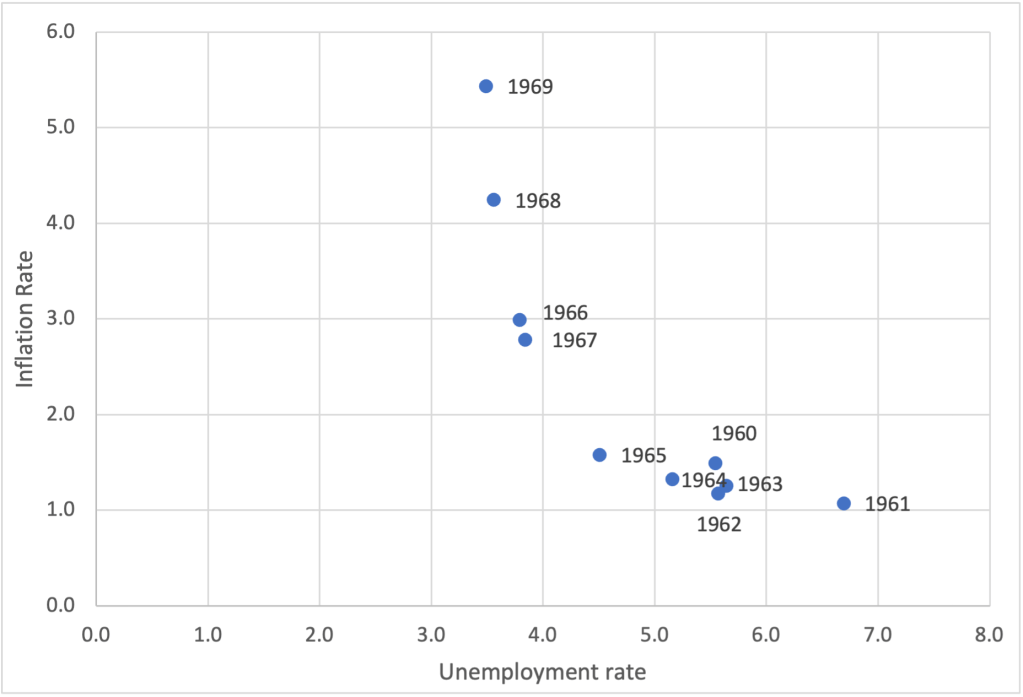
“From 1961 to 1967, the Kennedy and Johnson administrations ran the economy above potential [GDP], leading to a steady decrease in the unemployment rate down to less than 4 percent. Inflation increased but not very much, from 1 percent to just below 3 percent, suggesting to many a permanent trade-off between inflation and unemployment. In 1967, however, inflation expectations started adjusting, and by 1969, inflation had increased to close to 6 percent and was then seen as a major issue. Fiscal and monetary policies tightened, leading to a recession from the end of 1969 to the end of 1970.”

Fed Chair Jerome Powell seems confident, however, that any increase in inflation will only be temporary. In testifying before Congress, he stated that: “We might see some upward pressure on prices [as a result of expansionary monetary and fiscal policy]. Our best view is that the effect on inflation will be neither particularly large nor persistent.” 

Time will tell which side in what one economic columnist called the Great Overheating Debate of 2021 will turn out to be correct.

Sources: Neil Irwin, “If the Economy Overheats, How Will We Know?” New York Times, March 24, 2012; Olivier Blanchard, “In Defense of Concerns over the $1.9 Trillion Relief Plan,”  piie.com, February 18, 2021; Paul Kiernan and Kate Davidson, “Powell Says Stimulus Package Isn’t Likely to Fuel Unwelcome Inflation,” Wall Street Journal, March 23, 2021; Federal Open Market Committee, “Minutes,” various dates; Lael Brainard, “Bringing the Statement on Longer-Run Goals and Monetary Policy Strategy into Alignment with Longer-Run Changes in the Economy,” September 1, 2020; Raphael Bostic, “Views on the Economic and Policy Outlook,”  December 6, 2018; Raphael Bostic, “Racism and the Economy: Focus on Employment,” November 17, 2020; Jerome Powell, “New Economic Challenges and the Fed’s Monetary Policy Review,” August 27, 2020; and Federal Reserve Bank of St. Louis. 

Annoucing Hubbard and O’Brien, Money, Banking, and the Finacial System, Fourth Edition.

The new fourth edition of our Money, Banking, and the Financial System text is hot off the presses. The new edition is thoroughly updated and includes coverage of the effects of the Covid-19 pandemic on the financial system, the Fed’s policy response to the pandemic, and issues raised by the Fed’s close collaboration with the U.S. Treasury during the pandemic and by the Fed’s expansion into lending to nonfinancial businesses. 

We’ve also revised and updated our discussion of how the Fed uses the interest rate on excess reserves and the rate on its reverse repurchase agreements to manage the federal funds rate. Other new content with respect to monetary policy includes a discussion of the Fed’s shift away from emphasizing open market operations and toward relying on quantitative easing and forward guidance. We discuss many other current issues in monetary policy including whether the Fed has done enough to reduce Black unemployment.

For more details on the many revisions, the new material included literally in every chapter, and for ordering information, please click HERE.