Are the Fed’s Forecasts of Inflation and Unemployment Inconsistent?

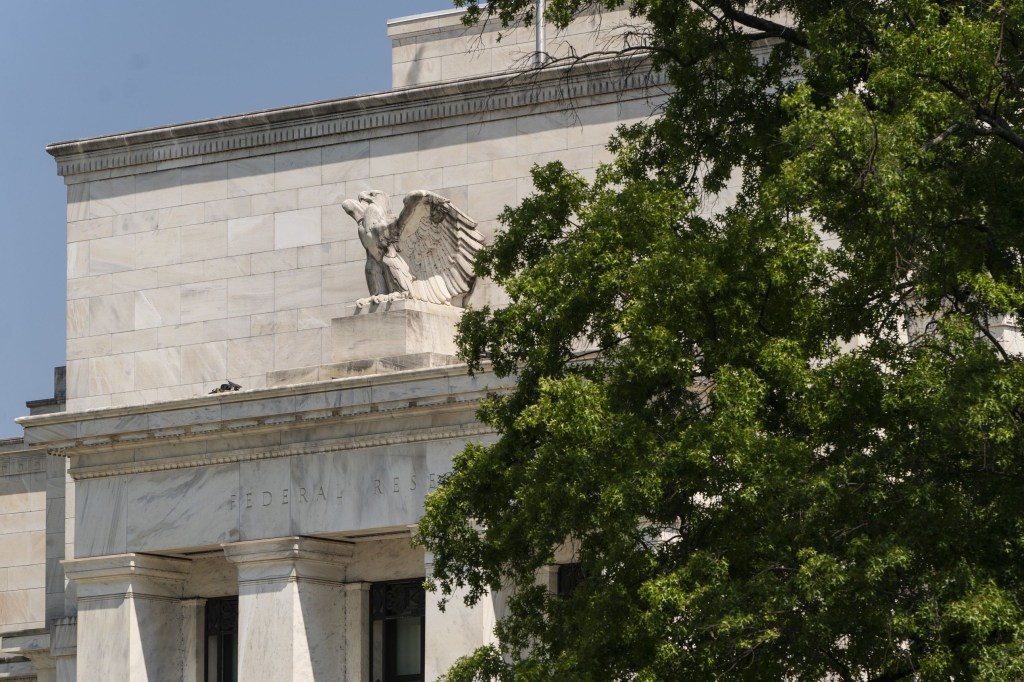
The Federal Reserve building in Washington, DC. Photo from the Wall Street Journal.

Four times per year, the members of the Federal Reserve’s Federal Open Market Committee (FOMC) publish their projections, or forecasts, of the values of the inflation rate, the unemployment, and changes in real gross domestic product (GDP) for the current year, each of the following two years, and for the “longer run.”  The following table, released following the FOMC meeting held on March 15 and 16, 2022, shows the forecasts the members made at that time.

  Median Forecast Meidan Forecast Median Forecast 
 202220232024Longer runActual values, March 2022
Change in real GDP2.8%2.2%2.2%1.8%3.5%
Unemployment rate3.5%3.5%3.6%4.0%3.6%
PCE inflation4.3%2.7%2.3%2.0%6.6%
Core PCE inflation4.1%2.6%2.3%No forecast5.2%

Recall that PCE refers to the consumption expenditures price index, which includes the prices of goods and services that are in the consumption category of GDP. Fed policymakers prefer using the PCE to measure inflation rather than the consumer price index (CPI) because the PCE includes the prices of more goods and services. The Fed uses the PCE to measure whether it is hitting its target inflation rate of 2 percent. The core PCE index leaves out the prices of food and energy products, including gasoline. The prices of food and energy products tend to fluctuate for reasons that do not affect the overall long-run inflation rate. So Fed policymakers believe that core PCE gives a better measure of the underlying inflation rate. (We discuss the PCE and the CPI in the Apply the Concept “Should the Fed Worry about the Prices of Food and Gasoline?” in Macroeconomics, Chapter 15, Section 15.5 (Economics, Chapter 25, Section 25.5)).

The values in the table are the median forecasts of the FOMC members, meaning that the forecasts of half the members were higher and half were lower.  The members do not make a longer run forecast for core PCE.  The final column shows the actual values of each variable in March 2022. The values in that column represent the percentage in each variable from the corresponding month (or quarter in the case of real GDP) in the previous year.  Links to the FOMC’s economic projections can be found on this page of the Federal Reserve’s web site.

At its March 2022 meeting, the FOMC began increasing its target for the federal funds rate with the expectation that a less expansionary monetary policy would slow the high rates of inflation the U.S. economy was experiencing. Note that in that month, inflation measured by the PCE was running far above the Fed’s target inflation rate of 2 percent. 

In raising its target for the federal funds rate and by also allowing its holdings of U.S. Treasury securities and mortgage-backed securities to decline, Fed Chair Jerome Powell and the other members of the FOMC were attempting to achieve a soft landing for the economy. A soft landing occurs when the FOMC is able to reduce the inflation rate without causing the economy to experience a recession. The forecast values in the table are consistent with a soft landing because they show inflation declining towards the Fed’s target rate of 2 percent while the unemployment rate remains below 4 percent—historically, a very low unemployment rate—and the growth rate of real GDP remains positive. By forecasting that real GDP would continue growing while the unemployment rate would remain below 4 percent, the FOMC was forecasting that no recession would occur.

Some economists see an inconsistency in the FOMC’s forecasts of unemployment and inflation as shown in the table. They argued that to bring down the inflation rate as rapidly as the forecasts indicated, the FOMC would have to cause a significant decline in aggregate demand. But if aggregate demand declined significantly, real GDP would either decline or grow very slowly, resulting in the unemployment rising above 4 percent, possibly well above that rate.  For instance, writing in the Economist magazine, Jón Steinsson of the University of California, Berkeley, noted that the FOMC’s “combination of forecasts [of inflation and unemployment] has been dubbed the ‘immaculate disinflation’ because inflation is seen as falling rapidly despite a very tight labor market and a [federal funds] rate that is for the most part negative in real terms (i.e., adjusted for inflation).”

Similarly, writing in the Washington Post, Harvard economist and former Treasury secretary Lawrence Summers noted that “over the past 75 years, every time inflation has exceeded 4 percent and unemployment has been below 5 percent, the U.S. economy has gone into recession within two years.”

In an interview in the Financial Times, Olivier Blanchard, senior fellow at the Peterson Institute for International Economics and former chief economist at the International Monetary Fund, agreed. In their forecasts, the FOMC “had unemployment staying at 3.5 percent throughout the next two years, and they also had inflation coming down nicely to two point something. That just will not happen. …. [E]ither we’ll have a lot more inflation if unemployment remains at 3.5 per cent, or we will have higher unemployment for a while if we are actually to inflation down to two point something.”

While all three of these economists believed that unemployment would have to increase if inflation was to be brought down close to the Fed’s 2 percent target, none were certain that a recession would occur.

What might explain the apparent inconsistency in the FOMC’s forecasts of inflation and unemployment? Here are three possibilities:

  1. Fed policymakers are relatively optimistic that the factors causing the surge in inflation—including the economic dislocations due to the Covid-19 pandemic and the Russian invasion of Ukraine and the surge in federal spending in early 2021—are likely to resolve themselves without the unemployment rate having to increase significantly. As Steinsson puts it in discussing this possibility (which he believes to be unlikely) “it is entirely possible that inflation will simply return to target as the disturbances associated with Covid-19 and the war in Ukraine dissipate.”
  2. Fed Chair Powell and other members of the FOMC were convinced that business managers, workers, and investors still expected that the inflation rate would return to 2 percent in the long run. As a result, none of these groups were taking actions that might lead to a wage-price spiral. (We discussed the possibility of a wage-price spiral in earlier blog post.) For instance, at a press conference following the FOMC meeting held on May 3 and 4, 2022, Powell argued that, “And, in fact, inflation expectations [at longer time horizons] come down fairly sharply. Longer-term inflation expectations have been reasonably stable but have moved up to—but only to levels where they were in 2014, by some measures.” If Powell’s assessment was correct that expectations of future inflation remained at about 2 percent, the probability of a soft landing was increased.
  3. We should mention the possibility that at least some members of the FOMC may have expected that the unemployment rate would increase above 4 percent—possibly well above 4 percent—and that the U.S. economy was likely to enter a recession during the coming months. They may, however, have been unwilling to include this expectation in their published forecasts. If members of the FOMC state that a recession is likely, businesses and households may reduce their spending, which by itself could cause a recession to begin. 

Sources: Martin Wolf, “Olivier Blanchard: There’s a for Markets to Focus on the Present and Extrapolate It Forever,” ft.com, May 26, 2022; Lawrence Summers, “My Inflation Warnings Have Spurred Questions. Here Are My Answers,” Washington Post, April 5, 2022; Jón Steinsson, “Jón Steinsson Believes That a Painless Disinflation Is No Longer Plausible,” economist.com, May 13, 2022; Federal Open Market Committee, “Summary of Economic Projections,” federalreserve.gov, March 16, 2022; and Federal Open Market Committee, “Transcript of Chair Powell’s Press Conference May 4, 2022,” federalreserve.gov, May 4, 2022. 

Does Majoring in Economics Increase Your Income?

Image by Andrea D’Aquino in the Wall Street Journal.

Studying economics provides students in any major with useful tools for understanding business decision making and for evaluating government policies. As we discuss in Chapter 1, Section 1.5 of Microeconomics, Macroeconomics, and Economics, majoring in economics can lead to a career in business, government, or at nonprofit organizations. Many students considering majoring in economics are interested in how the incomes of economics majors compare with the incomes of students who pursue other majors.

            The Federal Reserve Bank of New York maintains a web page that uses data collected by the U.S. Census to show the incomes of people with different college majors. The following table shows for economics majors and for all majors the median annual wage received by people early in their careers and in the middle of their careers. The median is a measure of the average calculated as the annual wage at which half of people in the group have a higher annual wage and half have a lower annual wage. “Early career” refers to people aged 22 to 27, and “mid-career” refers to people aged 35 to 45.  The data are for people with a bachelor’s degree only, so people with a masters or doctoral degree are not included.  

 Median Wage Early CareerMedian Wage Mid-Career
Economics majors$55,000$93,000
All majors$42,000$70,000

The table shows that early in their careers, on average, economics majors earn an annual wage about 31 percent higher than annual wage earned by all majors. At mid-career, in percentage terms, the gap increases slightly to 33 percent.

            How should we interpret these data? In Chapter 1, Section 1.3, in discussing how to evaluate economic models, we made the important distinction between correlation and causality. Just because two things are correlated, or happen at the same time, doesn’t mean that one caused the other. In this case, are the higher than average incomes of economics majors caused by majoring in economics or is majoring in economics correlated with higher incomes, but not actually causing the higher incomes. It might be true, for instance, that on average economics majors have certain characteristics—such as being more intelligent or harder workers—than are students who choose other majors. Because being intelligent and working hard can lead to successful careers, students majoring in economics might have earned higher incomes on average even if they had chosen a different major.

(Here’s a  more advanced point about identifying causal relationships in data: The problem with determining causality described in the previous paragraph is called selection bias. Students aren’t randomly assigned majors; they choose, or self-select, them. If students with characteristics that make it more likely that they will earn high incomes are also more likely to choose to major in economics, then the higher incomes earned by economics majors weren’t caused by (or weren’t entirely caused by) majoring in economics.)

            Economists Zachary Bleemer of the University of California, Berkeley and Aashish Mehta of the University of California, Santa Barbara have found a way to evaluate whether majoring in economics causes students to earn higher incomes. The authors gathered data on all the students admitted to the University of California, Santa Cruz (UCSC) between 2008 and 2012 and on their incomes in 2017 and 2018. To major in economics, students at UCSC needed a grade point average (GPA) of 2.8 or higher in the two principles of economics courses. The authors compared the choices of majors and the average early career earnings of students who just met or just failed to meet the 2.8 GPA threshold for majoring in economics. The authors use advanced statistical analysis to reach the conclusion that: “Comparing the major choices and average wages of above-and-below-threshold students shows that majoring in economics caused a $22,000 (46 percent) increase in annual early-career wages of barely above-threshold students.” 

            The authors attribute half of the higher wages earned by economics majors to their being more likely to pursue careers in finance, insurance, real estate, and accounting, which tend to pay above average wages.  The authors note that their findings from this study “imply that students’ major choices could have financial implications roughly as large as their decision to enroll in college ….”

Sources: Federal Reserve Bank of New York, The Labor Market for Recent College Graduates, https://www.newyorkfed.org/research/college-labor-market/index.html; and Zachary Bleemer and Aashish Meta, “Will Studying Economics Make You Rich? A Regression Discontinuity Analysis of the Returns to College Major,” American Economic Journal: Applied Economics, Vol. 14, No. 2, April 2022, pp. 1-22.

Harvard Professor Edward Glaeser on the Importance of Working on Site

Recently Tunku Varadarajan of the Wall Street Journal interviewed Edward Glaeser on whether the increases in working remotely due to the pandemic are likely to persist.

Glaeser notes that compared with the period before the pandemic, office attendance is still down 19% nationwide. In some large cities, it’s down considerably more, including being down more than 50% in San Francisco and 32% in New York and Boston.

Glaeser believes that a decline in working on site can be a particular problem for young workers:

“Cities—and face-to-face contact at work—have ‘this essential learning component that is valuable and crucial for workers who are young,’ [Glaeser] says. The acquisition of experience and improvement in productivity, ‘month by month, year by year,’ ensures that individual earnings are higher in cities than elsewhere.”

According to Glaeser, people who work remotely face a 50% reduction in the probably of being promoted.

Glaeser is not a fan of remote teaching:

“Delivering a lecture to 100 students on Zoom, he says, is ‘just a bad movie, a really bad movie. None of the magic that comes from live lecturing and live interaction with students is there when you’re doing it via Zoom.'”

There is much more in the article, which is well worth reading. It can be found here (a subscription may be required).

A Day in the Life of a Price Checker for the Bureau of Labor Statistics

Emily Mascitis checks prices at an auto-repair shop in Philadelphia. (Photo from the Wall Street Journal.)

As we discuss in Macroeconomics, Chapter 9, Section 9.4, (Economics, Chapter 19, Section 19.4) in calculating the consumer price index (CPI) each month, the Bureau of Labor Statistics sends hundreds of employees to gather price data from stores and offices. A reporter for the Wall Street Journal followed a price checker as she visited an auto-repair shop, a grocery store, and other businesses.

The article provides an excellent discussion of the care with which prices are collected, particularly with respect to making sure that the prices are for the same good or service each month. For instance, while in a grocery, the price checker almost made the mistake of recording the price of a can of low sodium chicken noodle soup, rather than the price of regular chicken noodle soup as in previous months.

At one point, the price checker noted that the price of clementines had been increasing rapidly and remarked that when buying fruit for her own family “We need to pick a less expensive fruit.” Switching from buying a fruit, in this case clementines, with a price that is increasing rapidly to a fruit with a price that is increasing more slowly, say regular oranges, is an example of the substitution bias. That’s one of the four biases discussed in Section 9.4 that can cause the measured increase in the CPI to overstate the true rate of inflation.

The article can be found here. (A subscription may be required.)

Source: Rachel Wolfe, “How the Inflation Rate Is Measured: 477 Government Workers at Grocery Stores,” Wall Street Journal, May 10, 2022.

Interest Rates, the Yen, the Dollar, and the International Financial System 

Photo from the Wall Street Journal.

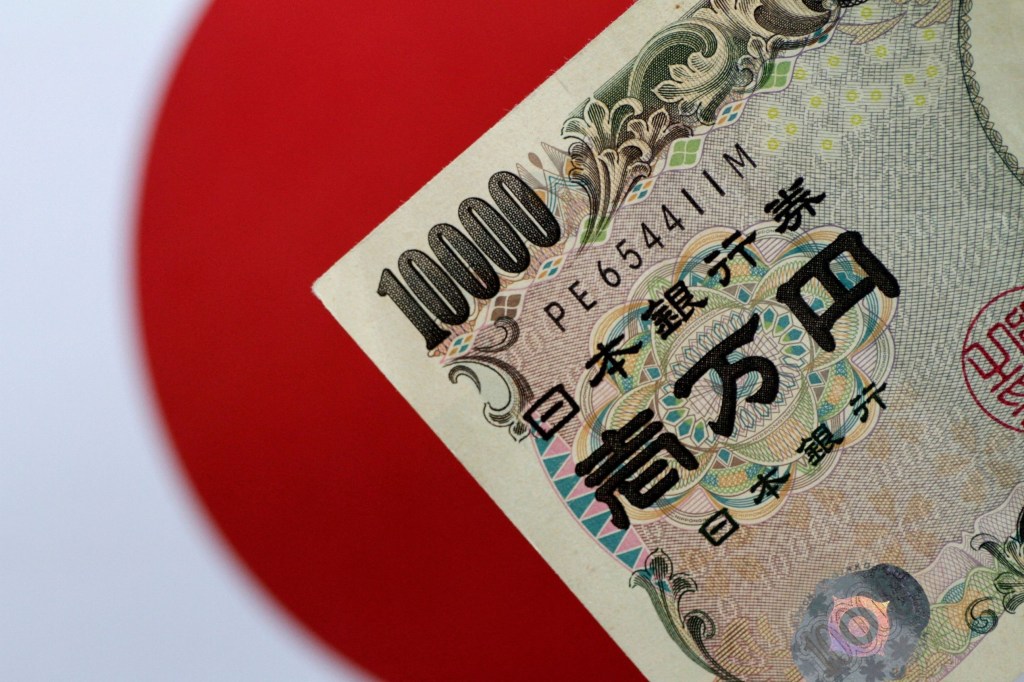
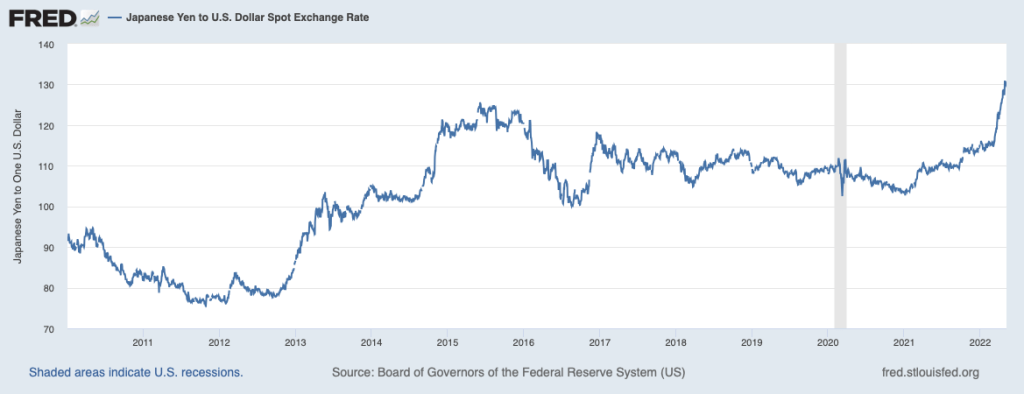
From early March to early May 2022, the Japanese yen persistently lost value versus the U.S. dollar. Between March 1 and May 9, the yen declined by 14% against the dollar, which is a substantial loss in value during such a short time period.  What explains the decline in the exchange rate between the yen and the dollar during that time? In Macroeconomics, Chapter 18, Section 18.2 (Economics, Chapter 28, Section 28.2), we saw that the exchange rate between most pairs of currencies fluctuates in response to these factors:

  • The foreign demand for U.S. goods
  • U.S. interest rates relative to foreign interest rates
  • Foreign demand for making direct investments or portfolio investments in the United States
  • The U.S. demand for foreign goods
  • Foreign interest rates relative to U.S interest rates
  • U.S. demand for making direct investments or portfolio investments in other countries

The following figure shows movements in the exchange rate between the yen and the U.S. dollar since 2010.  During different periods, the factor that is most important in explaining fluctuations in an exchange rate varies.  (Important note: The figure follows the convention of expressing the exchange between the yen and dollar in terms of yen per dollar. Therefore, in the figure, an increase in the exchange rate corresponds to a decrease in the value of the yen versus the dollar because it takes more yen to buy one dollar.)

From early March to early May 2022, the decline in value of the yen versus the dollar was mainly the result of U.S. interest rates increasing relative to Japanese interest rates. As the inflation rate increased rapidly in the spring of 2022, both short-term and long-term interest rates in the United States increased, partly in response to policy actions taken by the Federal Reserve. The Federal Reserve was attempting to increase interest rates in order to raise borrowing costs for households and firms, thereby slowing spending and inflation.  Japan was experiencing much lower rates of inflation—well below the Bank of Japan’s 2% annual inflation target—so the BOJ was reluctant to increase interest rates. As a consequence, the gap between the interest rate on 10-year U.S. Treasury notes and the interest rate on 10-year Japanese government bonds had risen to 2.9 percentage points.

Higher U.S. interest rates caused a shift to the right in the demand for dollars in exchange for yen as foreign investors exchanged their yen for dollars in order to buy U.S. Treasury securities and other U.S. financial assets.  As we show in Chapter 18, Figure 18.13, an increase in the demand for dollars (holding all other factors constant) increases the equilibrium exchange rate between the yen and the dollar.  

What effect does a stronger dollar and a weaker yen have on the two countries’ economies?  A weaker yen means that the yen price of imports from the United States will be higher. The higher prices will increase the Japanese inflation rate, but with inflation being low in in the spring of 2022, Japanese policymakers weren’t concerned by this effect. And because the value of U.S. imports is small relative to the size of the Japanese economy, the effect on the inflation rate wouldn’t be large in any case. The dollar price of Japanese exports to the United States will be lower, which should help Japanese firms exporting to the United States.

The effect on the U.S. economy will be the mirror image of the effect on the Japanese economy. The dollar price of Japanese imports being lower will help reduce the U.S. inflation rate, but not to a great extent because the value of Japanese imports is small relative to the size of the U.S. economy. The yen price of U.S. exports to Japan will be higher, which will be bad news for U.S. firms exporting to Japan.

Finally, many banks, other financial firms, and non-financial firms borrow money in dollars. They do so because over time the advantages of borrowing dollars has increased, even for foreign firms that receive most of their revenue in their domestic currency rather than dollars. In particular, the value of the dollar is relatively stable compared with the value of many other currencies. In addition, the Federal Reserve has made available short-term dollar loans to foreign central banks that allow those banks to provide short-term loans to local firms that are having temporary difficulty making dollar payments on their loans. By late 2021, the total amount of dollar loans made outside of the United States had risen to more than $13 trillion. In the spring of 2022, the value of the dollar was rising not just against the Japanese yen but also against many other currencies. The increase was bad news for foreign firms borrowing in U.S. dollars because it would take more of their domestic currency to buy the dollars necessary to make their loans payments. A large and prolonged increase in the value of the U.S. dollar could possibly upset the stability of the international financial system. 

Sources:  Yuko Takeo and Komaki Ito, “Japan’s Stepped-Up Warnings Fail to Stem Yen’s Slide Past 128,” bloomberg.com, April 19, 2022; Jacky Wong, “Japan Gets a Taste of the Wrong Type of Inflation,” Wall Street Journal, April 1, 2022; Megumi Fujikawa, “Yen Hits Lowest Level Since 2015, and Japan, U.S. Are OK With That,” Wall Street Journal, March 28, 2022; Bank for International Settlements, “BIS International Banking Statistics and Global Liquidity Indicators at End-September 2021,” January 28, 2022; and Federal Reserve Bank of St. Louis.