The Market for Lemon … Pokemon Cards?

Image created by ChatGPT

Sellers usually know more than buyers. The classic example is the used car market, analyzed by Nobel laureate George Akerlof in his classic academic paper, “The Market for ‘Lemons.'” As we discuss in Microeconomics, Chapter 7, Section 7.3 (Macroeconomics, Chapter 5, Section 5.3), the sellers of used cars know how well they have maintained their cars and whether they are reliable, but the buyers do not have a;; of this information and so have trouble distinguishing reliable used cars from unreliable ones. If potential buyers of used cars know that they will have difficulty distinguishing good used cars from bad used cars, or “lemons,” they will take this fact into account in the prices they are willing to pay.

Image created by ChatGPT

In this situation, buyers will generally offer a price somewhere between the price they would be willing to pay for a good car and the price they would be willing to pay for a lemon. Given that buyers don’t know whether any particular car offered for sale is a good car or a lemon, the price they offer to pay seems reasonable. But the sellers do know whether the cars they are offering are good cars or lemons. Some sellers of good cars will be reluctant to accept a price that is below the value of their car. Sellers of lemons, though, will be happy to accept a price that is above the value of their car. As some owners of good cars withdraw from the market, the average quality of the cars offered for sale falls. Buyers face adverse selection: Low-quality cars become disproportionately likely to be offered for sale.
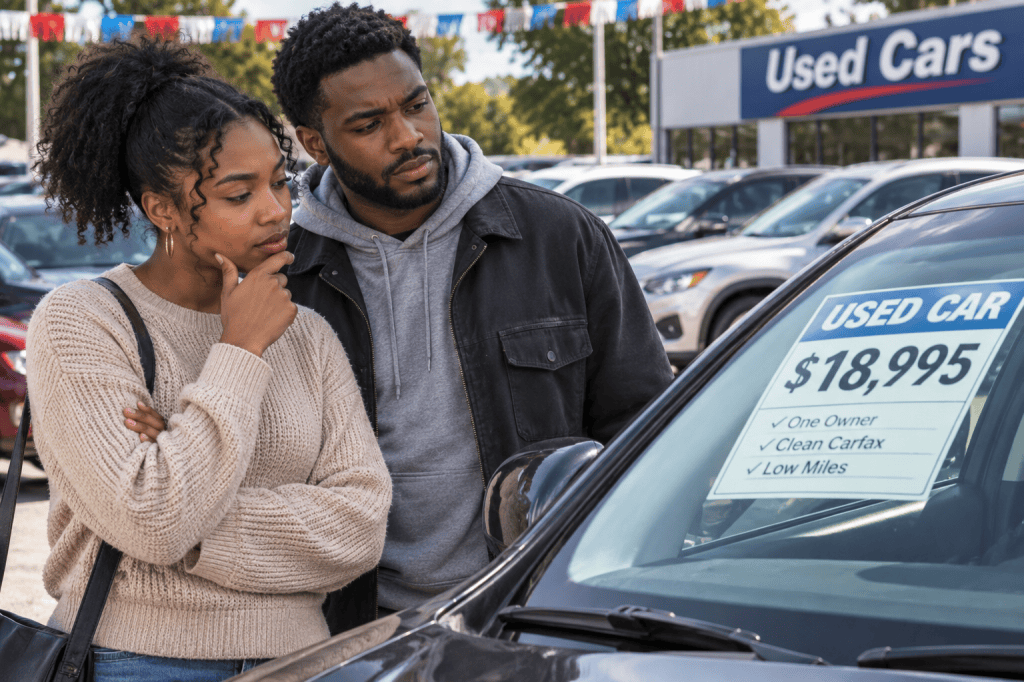
Image created by ChatGPT

Because people are naturally suspicious that an individual selling a car may not provide an honest account of the car’s history, many people will only buy a used car from a dealer. Dealers, of course, will know more about the true condition of a car than you will as a buyer. But unlike an individual who will likely sell a car only once every few years, most used car dealers intend to stay in business indefinitely, so their reputation for being honest is important to them. Dealers can also offer warranties on their cars, which typically cover needed repairs to the engine, transmission, or other specific components during the period until the warranty expires.

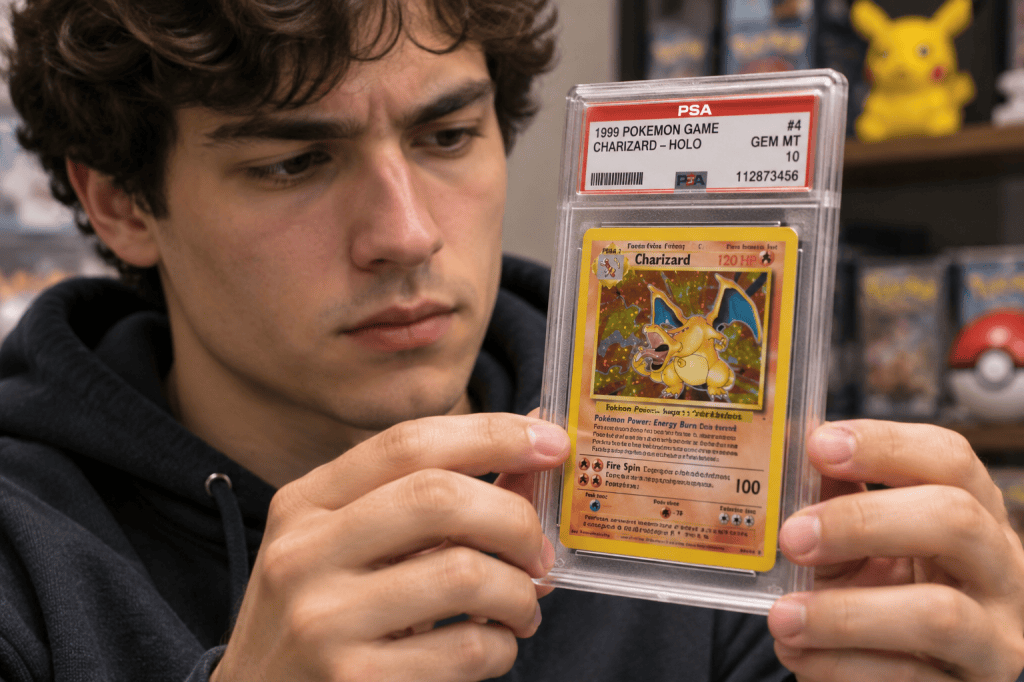
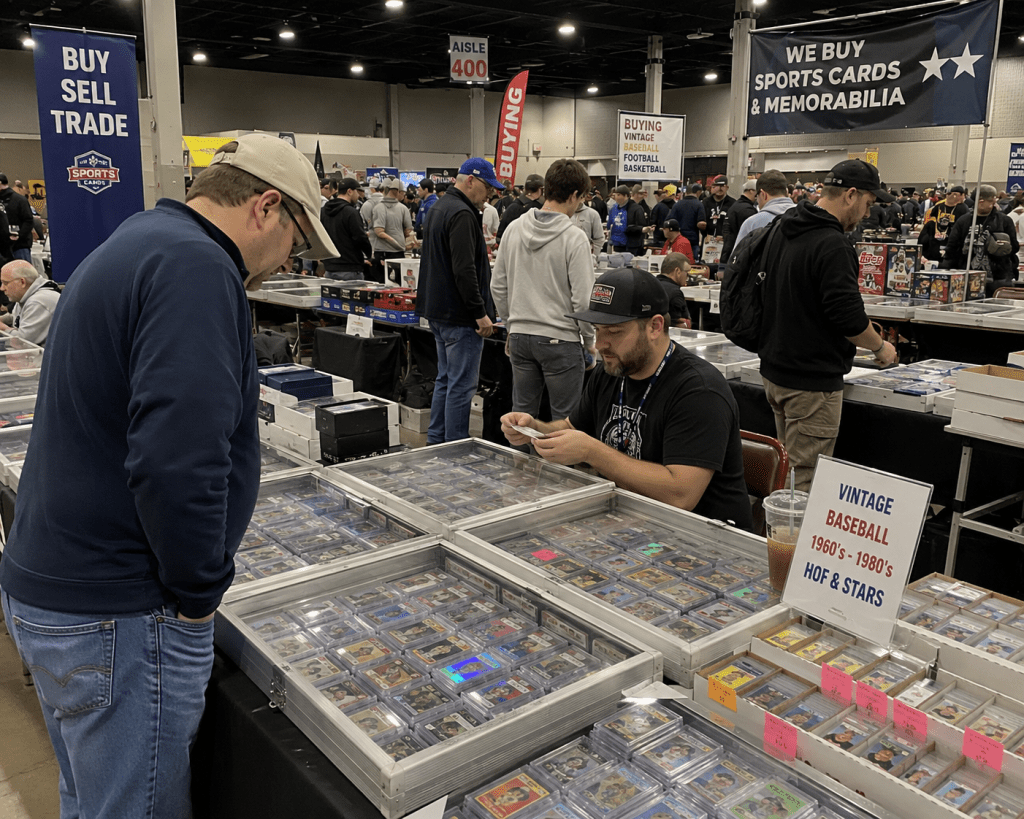
The market for collectibles is also subject to adverse selection. In recent years, there has been a surge in buying and selling sports cards and trading card game (TCG) cards, such as Pokémon and Magic: The Gathering cards. The value of collectible cards being sold has recently risen to $1 billion per month. People buy and sell cards on eBay, at card shows, and on auction sites like Fanatics Collect and Heritage Auctions. Most high-priced cards have been sealed in plastic cases known as slabs and given numerical grades (from 1 to 10) by grading firms like PSA and CGC. Collectors pay much higher prices for cards with higher grades. The difference in price between a card graded 10 and a card graded 9 can be thousands of dollars.
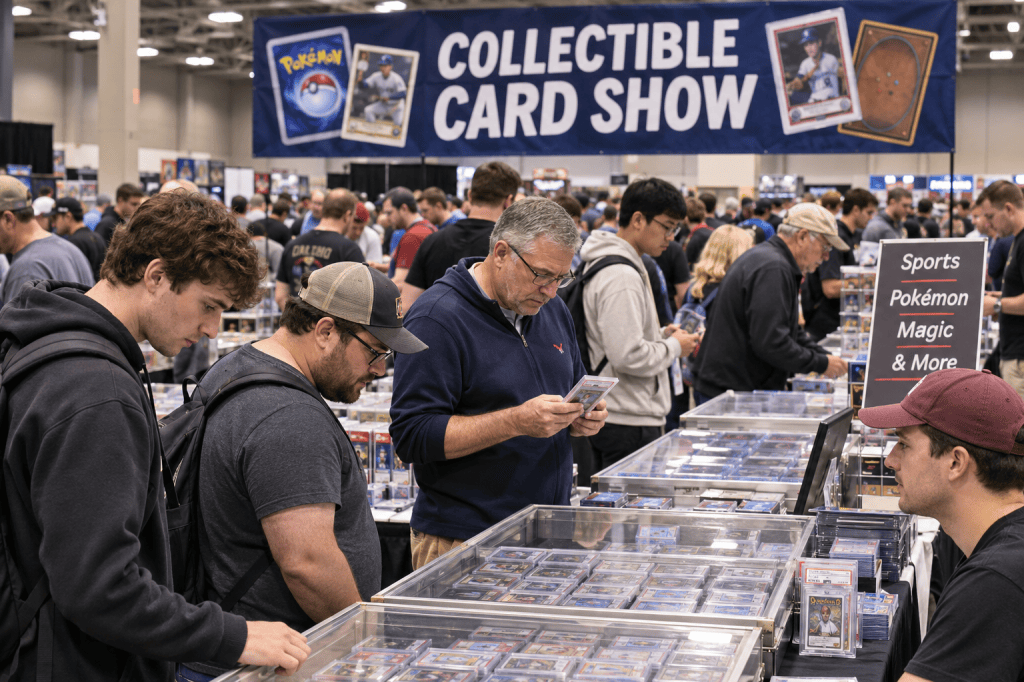
Image created by ChatGPT

One reason that many buyers prefer to buy graded cards rather than raw 0ungraded) cards is to reduce the problem of adverse selection. A seller may claim that a raw card should be given a high grade when it actually has too many flaws to be given that grade. Or a seller may have trimmed the edge of a card to eliminate wear or creasing. Most collectors consider such trimming to be unacceptable and grading companies typically won’t assign a numerical grade to an altered card.

Recently, however, card collectors have faced a new problem: counterfeiting. For example, in October, a Pokémon Dragonite card with a perfect PSA grade of 10 was auctioned on the Fanatics Collect site for $288,000. Grading companies like PSA and CGC give each card a unique certification number. After the auction had close, another collector posted online that he had a Dragonite card, also graded a 10, that had the same certification number. Online discussion of the evidence makes it likely that the auctioned card had a faked label that had been inserted into a slab that originally held a lower-grade card.

An even larger fraud involved a collector who earlier this year paid $660,000 for a rare Pokémon card, that was also in a PSA slab with a grade of 10. After the collector had paid for the card with cryptocurrency, he determined that the label had been faked and his card actually had a lower grade, making it worth much less. Earlier this year, the U.S. Department of Justice convicted someone of “conspiracy to commit wire fraud and wire fraud for engaging in a scheme to defraud customers by selling them sports and Pokémon trading cards with fake grades purportedly issued by Professional Sports Authenticator (‘PSA’).”
Image created by ChatGPT

The rise of counterfeiting has been aided by AI and more sophisticated printing techniques, which make it easier to produce fake labels and fake slabs. The card grading companies have been trying to make their labels harder to counterfeit in the same way that the U.S. Treasury has taken steps over time to make U.S. currency harder to counterfeit.

Counterfeiting has increased the problem of adverse selection in the market for collectible cards. A card in what appears to be a grading company’s holder may not actually have been authenticated and assigned that grade by the company. If buyers cannot distinguish genuinely graded cards from fraudulent slabs, they may lower the prices they offer, making owners of genuine high-grade cards less willing to sell. Private transactions, such as the one in which a collector paid $660,000 in cryptocurrency for what turned out to be a card with a fake label have become more hazardous.

Car dealers have reduced adverse selection in the market for used cars, and card grading companies have reduced adverse selection in the market for collectible cards. Auction sites such as Fanatics Collect, Heritage, and eBay can provide some protection against the adverse selection posed by counterfeit cards and counterfeit labels because, in principle, the auctions sites will refund money to the winner of an auction if the card turns out to be counterfeit. For this reason, we would expect that more buying and selling, particularly of high-value cards, will move from private transactions to auction sites.
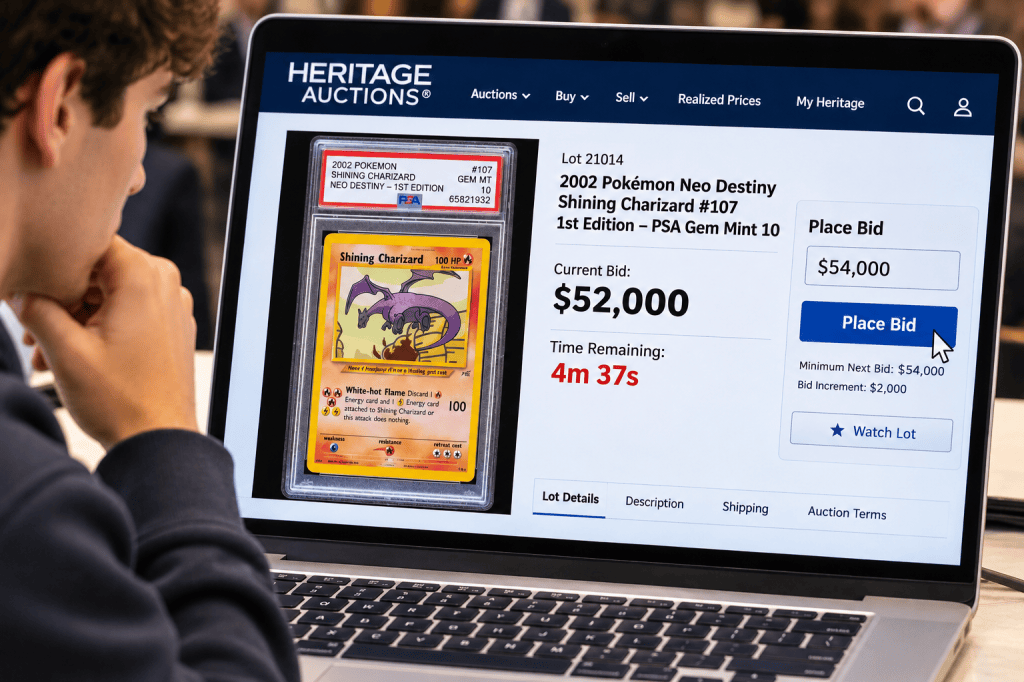
Image created by ChatGPT

But the refund guarantees of auction houses currently have some limitations. For instance, they typically allow returns only during a narrow window, often 30 days, and can declare that third-party graded material is sold “as-is,” which, if strictly enforced, would mean that a purchase of a counterfeit card would not be refunded. Going forward, though, auction sites have an incentive to make their guarantees more comprehensive in order to attract more collectors willing to bid on high-value cards. The higher the auction price, the higher the fees auction houses can collect from buyers and sellers.
AI Analyzes an Economic Puzzle

Image generated by ChatGPT

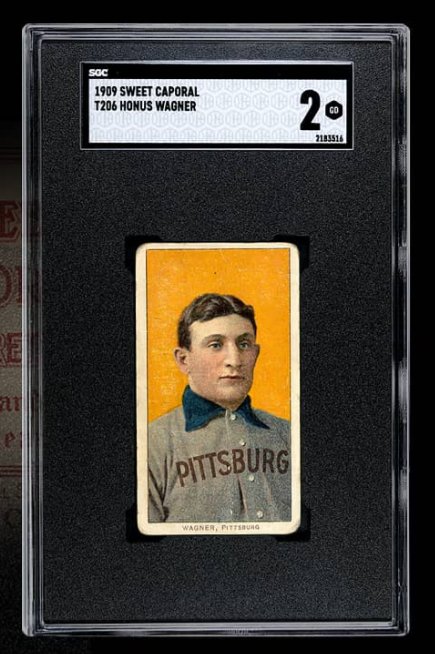
People have collected sports cards for decades. For many years, the most sought-after and highest-priced example was a baseball card featuring Pittsburgh Pirates shortstop Honus Wagner. In the early twentieth century, baseball cards were often included in packs of cigarettes. In 1909, each pack of Sweet Caporal Cigarettes included a baseball card from what collectors call the T206 set. Although Wagner was a major star, relatively few of his cards were issued. That may have been because he was opposed to tobacco use and didn’t want his card to help sell cigarettes or because the tobacco company declined to pay him the fee he required. 

There are probably only 50 to 60 Wagner cards in existence. In August 2022, the Wagner card shown below sold at auction for $7.25 million, which was at the time a record.   

Image from goldin.co

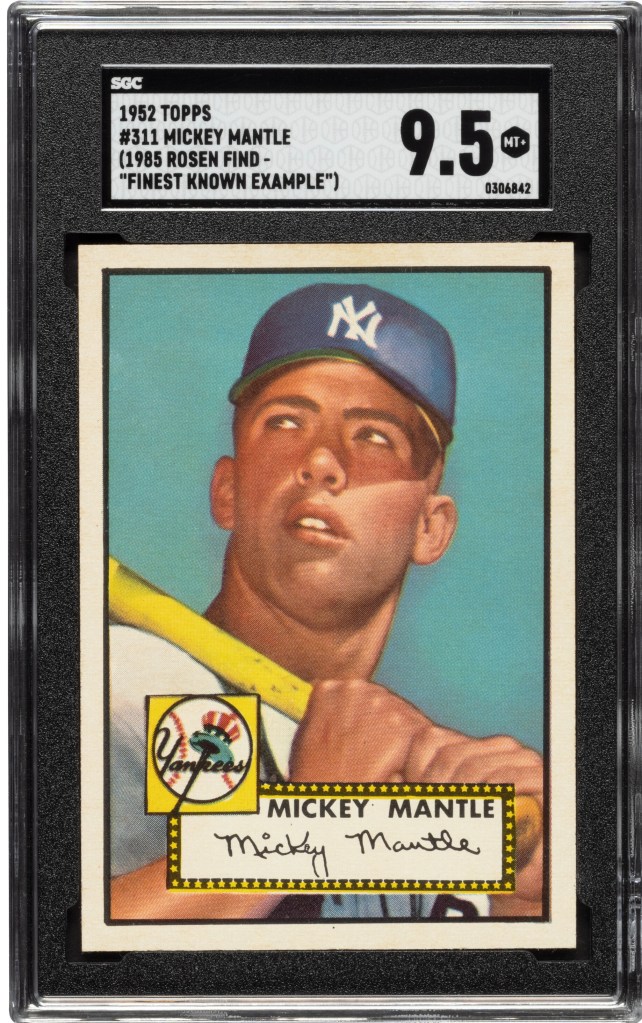
This record was broken a few days later when the Topps rookie card for New York Yankees outfielder Mickey Mantle sold for $12.6 million.

Image from ha.com

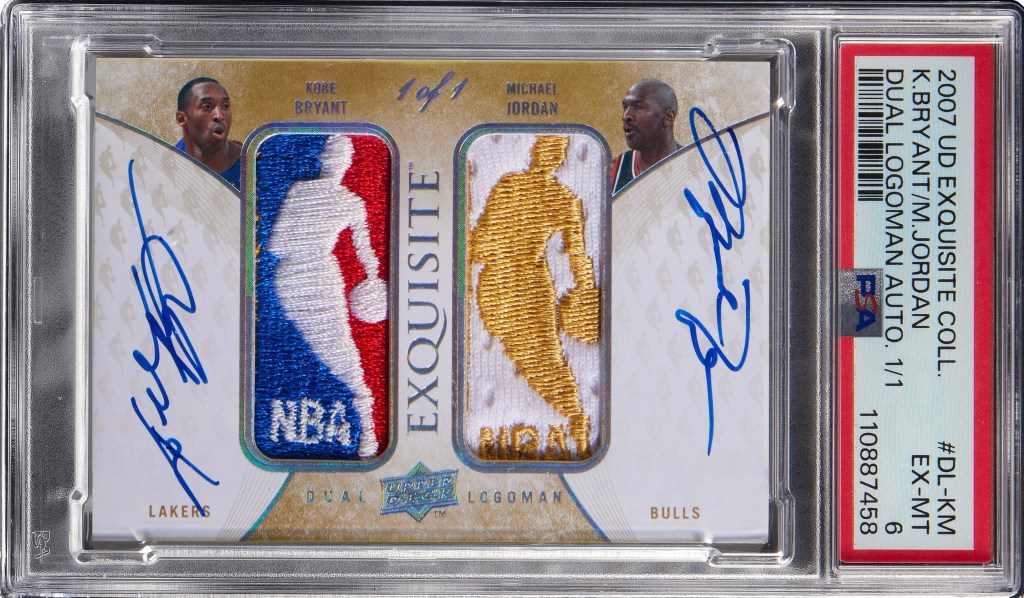
A new record as the highest-priced sports card was set in August 2025, when a card featuring basketball stars Michael Jordan and Kobe Bryant sold for $12.932 million.

Image from ha.com

In recent years, collecting cards from trading card games (TCG) such as Magic: The Gathering, Yu-Gi-Oh!, and, especially, Pokémon has become increasingly popular. Collectors pay higher prices for cards that are in nicer condition. Accordingly, many collectors and dealers submit cards to grading companies that assign the cards a numerical grade, with 10 being the highest grade. The leading card grading company is Professional Sports Authenticator (PSA). Despite its name, PSA now grades more TCG cards than sports card. In 2025, PSA graded 11.5 million TCG cards and 7.7 million sports cards.

In February of this year, a rare PSA-graded 1998 Japanese Pikachu Illustrator Pokémon card with a perfect grade of 10 sold for $16.492 million.

Image from goldin.co

The increasing popularity of collecting TCG cards and the publicity from media reports of the high sales prices of some cards has led to a surge in submissions to card grading companies. PSA is the largest card grading company, grading nearly four times as many cards as its closest competitor. Card grading fees increase with the market value of the card being graded. PSA charges significantly higher prices than its competitors. Collectors are apparently willing to pay the higher prices because PSA-graded cards often sell for higher prices than do cards graded by competitors.

On May 28, PSA surprised many card collectors by announcing that its backlog of cards collectors had submitted but that the company had not yet graded had reached 10 million. As a result, the company stated it was no longer accepting new submissions of lower priced cards. (Cards submitted to its Value Bulk, Value, Value Plus, and Value Max tiers.) The company described the policy as a “temporary pause” that would remain in place until its backlog of ungraded cards had declined to 5 million. PSA estimated that it would take four months to reach that target.

Why did PSA allow its backlog of ungraded cards to grow to 10 million? The backlog is an indication that at the prices it was charging, the quantity of its grading services demanded was much greater than the quantity of grading services it could supply with its existing workforce and grading equipment. Why, then, didn’t it raise its prices to reduce the quantity of its grading services demanded?

In Microeconomics, Chapter 10, Section 10.3, we describe several examples of firms being a situation similar to the one PSA finds itself in. In these situations, firms choose not to raise their prices even though doing so would seem to increase their profits. As we discuss in that chapter, the key reason firms don’t raise prices is they believe their customers might see the price increases as being unfair.

We thought it would be interesting to ask ChatGPT to analyze why PSA didn’t raise its prices when faced with a rapidly expanding backlog of ungraded cards. Here’s ChatGPT’s—lengthy!—answer to this economic puzzle:

 Image generated by ChatGPT

They probably could have raised price enough to slow submissions, but that would not have solved the whole problem PSA was trying to solve.
In the current 2026 pause, PSA said Value Bulk, Value, Value Plus, and Value Max submissions were being paused because a surge added 1.6 million cards and pushed the active backlog toward 10 million; PSA’s stated goal is to reduce that backlog to 5 million before reopening those tiers. In other words, the target was not “new submissions = grading capacity.” The target was new submissions well below capacity so the existing queue could shrink.


The clean economic answer is:

1. A market-clearing price would only stop the backlog from getting worse.
Suppose PSA can grade 90,000 cards per day, a capacity figure PSA itself recently gave for global output. If they priced submissions so exactly 90,000 new cards arrived per day, the backlog would not fall; it would stay stuck. To reduce a 10-million-card backlog to 5 million, they need throughput to exceed incoming volume by millions of cards over the pause period. That means they needed rationing that was stronger than ordinary price clearing.

2. They actually did use price rationing, just in a blunt tiered way.
PSA did not close everything. It paused the lower-priced value tiers and left Regular, Express, Super Express, Walk-Through, and premium services open. PSA’s own pricing page shows Regular at $79.99/card, Express at $149/card, Super Express at $349/card, Walk-Through at $599/card, and premium tiers much higher. Baseball America summarized the effect as PSA temporarily pausing all card grading tiers under $80. So one way to read the move is: PSA effectively raised the minimum direct price for new card grading to the Regular tier, while refusing to call the paused Value tiers “available at a surge price.”

3. The demand curve was probably unstable and hard to estimate.
A normal market-clearing price assumes the firm can predict how many units will arrive at each price. PSA’s demand was not behaving smoothly. In 2021, after a price increase, PSA still reported receiving more cards in three days than it had received in the prior three months. In 2026, PSA said updated turnaround/service announcements were followed by another rapid demand spike. In that environment, “raise the price until volume equals capacity” is not simple, because each price change can trigger a rush, panic submissions, dealer behavior, and speculation.

4. A huge price increase would damage the brand more than a pause.
If PSA had said, “Value Bulk is still open, but now it costs $80, $120, or $200 per card,” many collectors would view that as gouging, especially because value-tier grading is used for lower-value cards. A pause lets PSA say, “we are protecting turnaround times and existing customers,” rather than “we are monetizing a bottleneck.” PSA explicitly framed the 2026 pause as a way to avoid compromising existing orders and to focus on cards already in its care. 

5. Grading quality is part of the product.
PSA is not just selling a slot in a queue; it is selling trust in the grade. If a backlog forces rushed hiring, rushed training, overloaded receiving, or inconsistent review, the long-term asset — confidence in PSA 10, PSA 9, etc. — can be worth more than the short-term revenue from accepting every card at a higher price. PSA’s own statement tied the pause to protecting the “integrity of the PSA standard.” 

6. A pause is easier to reverse than a surge-price regime.
A temporary stop says: “These tiers are closed until backlog conditions improve.” A giant price hike creates other problems: customers anchor to the new price, dealers renegotiate, memberships lose value, submitters complain when prices later fall, and competitors can market PSA as exploitative. PSA instead extended Collectors Club memberships during the pause, which suggests they were trying to preserve customer goodwill while reducing intake. 

So the best answer is: because the bottleneck was a stock problem, not just a flow problem. Raising prices enough to make new submissions equal daily capacity would still leave the backlog in place. To drain the backlog, PSA needed submissions below capacity; pausing the cheapest/highest-volume tiers achieved that more predictably, while keeping high-value urgent tiers open and avoiding the optics of extreme surge pricing.