
Image created by ChatGPT
Sellers usually know more than buyers. The classic example is the used car market, analyzed by Nobel laureate George Akerlof in his classic academic paper, “The Market for ‘Lemons.'” As we discuss in Microeconomics, Chapter 7, Section 7.3 (Macroeconomics, Chapter 5, Section 5.3), the sellers of used cars know how well they have maintained their cars and whether they are reliable, but the buyers do not have a;; of this information and so have trouble distinguishing reliable used cars from unreliable ones. If potential buyers of used cars know that they will have difficulty distinguishing good used cars from bad used cars, or “lemons,” they will take this fact into account in the prices they are willing to pay.

Image created by ChatGPT
In this situation, buyers will generally offer a price somewhere between the price they would be willing to pay for a good car and the price they would be willing to pay for a lemon. Given that buyers don’t know whether any particular car offered for sale is a good car or a lemon, the price they offer to pay seems reasonable. But the sellers do know whether the cars they are offering are good cars or lemons. Some sellers of good cars will be reluctant to accept a price that is below the value of their car. Sellers of lemons, though, will be happy to accept a price that is above the value of their car. As some owners of good cars withdraw from the market, the average quality of the cars offered for sale falls. Buyers face adverse selection: Low-quality cars become disproportionately likely to be offered for sale.
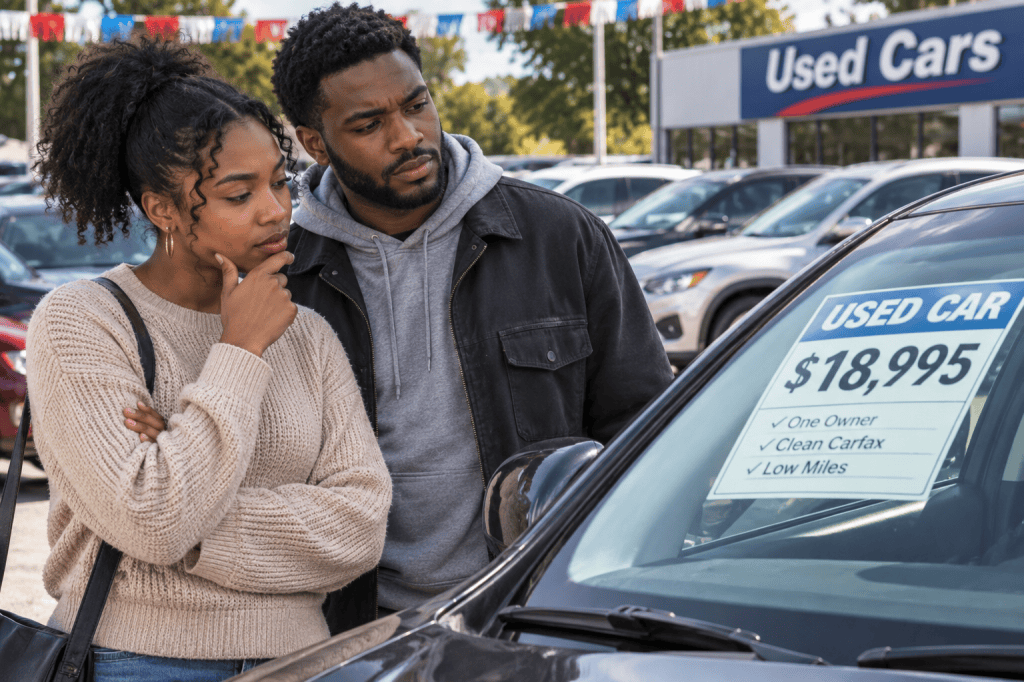
Image created by ChatGPT
Because people are naturally suspicious that an individual selling a car may not provide an honest account of the car’s history, many people will only buy a used car from a dealer. Dealers, of course, will know more about the true condition of a car than you will as a buyer. But unlike an individual who will likely sell a car only once every few years, most used car dealers intend to stay in business indefinitely, so their reputation for being honest is important to them. Dealers can also offer warranties on their cars, which typically cover needed repairs to the engine, transmission, or other specific components during the period until the warranty expires.
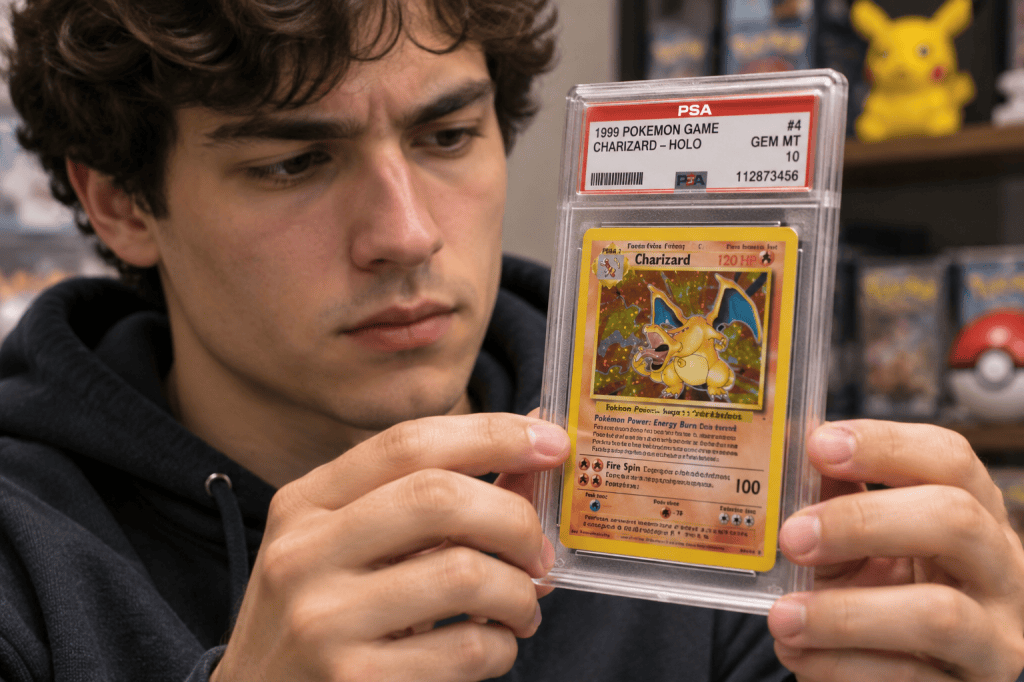
The market for collectibles is also subject to adverse selection. In recent years, there has been a surge in buying and selling sports cards and trading card game (TCG) cards, such as Pokémon and Magic: The Gathering cards. The value of collectible cards being sold has recently risen to $1 billion per month. People buy and sell cards on eBay, at card shows, and on auction sites like Fanatics Collect and Heritage Auctions. Most high-priced cards have been sealed in plastic cases known as slabs and given numerical grades (from 1 to 10) by grading firms like PSA and CGC. Collectors pay much higher prices for cards with higher grades. The difference in price between a card graded 10 and a card graded 9 can be thousands of dollars.
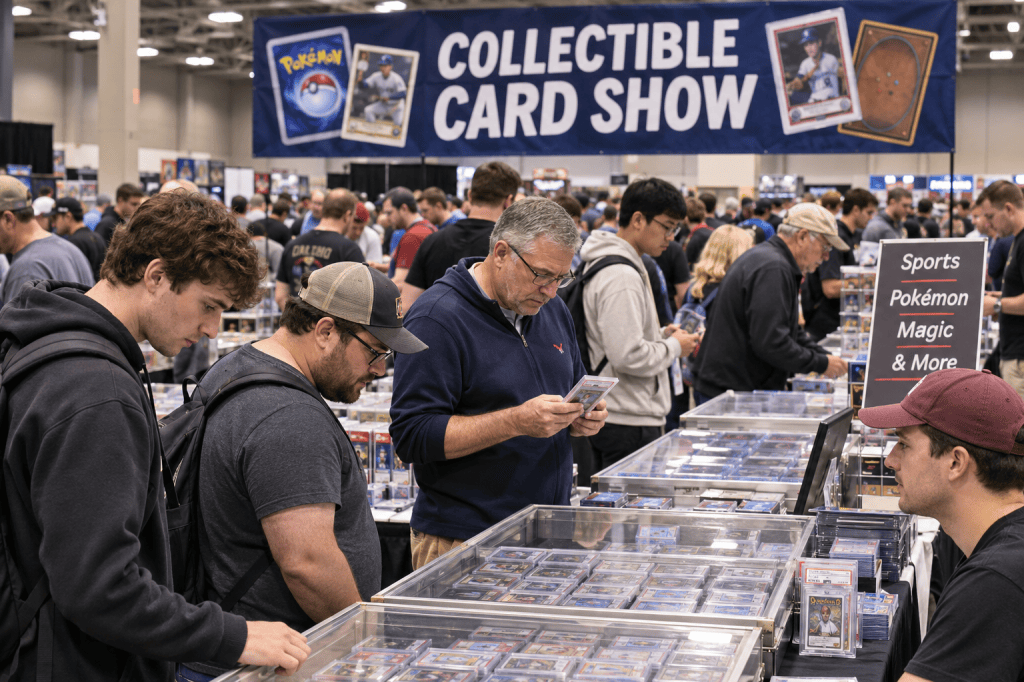
Image created by ChatGPT
One reason that many buyers prefer to buy graded cards rather than raw 0ungraded) cards is to reduce the problem of adverse selection. A seller may claim that a raw card should be given a high grade when it actually has too many flaws to be given that grade. Or a seller may have trimmed the edge of a card to eliminate wear or creasing. Most collectors consider such trimming to be unacceptable and grading companies typically won’t assign a numerical grade to an altered card.
Recently, however, card collectors have faced a new problem: counterfeiting. For example, in October, a Pokémon Dragonite card with a perfect PSA grade of 10 was auctioned on the Fanatics Collect site for $288,000. Grading companies like PSA and CGC give each card a unique certification number. After the auction had close, another collector posted online that he had a Dragonite card, also graded a 10, that had the same certification number. Online discussion of the evidence makes it likely that the auctioned card had a faked label that had been inserted into a slab that originally held a lower-grade card.
An even larger fraud involved a collector who earlier this year paid $660,000 for a rare Pokémon card, that was also in a PSA slab with a grade of 10. After the collector had paid for the card with cryptocurrency, he determined that the label had been faked and his card actually had a lower grade, making it worth much less. Earlier this year, the U.S. Department of Justice convicted someone of “conspiracy to commit wire fraud and wire fraud for engaging in a scheme to defraud customers by selling them sports and Pokémon trading cards with fake grades purportedly issued by Professional Sports Authenticator (‘PSA’).”

Image created by ChatGPT
The rise of counterfeiting has been aided by AI and more sophisticated printing techniques, which make it easier to produce fake labels and fake slabs. The card grading companies have been trying to make their labels harder to counterfeit in the same way that the U.S. Treasury has taken steps over time to make U.S. currency harder to counterfeit.
Counterfeiting has increased the problem of adverse selection in the market for collectible cards. A card in what appears to be a grading company’s holder may not actually have been authenticated and assigned that grade by the company. If buyers cannot distinguish genuinely graded cards from fraudulent slabs, they may lower the prices they offer, making owners of genuine high-grade cards less willing to sell. Private transactions, such as the one in which a collector paid $660,000 in cryptocurrency for what turned out to be a card with a fake label have become more hazardous.
Car dealers have reduced adverse selection in the market for used cars, and card grading companies have reduced adverse selection in the market for collectible cards. Auction sites such as Fanatics Collect, Heritage, and eBay can provide some protection against the adverse selection posed by counterfeit cards and counterfeit labels because, in principle, the auctions sites will refund money to the winner of an auction if the card turns out to be counterfeit. For this reason, we would expect that more buying and selling, particularly of high-value cards, will move from private transactions to auction sites.
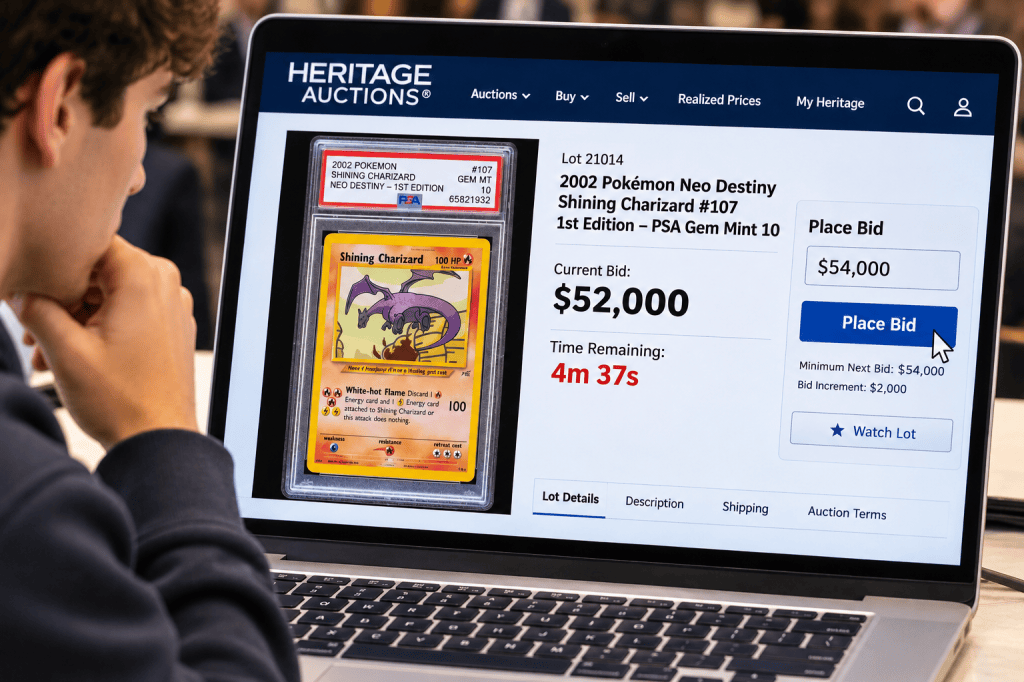
Image created by ChatGPT
But the refund guarantees of auction houses currently have some limitations. For instance, they typically allow returns only during a narrow window, often 30 days, and can declare that third-party graded material is sold “as-is,” which, if strictly enforced, would mean that a purchase of a counterfeit card would not be refunded. Going forward, though, auction sites have an incentive to make their guarantees more comprehensive in order to attract more collectors willing to bid on high-value cards. The higher the auction price, the higher the fees auction houses can collect from buyers and sellers.

