Glenn Is Interviewed by the Financial Times

The Financial Times recently interviewed Glenn. Here is an edited version. The full interview can be found here.

Financial Times (Gillian Tett, editor-at-large for the United States): Gross domestic product data show that the economy is rebounding very fast from the pandemic; the Federal Reserve just said that it doesn’t intend to raise rates any time soon; and President Joe Biden has pledged a massive fiscal package. So what is your forecast for the American economy?

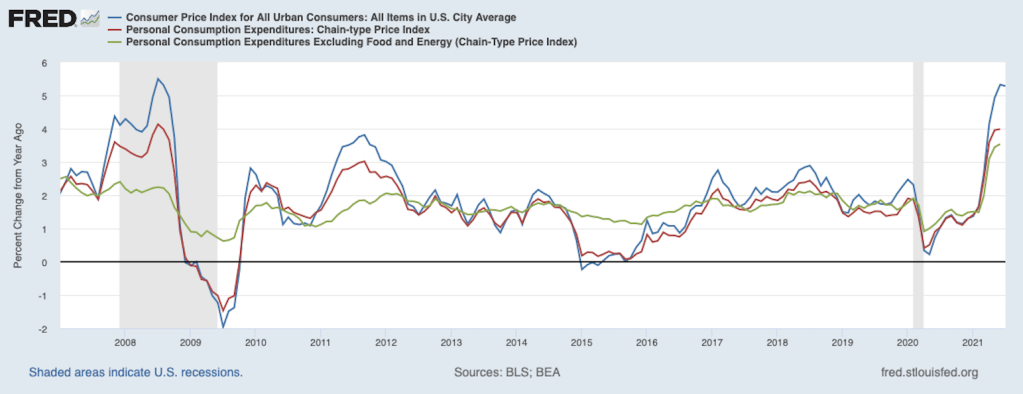
Glenn:  Re-opening as the virus recedes would always lead to a very significant pop in GDP growth. So the near-term is not really the big question. There will certainly be a transitory increase in inflation. But I think the Fed on balance is correct, that boost is likely to be transitory. My worry is when I hear the Fed talk, as its chair Jay Powell has done, about wanting to watch for labor market “re-healing” to finish. The problem in the labor market is [largely] structural. Just running the economy hot by the Fed doesn’t fix that.

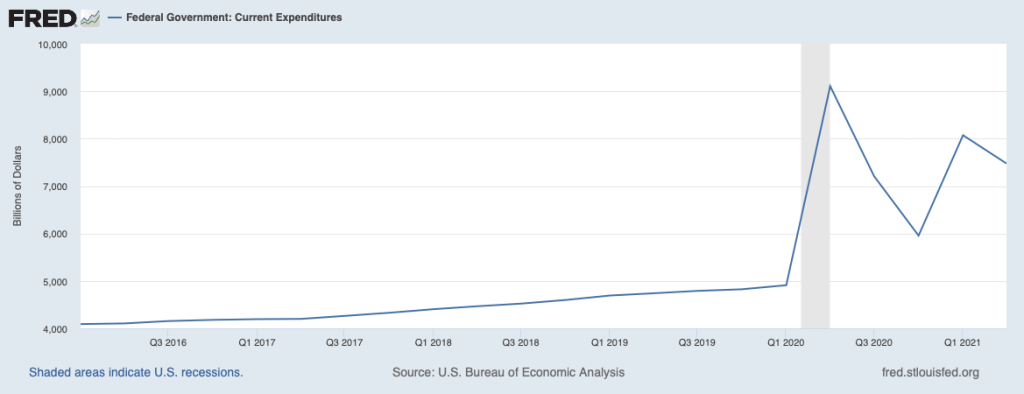
On fiscal policy, this is not just a “boost”.… The American Rescue Plan was intended as stimulus. But the American Jobs Act, the American Families Plan, those are really a remaking of the size of government. It has to be paid for and arithmetically can’t be paid for by taxes on the rich. There’s just not enough there. So the honest conversation with the American people is a matter of public choice: if you want a big government that does what President Biden wants [it to do], you’ll have to pay for it. 

GT: How confident are you that inflation pressures are transitory?

GH: One can never be completely confident, but I think if the Fed had a clearer policy story I could be confident that commodity price increases are transitory. What worries me is the Fed thinking it can lean against structural changes in the labor market with monetary policy. One might worry a bit about inflation risks in the long-term—some of the structural headwinds against inflation to do with demography and growth in the emerging world, particularly in China, are going away. 

GT: Do you think that the Fed should be indicating that it’s willing to raise rates if inflation rises?

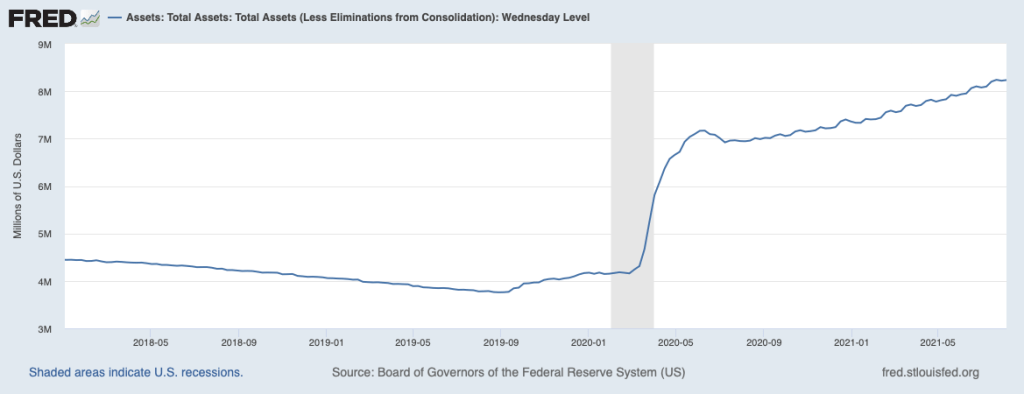
GH: I think the Fed is unlikely to do that. [But] one of the reasons you are seeing implied volatility in rates and credit markets so high relative to equities, is the fear in the bond market that, maybe, the Fed is saying one thing but if backed into the corner could do another. Remember that the Fed bought around half of Treasury issues last year, and owns 40 per cent of all of the outstanding 10-year plus maturity treasuries, so the Fed’s thoughts there, which aren’t really clear to the bond market, are very, very important. 

GT: Larry Summers has said this is way too much [stimulus], way too fast and will create inflation risks. You and Larry don’t often agree, but would you agree on this? 

GH: I would agree on the risk, but it’s [not] the problem that is worrying me the most. What worries me even more is [in trying to] create a government that large . . .  if you want a government that does those things, tax burdens will have to be higher.

If you look at the math on the tax burden, the [proposed] corporate tax increase or capital gains tax increase are not remotely large enough. The other structural thing that worries me is that I do see productivity reductions and investment reductions as a result of these large tax increases. 

GT: Biden said if you are earning less than $400,000 a year you will not see your taxes go up. 

GH: Well, it’s just not true, [neither] in the near-term [nor] the long-term. Take the corporate tax. Many economists have concluded that much of the burden of the corporate tax is borne by workers. In the 1970s and early 1980s, we thought it was capital that bore the burden of the corporate taxes. [But] that is not what economists believe today. So you simply cannot say that people who make less than $400,000 aren’t going to bear a part of the burden of the tax. 

Likewise with capital gains, the president says: “I’m only going after 0.3 per cent of taxpayers,” meaning [those] that make more than a million dollars a year and have capital gains. But those individuals don’t have 0.3 per cent of the capital gains—they likely have the bulk of them. So if there are any effects on risk-taking, on saving and investment, the [risks] are very large.

Those effects are borne by the economy, not by the top 0.3 per cent …. And in the longer term … if you look at the budget math here, there’s going to be a large revenue hole. Somebody has to pay for it. 

GT: Well, what about that “somebody” being companies? 

GH: Let’s put the tax changes into two buckets. On the rates, I don’t think we want to go as high as the president is proposing, certainly not back to the old rates. On the base, president Biden is proposing a tax increase by base broadening—it’s a very, very big change. I expect companies will acknowledge they need to pay some minimum level, but the math isn’t going to add up.

GT: What about taxes under the guise of climate change action, such as a fuel tax or value added tax?

GH: I think it’s a great idea. For years I have supported a carbon tax because I do believe that it is one of the best ways to deal with climate change. I’m very skeptical of subsidies in green things but if you put a price on carbon, businesspeople will rush around and innovate and do it efficiently and it does not have to be regressive .…

About [a value-added tax] VAT—there is no question that if we want the government President Biden is suggesting, you absolutely have to have a VAT.

European states that have much bigger [state sectors] than the American state as a share of GDP are not financed with taxes on capital. In fact, in many European countries capital taxes are lower than they are in the United States. They’re financed by consumption taxes [such as the VAT]. 

GT: Why do you think Biden’s package is undermining productivity? 

GH: Let me just take one step back. Some discussions of secular stagnation come from insufficient aggregate demand. Another school of thought thinks that structurally we have a problem with productivity growth, in terms of the supply side of the economy and the economy’s potential to grow. That is where I’m coming from. The tax plans are definitely anti-investment, as the lack of capital deepening explains low productivity growth and capital gains tax increases can affect risk-taking. There’s certainly nothing to enhance productivity [in Biden’s plans] and a lot to discourage productivity. 

It is not just the tax policy. I worry about a monetary policy that could lead to zombification of firms—an environment of very low interest rates that sustain low-productivity firms. To President Biden’s credit, pieces of what he’s proposing that are true infrastructure could, in fact, raise productivity, but that is a small part of what he’s actually calling infrastructure. 

GT: Are you concerned about a future debt crisis?

GH: Well, we are the reserve currency country, and we are borrowing in our currency, so I think a slow and steady malaise is more likely. To give a practical example, the Medicare trust fund could run out of money within a year or so, social security within five or so years. That will force discussions in Washington as to whether the public may wish to have a government this size. 

GT: So you don’t expect a debt crisis per se because of the reserve currency status?

GH: [Not] at the moment.

GT: Should Republicans be co-operating to create a bipartisan bill? 

GH: You could get bipartisan support for a new “GI bill” to prepare workers to adjust from the Covid world. For example, support in community colleges.

I’m not talking about free community college but supply side support—increasing their capacity to train people. Where you won’t get bipartisan support is [for] the notion that we need to move away from a work-supported social insurance system to a broader cradle-to-grave safety net.

The administration really fuzzed that up by calling it an infrastructure bill. Infrastructure doesn’t have to be just roads and bridges and airports—it could be broadband. But not healthcare. 

GT: Are childcare support and elderly support part of “infrastructure”?

GH: No—those are social spending. 

GT: One of the interesting ways you frame this debate is with the contrast between Keynes and Hayek, i.e. whether you’re trying to prop up the current system or encourage more rapid transformation. What do you mean?

GH: You could think of Covid [in terms of] a Keynesian response — we have a collapse in demand. The Keynesian response is not fanciful. But Hayek would say the new world after Covid isn’t going to look like the old world, so why support every single business? Both are right. We did a good job in policy on the Keynesian part. [But] we’ve done less well [thinking about Hayek]. 

GT: What do you think about Larry Summer’s concept of secular stagnation? 

GH: There’s a scene in Dickens’ A Christmas Carol, when Scrooge asks, [something like] “are these the shadows of things that are or might be?”. I feel the same way about Bob Gordon’s descriptions of the American economy — Larry and Bob are talking about the shadows of things that could be if we have bad enough public policy, going back to the anti-productivity story. But I don’t think they’re inevitable. 

Every businessperson with whom I speak is pretty optimistic about the technology frontier in productivity. If there’s a reason for pessimism, it’s more about the political system’s ability and willingness to let that productivity growth [run free].

GT: Do you think that the Republican party knows what it stands for with economics?

GH: … [An] approach Republicans could take is to go past the neoliberalism to liberalism (with a small L), to Adam Smith. He was anti-mercantilist—that’s what got him angry in The Wealth of Nations—and he was very interested in the ability of everybody in the economy to compete.

So a new Republican agenda might do more to help people compete—that sounds more like Lincoln, or like Roosevelt’s GI bill. In that lies a new agenda. But I don’t see the party really moving in that direction. 

GT: What about the second book of Smith’s, The Theory of Moral Sentiments?

GH: Smith referred to “mutual sympathy”, which today we would call empathy. Forward-leaning businesspeople and business leaders think that way. I don’t see [the environmental, social, and governance] ESG [approach to investing] as somehow an enemy of shareholders—this isn’t Milton Friedman versus socialism—it’s more a matter of what really is in the long-term interest of the firm.

Remember, Smith railed against the British East India Company, which he thought of as a cancer. He thought you had to be very careful in the social framing of corporations. Businesspeople today need to understand the corporate structure is a social gift. In fact, capitalism is a social gift. If the public doesn’t want it, it won’t happen. 

GT: I have a book coming out in a few weeks’ time that stresses this social and cultural aspect of business and finance and economics, and argues that business leaders need to move beyond tunnel vision to use lateral vision. Do you agree with this? 

GH: Yes. When I teach students political economy, I remind them that great thinkers like a Friedman or Hayek or Smith wrote [for] the times in which they lived. Friedman and Hayek were writing in response to a very slovenly and inefficient corporatist economic system and were horrified by fascism. If Ronald Reagan were with us today, I don’t think he would be the 1980s Ronald Reagan. If Friedman and Hayek were with us today, they might have a different view. Context shifts.

GT: Friedman was also operating when people assumed that they could outsource the difficult social decisions to government and when there wasn’t radical transparency and customers, clients and employees couldn’t see exactly what firms were doing. Does that matter?

GH: Yes. If Friedman were here he might correctly remind us that there are big social externalities no one company can fix. But there is no reason businesspeople can’t be leaders. When the Marshall Plan was passed, that was not because Congress in its great wisdom decided to do something. It was because the business community came together and said: “Good Lord, we are going to have communism in western Europe and what’s that going to do to our economic system?” They pushed Congress. I understand that [today business is] afraid. But it’s not an excuse not to act. At many companies, their own employees are going to put pressure [on them to act]. 

GT: You are starting to see a level of company collaboration which was unimaginable when we had Thatcherism and Reaganism. Will this last? 

GH: I do [think so] and Hayek would have celebrated this co-ordinated response because it bubbled up from the bottom. If you compare the production of vaccines, which was largely a private-sector activity, to the distribution of vaccines, which was more a public-sector activity, I think we know which one seemed to work better.

There are things that could help that—imagine if Biden put applied research centers all around the country that were linked with universities. That might help companies fix localities, as well as solving big problems like vaccines. 

GT: Are you concerned that we have an ESG bubble?

GH: I am, in several aspects. We are running the risk of industrial policy and rent seeking, with just subsidizing “green things.” I also worry about how CEOs can deal with this—you don’t want the CEO spending half of his or her day responding to social concerns.

GT: What about protectionism? Can the Republicans present an alternative voice on this? 

GH: I hope so, but I’m not sure. Like almost all economists … I believe in free trade. So why is something that is obvious in Econ 101 not so popular with the public?

I think for two reasons. One is whenever your Econ 101 professor talked about the gains from trade, he or she always [had] the idea that there would be losers, but compensation would somehow occur—and it hasn’t.

[Second] free trade is one of those examples, like the old classical gold standard, of a system that’s outside-in. You have to sign up for the rules of the game and then you just adjust. I think we need to go back to a period that says, look, we do need to understand domestic constituencies. That could mean much more support for training, it could be wage insurance, it could be lots of things rather than just saying free trade. 

GT: So it’s about trying to talk about free trade with both parts of Adam Smith. 

GH: Yes, exactly. Even Smith, who was the champion for openness, would not have countenanced whole areas just being left behind. Smith talked a lot about places—he said something like a man is a sort of luggage that’s hard to move, meaning you really have to look after places, not just jobs . . . its culture. 

GT: Hey, anthropology can mingle with economics! 

GH: Exactly—two social sciences, peas in a pod. 

GT: So what’s happening to the economics profession? With issues like [the debate around Larry Summers’ criticism of Biden’s policies] are we seeing a tribal warfare break out between economists? Is there a rethink of economics? Is Biden moving away from them?

GH: Well, let me start with some good news: the young stars in the [economics] profession today tend to be people who are talking about big problems with new tools and techniques, ranging from development to monetary policy to labor markets. I think that’s entirely healthy. 

I think the government needs people who have big macro views [too]. If I were in Janet Yellen’s shoes, I’d want to be talking to economists who could continue to give me that perspective, but also get micro perspectives from labor and financial markets. So there needn’t be a war. [But] I do worry from the way the Biden administration is talking about policies that economists just aren’t very involved at all. That’s not the first administration I’ve seen that happen—but it is a concern for the economics profession. 

Is the Natural Rate of Unemployment the Best Guide to Monetary Policy? The Fed’s New Monetary Policy Strategy

In response to the 2007-2009 financial crisis, in December 2008, the Federal Open Market Committee effectively cut its target for the federal funds to zero where it remained during the first six years of the recovery. In December 2015, Fed Chair Janet Yellen and the FOMC began the process of normalizing monetary policy by raising the target for the federal funds rate to 0.25 to 0.50 percent.

The FOMC raised the target several more times during the following years (Jerome Powell succeeded Janet Yellen as Fed Chair in February 2018) until it reached 2.25 to 2.50 percent in December 2018. In Chapter 27 of the textbook we discuss the fact that the experience of the Great Inlfation that had lasted from the late 1960s to the early 1980s had convinced many economists inside and outside of the Fed that if the unemployment rate declined below the natural rate of unemployment (also referred to as the nonaccelerating inflation rate of unemployment, or NAIRU), the inflation rate was likely to accelerate unless the FOMC increased its target for the federal funds rate. The actions the FOMC took starting in December 2015 were consistent with this view.

At the December 2015 meeting, the FOMC members gave their estimates of several key economic variables, including the natural rate of unemployment. At the time of the meeting, the unemployment rate was 5.0 percent. The average of the FOMC members’ estimates of the natural rate of unemployment was 4.9 percent. The inflation rate in December 2015 was 1.2 percent—well below the Fed’s target inflation rate of 2 percent. Although it might seem that with such a low inflation rate, the FOMC should not have been increasing the federal funds rate target, doing so was consistent with one of the lessons from the Great Inflation: Because monetary policy affects the economy with a lag, it’s important for the Fed to react before inflation begins to increase and a higher inflation rate becomes embedded in the economy. With many FOMC members believing that the NAIRU had been reached in December 2015, raising the federal funds rate from effectively zero seemed like an appropriate policy.

At least until the end of 2018, some members of the FOMC indicated publicly that they still believed that the Fed should pay close attention to the relationship between the natural rate of unemployment and the actual rate of unemployment. For example, in a speech delivered in December 2018, Raphael Bostic, president of the Federal Reserve Bank of Atlanta, who was serving that year on the FOMC, made the following points:

“[P]eriods of time when the actual unemployment rate fell below what the U.S. Congressional Budget Office now estimates as the so-called natural rate of unemployment … I refer to … as “high-pressure” periods. … Dating back to 1960, every high-pressure period ended in a recession. And all but one recession was preceded by a high-pressure period….

One potential consequence of overheating is that inflationary pressures inevitably build up, leading the central bank to take a much more “muscular” stance of policy at the end of these high-pressure periods to combat rising nominal pressures. Economic weakness follows. You might argue that the simple answer is to not respond so aggressively to building signs of inflation, but that would entail risks that few responsible central bankers would accept. It is true that the Fed and most other advanced-economy central banks have the luxury of solid credibility for achieving and maintaining their price stability goals. But we shouldn’t forget that such credibility was hard won. Inflation expectations are reasonably stable for now, but we know little about how far the scales can tip before it is no longer so.”

Bostic also noted in the speech that “it is very difficult to determine when the economy is actually overheating.” One indication of that difficulty is given by the following table, which shows how the average estimate by FOMC members of the natural rate of unemployment declined each year during the period in which they were raising the target for the federal funds rate. 

December 20154.9%
December 20164.8%
December 20174.7%
December 20184.4%
December 20194.1%
Federal Open Market Committee Forecasts of the Natural Rate of Unemployment, 2015-2019

As we discuss in Chapter 19, Section 19.1 of the textbook, because of problems in measuring the actual unemployment rate and in estimating the natural rate of unemployment, some economists inside and outside of the Fed have argued that the employment-population ratio for prime age workers is a better measure of the state of the labor market.  The following shows movements in the employment-population ratio for workers aged 25 to 54 between January 2000, when the ratio was near its post-World War II high, and February 2021. 

Employment-Population Ratio for Worker Aged 25 to 54, 2000-2021

The figure shows that in December 2015, when the Fed began to raise its target for the federal funds rate and when the average estimate of the FOMC members indicated that unemployment was at its natural rate, the employment-population rate was still 4.5 percentage points below its level of early 2000. The FOMC members do not report individual forecasts of the employment-population ratio. If they had focused on that measure rather than on the unemployment rate, they may have concluded that there was more slack in the labor market and, therefore, have been less concerned that inflation might be about to significantly increase.

In 2019, the Fed began to cut its target for the federal funds rate as the growth of real GDP slowed. In March 2020, following the start of the Covid-19 pandemic, the Fed cut the target back to 0 to 0.25 percent. During that time, some members of the FOMC and some economists outside of the Fed concluded that the Fed may have made a mistake by raising the target for the federal funds rate multiple times between 2015 and 2018. For example, Bostic in a speech in November 2020, noted that “the actual unemployment rate exceeded estimates of the NAIRU by an average of 0.8 percentage points each year” between 1979 and 2019. He concluded that “If estimates of the NAIRU are actually too conservative, as many would argue they have been …unemployment could have averaged one to two percentage points lower” between 1979 and 2019, which he argues would have been a particular benefit to black workers. In a speech in September 2020, Lael Brainard, a member of the Fed’s Board of Governors, noted that the Fed’s previous approach of making policy less expansionary “when the unemployment rate nears the [natural] rate in anticipation of high inflation that is unlikely to materialize risks an unwanted loss of opportunity for many Americans.”  

in August 2020, the Fed announced the results of a review of its monetary policy. In a speech that accompanied the statement Fed Chair Jerome Powell noted that in attempting to achieve its mandate of high employment, the Fed faces the difficulty that “the maximum level of employment is not directly measurable and changes over time for reasons unrelated to monetary policy. The significant shifts in estimates of the natural rate of unemployment over the past decade reinforce this point.” Powell noted that the in the Fed’s new monetary policy statement, policy will depend on the FOMC’s: “’assessments of the shortfalls of employment from its maximum level’ rather than by ‘deviations from its maximum level’ as in our previous statement. This change may appear subtle, but it reflects our view that a robust job market can be sustained without causing an outbreak of inflation.” 

At this point, the details of how the Fed’s new monetary policy strategy will be implemented are still uncertain. But it seems clear that the Fed has ended its approach dating back to the early 1980s of raising its target for the federal funds rate when the unemployment rate declined to or below the FOMC’s estimate of the natural rate of unemployment. Particularly after Congress and the Biden administration passed the $1.9 trillion American Rescue Plan in March 2021, some economists wondered whether the Fed’s new strategy might make it harder to counter an increase in inflation without pushing the U.S. economy into a recession. For instance, Olivier Blanchard of the Peterson Institute for International Economics argued that the combination of very expansionary fiscal and monetary policies might lead to a situation similar to the late 1960s:

“From 1961 to 1967, the Kennedy and Johnson administrations ran the economy above potential [GDP], leading to a steady decrease in the unemployment rate down to less than 4 percent. Inflation increased but not very much, from 1 percent to just below 3 percent, suggesting to many a permanent trade-off between inflation and unemployment. In 1967, however, inflation expectations started adjusting, and by 1969, inflation had increased to close to 6 percent and was then seen as a major issue. Fiscal and monetary policies tightened, leading to a recession from the end of 1969 to the end of 1970.”

Fed Chair Jerome Powell seems confident, however, that any increase in inflation will only be temporary. In testifying before Congress, he stated that: “We might see some upward pressure on prices [as a result of expansionary monetary and fiscal policy]. Our best view is that the effect on inflation will be neither particularly large nor persistent.” 

Time will tell which side in what one economic columnist called the Great Overheating Debate of 2021 will turn out to be correct.

Sources: Neil Irwin, “If the Economy Overheats, How Will We Know?” New York Times, March 24, 2012; Olivier Blanchard, “In Defense of Concerns over the $1.9 Trillion Relief Plan,”  piie.com, February 18, 2021; Paul Kiernan and Kate Davidson, “Powell Says Stimulus Package Isn’t Likely to Fuel Unwelcome Inflation,” Wall Street Journal, March 23, 2021; Federal Open Market Committee, “Minutes,” various dates; Lael Brainard, “Bringing the Statement on Longer-Run Goals and Monetary Policy Strategy into Alignment with Longer-Run Changes in the Economy,” September 1, 2020; Raphael Bostic, “Views on the Economic and Policy Outlook,”  December 6, 2018; Raphael Bostic, “Racism and the Economy: Focus on Employment,” November 17, 2020; Jerome Powell, “New Economic Challenges and the Fed’s Monetary Policy Review,” August 27, 2020; and Federal Reserve Bank of St. Louis. 

Deciphering the April Employment Report

On Friday May 7, 2021, the Bureau of Labor Statistics (BLS) released its monthly “Employment Situation Report.”  The BLS estimated that nonfarm payroll employment had increased by 266,000 from March to April. The average forecast of the Wall Street Journal’s panel of economists was for a much higher increase in employment of  1 million. The unemployment rate increased from 6.0% to 6.1%, rather than falling to 5.8% as economists had forecast.  

Keep in mind that employment data is subject to revisions. What does this employment report tell us about the state of the economy and the state of the labor market?  First, it’s always worth remembering that the BLS revises its employment estimates at least three times in subsequent months as more complete data become available. (The unemployment rate estimates are calculated in a separate survey of households and are not revised other than as seasonal adjustment factors change.)

Employment data gathered during and immediately after a recession are particularly subject to large revisions. In the principles textbook, Chapter 19, Section 19.1 includes a discussion of the substantial revisions the BLS made to its initial employment estimates during the 2007–2009 recession.  Today’s report noted that the increase in employment from February to March, which had originally been reported as 916,000 had been revised downward to 770,000.

Explaining the slow increase in employment. So, the estimated employment increase the BLS reported today may well end up being revised upward. But the revisions will almost certainly leave the increase far short of the forecast increase of 1 million.  We can discuss two types of explanations for this relatively disappointing employment increase: 1) factors affecting the demand for labor, and 2) factors affecting the supply of labor.

The demand for labor.  During the recovery from a typical recession, increases in labor demand may lag behind increases in production, limiting employment increases and causing temporary increases in the unemployment rate.  Employers may be reluctant to hire more workers if the employers are uncertain that the increase in demand for their products will be maintained. During a recession, firms also typically reduce employment by less than they reduce output because searching for workers during a recovery is costly and because they may fear that if they lay off their most productive workers, these workers may accept jobs at competing firms. As a result, during the early months of a recovery, firms are in position to increase output by more than they increase employment. That this outcome occurred during the first months of 2021 is indicated by the fact that productivity increased 5.4% during the first quarter of 2021, as firms increased output by 8.4% but hours worked by only 2.9%.

The recession caused by the pandemic was unusual in that many businesses decreased their supply of goods and services not because of a decline in consumer demand but because of government social distancing requirements. During March 2021, as more people became vaccinated against Covid-19, state and local governments in many areas of the country were relaxing or eliminating these requirements. But upsurges in infection in some areas slowed this process and may also have made consumers reluctant to shop at stores or attend movie theaters even where such activities were not restricted. Finally, partly due to the pandemic, some U.S. manufacturers were having trouble receiving deliveries of intermediate goods. In particular, automobile companies had to reduce production or close some factories because of the difficulty of obtaining computer chips. As a result, during April 2021, employment declined in the motor vehicle and parts industry despite strong consumer demand for cars and light trucks.

The supply of labor. In the weeks leading up to the release of employment report, the media published many articles focusing on firms that were having difficulty hiring workers. BLS data for February 2021 (the most recent month with available data) showed that the estimated number of job opening nationwide was actually 5% higher than in February 2020, the last month before the pandemic.

That employment grew slowly despite a large number of available jobs may be an indication that labor supply had declined relative to the situation before the pandemic. That is, fewer people were willing to work at any given wage than a year earlier. There are several related reasons that the labor supply curve may have shifted: 1) Many K-12 schools were still conducting instruction either wholly or partially online making it more difficult for parents of school-age children to accept work outside the home; 2) although vaccinations had become widely available, some people were still hesitant to be in close proximity to other people as is required in many jobs; and 3) under the American Rescue Plan Act proposed by President Biden and passed by Congress in March 2021, many unemployed workers were eligible for an additional $300-per-week federal payment on top of their normal state unemployment insurance payment. These expanded unemployment benefits were scheduled to end September 2021. In the case of some low-wage workers, their total unemployment payment during April was greater than the wage they would have earned if employed.

These three factors affecting labor supply were potentially interrelated in that the expanded unemployment insurance benefits provided the financial means that allowed some workers to remain unemployed so that they could be home with their children or so that they could avoid a work situation that they believed exposed them to the risk of contracting Covid-19.

That at least some firms were having difficulty hiring workers seemed confirmed by the fact that average weekly hours worked steadily increased from February through April, indicating that employers were asking their existing employees to work longer hours. 

Summary. It’s never a good idea to draw firm conclusions about the state of the economy from one month’s employment report. That observation is particularly true in this case because April 2021 was a period of continuing transition in the U.S. economy as vaccination rates increased, infection rates declined, and government restrictions on business operations were relaxed. All of these factors made it likely that during the following months more businesses would be able to resume normal operations, increasing the demand for labor.

In addition, by the fall, the factors affecting labor supply may have largely been resolved as most children return to full-time on-site schooling, increased vaccination rates reduce fears of infection, and the supplementary unemployment benefits end.

The three figures below show: 1) total nonfarm private employment; 2) the employment-population ratio for workers aged 25 to 54; and 3) the unemployment rate. Together the figures indicate that in April 2021 the recovery from the worst effects of the pandemic on the labor market was well underway, but there was still a long way to go.

NEW! – 04/16/21 Podcast – Authors Glenn Hubbard & Tony O’Brien discuss monetary policy and the tools available to the Federal Reserve.

Authors Glenn Hubbard and Tony O’Brien follow up on last week’s fiscal policy podcast by discussing monetary policy in today’s world. The Fed’s role has changed significantly since it was first introduced. They keep an eye on inflation and employment but aren’t clear on which is their priority. The tools and models used by economists even a decade ago seem outdated in a world where these concepts of a previous generation may be outdated. But, are they? LIsten to Glenn & Tony discuss these issues in some depth as we navigate our way through a difficult financial time.

Just search Hubbard O’Brien Economics on Apple iTunes or any other Podcast provider and subscribe! Today’s episode is appropriate for Principles of Economics and/or Money & Banking!

Please listen & share!

NEW! – 04/09/21 Podcast – Authors Glenn Hubbard & Tony O’Brien discuss the longer-term impact of several post-pandemic fiscal policy efforts and the new Biden administration infrastructure investment proposal.

Authors Glenn Hubbard and Tony O’Brien discuss the long-term impacts of recent fiscal policy decisions as well as the proposed infrastructure investment by the Biden administration. The most recent round of fiscal stimulus means that we’re spending almost 4.5 Trillion which is a high percentage of what we recently spent in an entire fiscal year. They deal with the question of if the infrastructure spending will increase future productivity or will just be spent on the social programs. Also, Glenn deals with the proposed corporate tax increase to 28% which has been designated to fund these programs but does have an impact on stock market values held by millions through 401K’s and IRA’s.

Just search Hubbard O’Brien Economics on Apple iTunes or any other Podcast provider and subscribe!

Please listen & share!

NEW! – 02/19/21 Podcast – Authors Glenn Hubbard & Tony O’Brien discuss early thoughts on the Biden Administration’s economic plan.

Authors Glenn Hubbard and Tony O’Brien discuss early thoughts on the Biden Administration’s economic plan. They consider criticisms of the most recent stimulus packages price tag of $1.9B that it may spur inflation in future quarters. They offer thoughts on how this may become the primary legislative initiative of Biden’s first term as it crowds out other potential policy initiatives. Questions are asked about what bounce we may see for the economy and comparisons are made to the Post World War II era. Please listen and share with students!

The following editorials are mentioned in the podcast:

Glenn Hubbard’s Washington Post Editorial with Alan Blinder

Olivier Blanchard’s comments on the Stimulus in a Peterson Institute for International Economics post

Larry Summer’s WaPo editorial about the risks of the stimulus:

Just search Hubbard O’Brien Economics on Apple iTunes or any other Podcast provider and subscribe!

Please listen & share!

NEW! – 02/12/21 Podcast – Authors Glenn Hubbard & Tony O’Brien talk with early-career Econ graduate – Sydney Levine

Authors Glenn Hubbard and Tony O’Brien catch up with recent Econ graduate – Sydney Levine. Sydney received her undergraduate degree from SUNY-Geneseo and received her master’s from Johns Hopkins University School for Advanced International Studies. She is now a Consultant with Guidehouse LLC. Hear about the tools Sydney developed as an Economics student that aid her in tackling complex business challenges each day with her management consulting team. She also offers insight into which courses helped most in developing her economic view. Glenn and Tony offer thoughts on Adam Smith and other topics during the discussion.

Just search Hubbard O’Brien Economics on Apple iTunes or any other Podcast provider and subscribe!

Please listen & share!

The Wild Ride of GameStop’s Stock Price

Supports:  Hubbard/O’Brien, Chapter 8, Firms, the Stock Market, and Corporate Governance; Macroeconomics Chapter 6; Essentials of Economics Chapter 6; Money, Banking, and the Financial System, Chapter 6.

We’ve seen that a firm’s stock price should represent the best estimates of investors as to how profitable the firm will be in the future. How, then, can we explain the following graph of the price of shares of GameStop, the retail chain that primarily sells video game cartridges and video game systems? The graph shows the price of the stock from December 1, 2020 through February 9, 2021. If the main reason the price of a stock changes is that investors have become more or less optimistic about the profitability of the firm, is it plausible that opinions on GameStop’s profitability changed so much in such a short period of time?.

  Sometimes investors do abruptly change their minds about the profitability of a firm but typically this happens when the firm’s profitability is heavily dependent on the success of a single product. For instance, the price of the stock a biotech firm might soar as investors believe that a new drug therapy the firm is developing will succeed and then the price of the stock might crash when the drug is unable to gain regulatory approval.  But it wasn’t news about its business that was driving the price of GameStop’s stock from $15 per share during December 2020 to a high of $347 per share on January 27, 2021 and then down to $49 per share on February 9.

            To understand these prices swings, first we need to take into account that not all people buying stock do so because they are making long-term investments to accumulate funds to purchase a house, pay for their children’s educations, or for their retirement. Some people who buy stock are speculators who hope to profit by buying and selling stock during a short period—perhaps as short as a few minutes or less. The availability of online stock trading apps, such as Robinhood, that don’t charge commissions for buying and selling stock, and online stock discussion groups on sites like Reddit, have made it easier for some individual investors to become day traders, frequently buying and selling stocks in the hopes of making a short-term profit.

Many day traders engage in momentum investing, which means they buy stocks that have increasing prices and sell stocks that have falling prices, ignoring other aspects of the firm’s situation, including the firm’s likely future profitability. Momentum investing is an example of what economists call noise trading, or buying and selling stocks on the basis of factors not directly related to a firm’s profitability. Noise trading can result in a bubble in a firm’s stock, which means that the price rises above the fundamental value of the stock as indicated by the firm’s profitability. Once a bubble begins, a speculator may buy a stock to resell it quickly for a profit, even if the speculator knows that the price is greater than the stock’s fundamental value. Some economists explain a bubble in the price of a stock by the greater fool theory: An investor is not a fool to buy an overvalued stock as long as there’s a greater fool willing to buy it later for a still higher price. 

Although the factors mentioned played a role in explaining the volatility in GameStop’s stock price, there was another important factor that involved hedge funds and short selling. Hedge funds are similar to mutual funds in that they use money from savers to make investments. But unlike mutual funds, by federal regulation only wealthy individuals or institutional investors such as pension funds or university endowment funds are allowed to invest in hedge funds. Hedge funds frequently engage in short selling, which means that when they identify a firm whose stock they consider to be overvalued, they borrow shares of the firm’s stock from a broker or dealer and sell them in the stock market, planning to make a profit by buying the shares back after their prices have fallen.

In early 2021, several large hedge funds were shorting GameStop’s stock believing that the market for video game cassettes would continue to decline as more gamers switched to downloading games. Some people in online forums—notably the WallStreetBets forum on Reddit—dedicated to discussing investing strategies argued that if enough day traders bought GameStop’s stock they could make money through a short squeeze. A short squeeze happens when a heavily shorted stock increases in price. The speculators who shorted the stock may then have to buy back the stock to avoid large losses or having to pay very high fees to dealers who had loaned them the shares they were shorting. As the short sellers buy stock, the price of the stock is bid up further, earning a profit for day traders who had bought the stock in anticipation of the short squeeze. One MIT graduate student made a profit of more than $200,000 on a $500 investment in GameStop stock. Some hedge funds that had been shorting GameStop lost billions of dollars.

Some of the day traders involved saw this episode as one of David defeating Goliath because the people executing the short squeeze were primarily young with moderate incomes whereas the people running the hedge funds taking substantial losses in the short squeeze were older with high incomes. The reality was more complex because as the price of GameStop stock declined from $347 on to $54 on February 4, some day traders who bought the stock after its price had already substantially risen lost money. And all the winners from the short squeeze weren’t day traders; some were hedge funds. For instance, by early February, the hedge fund Senvest Management had earned $700 million from its trading in GameStop’s stock.  

Economists had differing opinions about whether the GameStop episode had a wider significance for understanding how the stock market works or for how it was likely to work in the future. Some economists and investment professionals argued that what happened with GameStop’s stock price was not very different from previous episodes in which speculators buying and selling a stock will for a time cause increased volatility in the stock’s price. In the long run, they believe that stock prices return to their fundamental values. Other economists and investors thought that the increased number of day traders combined with the availability of no-commission stock buying and selling meant that stock prices might be entering a new period of increased volatility. They noted that similar, if less spectacular, price swings had happened at the same time in other stocks such as AMC, the movie theater chain, and Express, the clothing store chain. An article on bloomberg.com quoted one analyst as saying, “We’ve made gambling on the stock market cheaper than gambling on sports and gambling in Vegas.” 

            Federal regulators, including Treasury Secretary Janet Yellen, were evaluating what had happened and whether they needed to revise existing government regulations of financial markets.  

Sources: Misyrlena Egkolfopoulou and Sarah Ponczek, “Robinhood Crisis Reveals Hidden Costs in Zero-Fee Trading Model,” bloomberg.com, February 3, 2021; Gunjan Banerji,  Juliet Chung, and Caitlin McCabe, “GameStop Mania Reveals Power Shift on Wall Street—and the Pros Are Reeling,” Wall Street Journal, January 27, 2021; Gregory Zuckerman, “For One GameStop Trader, the Wild Ride Was Almost as Good as the Enormous Payoff,” Wall Street Journal, February 3, 2021; Juliet Chung, “Wall Street Hedge Funds Stung by Market Turmoil,” Wall Street Journal, January 28, 2021; and Juliet Chung, “This Hedge Fund Made $700 Million on GameStop,” Wall Street Journal, February 3, 2021. 


Questions 

  1. During the same week that the price of GameStop’s stock was soaring to a record high, an article in the Wall Street Journal noted the following: “Analysts expect GameStop to post its fourth consecutive annual decline in revenue in its latest fiscal year amid declines in its core operations [of selling video game cartridges and video game consoles in retail stores].” Don’t stock prices reflect the expected profitability of the firms that issue the stock? If so, why in January 2021 was the price of GameStop’s stock greatly increasing when it seemed unlikely that the firm would become more profitable in the future?

Source: Sarah E. Needleman, “GameStop and AMC’s Stocks Are on a Tear, but Their Businesses Aren’t,” Wall Street Journal, January 31, 2021

2. In early 2021, as the stock price of GameStop was soaring, a columnist in the New York Times advised that: “A better option [than buying stock in GameStop] would be salting away money in dull, well-diversified stock and bond portfolios, these days preferably in low-cost index funds.”

a. What does the columnist mean by “salting money away”?

b. are index funds and why might they be considered dull when compared to investing in an individual stock like GameStop?

c. Why would the columnist consider investing in an index mutual fund to be a better option than investing money in an individual stock like GameStop? 

Source: Jeff Sommer, “How to Keep Your Cool in the GameStop Market,” New York Times, January 29, 2021.

Instructors can access the answers to these questions by emailing Pearson at christopher.dejohn@pearson.com and stating your name, affiliation, school email address, course number.

Read Glenn Hubbard’s Recent Column, Co-Written with Alan Blinder, on the Covid-19 Relief Package.

Glenn recently co-wrote an op-ed column for the Washington Post with Alan Blinder. Blinder is a professor of economics and public affairs at Princeton University and served as vice chairman of the Federal Reserve Board from 1994 to 1996. They discuss President Biden’s proposed $1.9 trillion relief package currently before Congress. You can read the column HERE, but note that to read articles in the Washington Post you need a subscription, although you may be able to access several article per month for free.

Guest Post from Jadrian Wooten of Penn State on Using Pop Culture to Teach Economics

Jadrain Wooten is an associate teaching professor of economics at Penn State. Jadrian created the Economics Media Library. Clips to the site are included in Jadrian’s essay below.

Last September, we interviewed Jadrian on our podcast. That podcast episode can be found HERE.

What follows is an essay from Jadrian on ideas for teaching economics using examples from pop culture.

Using Pop Culture to Teach Economics

My favorite courses as an undergraduate student weren’t always economics courses. Don’t get me wrong, I loved my intermediate microeconomics so much that I immediately dropped my summer internship so I could add economics as a second major (thanks Ed!). The principles courses, however, weren’t that interesting. We drew graphs, talked about efficiency, and then left for the day. The first class I remember that heavily used media as a teaching tool was Mark Frank’s Business and Government class.

Instead of a traditional textbook, we read The Art of Strategy, When Genius Failed, and The Regulators. Instead of straight lecture, Mark ran experiments and showed a particular episode from ABC Primetime that I still show my students today, over 14 years later. It was the last semester of my undergraduate degree, but his course confirmed that I wanted to get a PhD in economics, and that I wanted to teach my courses like he had taught that course.

I had other amazing professors who used media in the classroom (thanks Darren!), and I landed in a graduate program that trusted me to teach my how I saw fit. For me, that meant a heavy dose of television and movie clips in order to avoid the Ferris Bueller treatment of economics. One of the best parts of teaching today compared to a decade ago is just how much media is available online (shameless plug for Economics Media Library). Thanks in part to cheap hosting services, economics educators have created entire websites specific to economic content found in television shows (Breaking Bad, Modern Family, Parks and Recreation, Seinfeld, Shark Tank, and Superstore), Broadway musicals, and country music.

Many of these educators have also arranged lesson plans and projects associated with various topics as specific as marginal revenue product and the Coase Theorem. Lesson plans (1, 2, 3, 4) have been prepared that take scenes from different shows and detail how they can be integrated into a lesson. Many of the show-specific websites linked earlier also have a section detailing ways to integrate their clips. Most of this focus is at the principles level, but there are also some resources designed for upper-level courses.

Pop culture isn’t just limited to television and film clips! One of the teaching methods I adopted from my undergraduate experience was assigning trade books. Student in my Principles of Microeconomics course read Think Like a Freak and The Why Axis. My Labor Economics students go through “New Geography of Jobs” and We Wanted Workers, while Economics of Crime students read Narconomics, and my Natural Resource Economics students read Endangered Economies. For almost every course out there, there is likely a trade book that presents current research in a digestible manner. Assessing students on readings can be as varied as creating random assignments for each student or using Monte Carlo Quizzes. Using trade books, in addition to the textbook, gives students another avenue for applying the concepts and theories.

Bridging the gap between books and television shows is the use of podcasts. Rebecca Moryl has put together a series of papers (1, 2, 3) as well as a website that categorizes podcasts that can be used to teach (my favorite is Planet Money). Similar to how I use trade books, my students are assigned podcasts along with readings and are assessed with a Monte Carlo Quiz or on their midterm exams. Short podcasts can be played during class to spark a discussion on upcoming topics or as a review of previous material. I love Planet Money’s “A Mall With Two Minimum Wages” for the labor markets chapter.

The number of available resources will only grow as educators continue to develop creative ways to use media in the classroom. What’s my general advice to instructors interested in using media in the classroom? Start small. Play some music before class starts, but link that song to the lesson. Play Brad Paisley’s “American Saturday Night” before you start your lesson on trade and see how your students respond. We teach our students about marginal analysis, so take the same approach to using media!

If the pre-class music video goes well, consider adding a short clip to introduce a topic. Before teaching about liquidity, show this scene from Modern Family where Luke confuses the meaning of “frozen assets.” Need an example for comparative advantage? Try this scene from King of the Hill where Hank and his neighbor debate the best products from the United States and Canada. Just play the clip and then transition straight to your lesson. Let your students know you’ll cover those concepts in class that day, then refer back to the scene when you get to the relevant section.

Ready to go a bit further and really integrate media into your lessons? Play this interview from The Colbert Report and ask students to draw the market for cashmere, including the externality. Have students calculate consumer and producer surplus after watching this scene from Just Go With It. See if students can identify the type of unemployment from this scene in Brooklyn 99. Check out Economics Media Library to see if there’s a clip that you can use in your next lesson. If all of that goes well, check out all of the great resources educators have put together to see what would work in your classroom for the next semester. Maybe one day you’ll teach an entire course on economics through film or one themed entirely on Parks and Recreation.