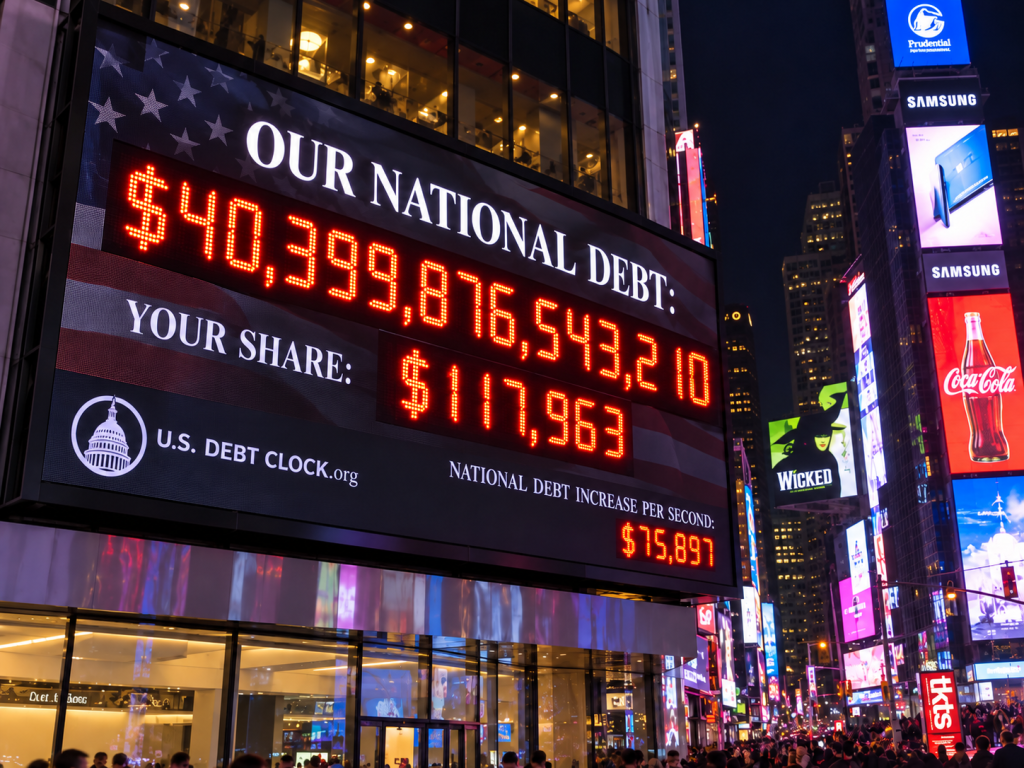
Image created by ChatGPT
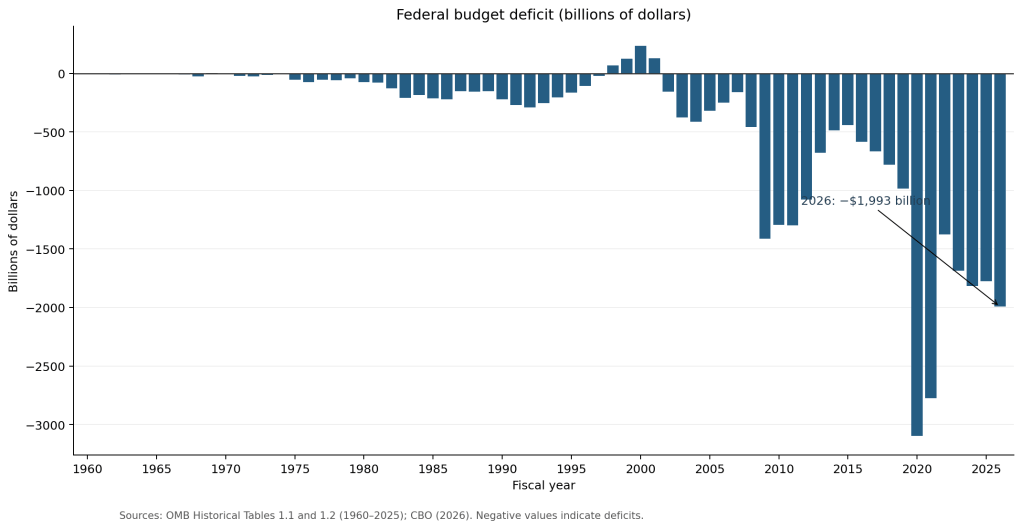
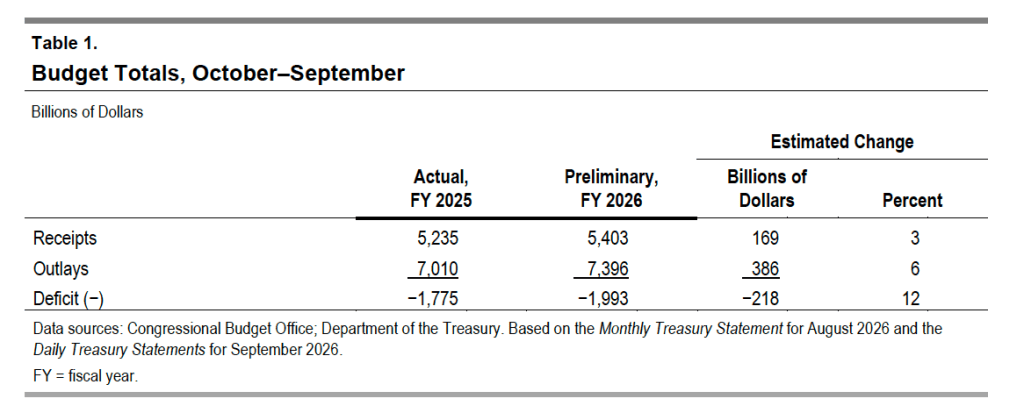
The federal government’s fiscal year runs from October 1 to September 30. The Congressional Budget Office (CBO) has released its estimate of the deficit for the 2026 fiscal year, which ended September 30, 2026. The deficit increased to $1,993 billion in 2026 from $1,775 billion in 2025. As the following figure shows, in the context of the period since 1960, the budget deficit in 2026 remains very large, particularly at a time when the U.S. economy is at or very close to full employment. The budget deficit in 2026 is well below the record deficit of $3,096 billion in 2020.
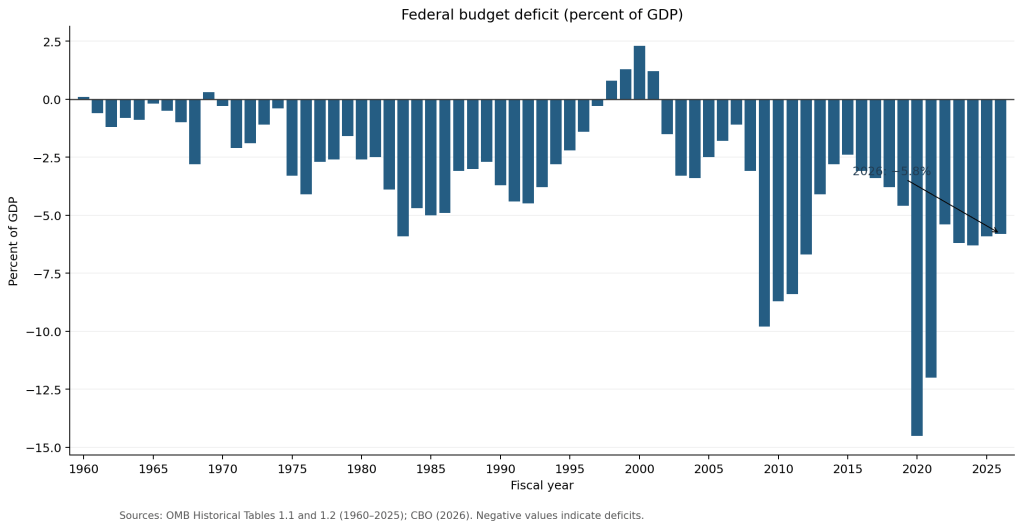
Economists typically focus more on the size of the budget deficit relative to the size of the economy, as measured by GDP. The following figure shows the federal budget deficit as a percentage of GDP was largest during and after the Great Recession of 2007–2009, and in 2020–2021, during and immediately after the Covid recession. In both those periods, federal tax revenues declined as production and employment fell. In addition, Congress passed legislation increasing government purchases and transfer payments. Although during the past few years the budget deficit as a percentage of GDP has declined from a high of 14.5 percent in 2020 (which was the largest deficit since World War II ended in 1945), it still remains very high for a period of close to full employment.
The following table from the CBO report shows that in 2026 federal receipts increased less than federal outlays, leading to a larger budget deficit.
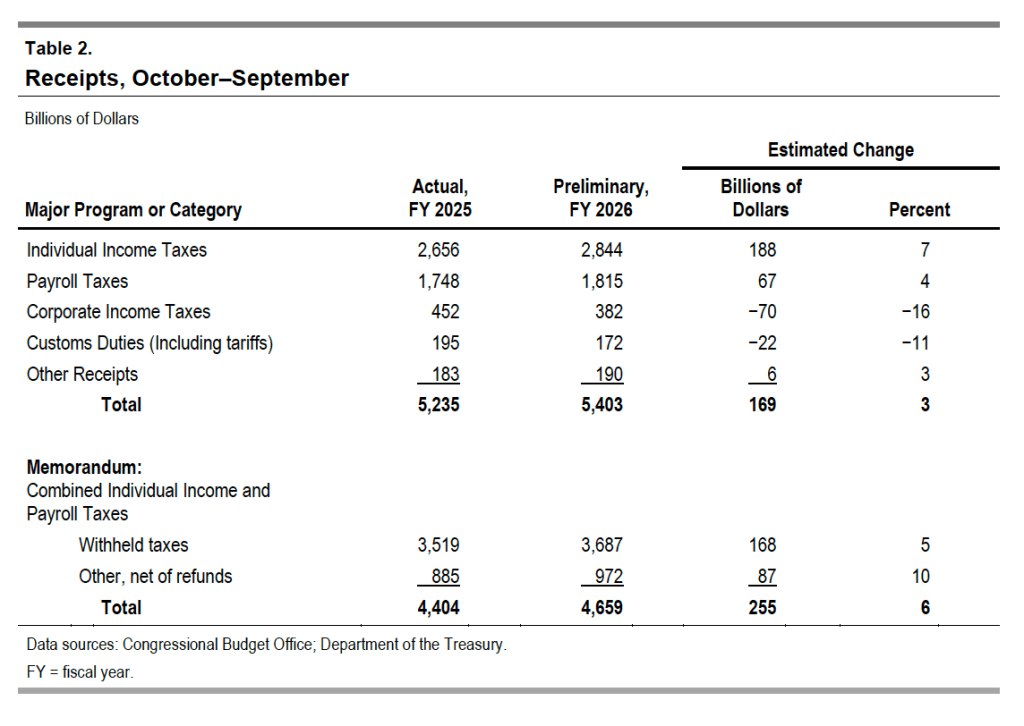
The next table shows the changes in the major categories of federal receipts. Individual income and payroll taxes—which fund the Social Security and Medicare programs, as well as the federal government’s contributions to state unemployment insurance plans—both increased, while corporate income tax receipts fell. Customs duties declined as the federal government refunded tariffs collected under higher tariff rates imposed by the Trump administration beginning in April 2025. The Supreme Court ruled in February 2026 that some of the tariff increases were not authorized by federal law.
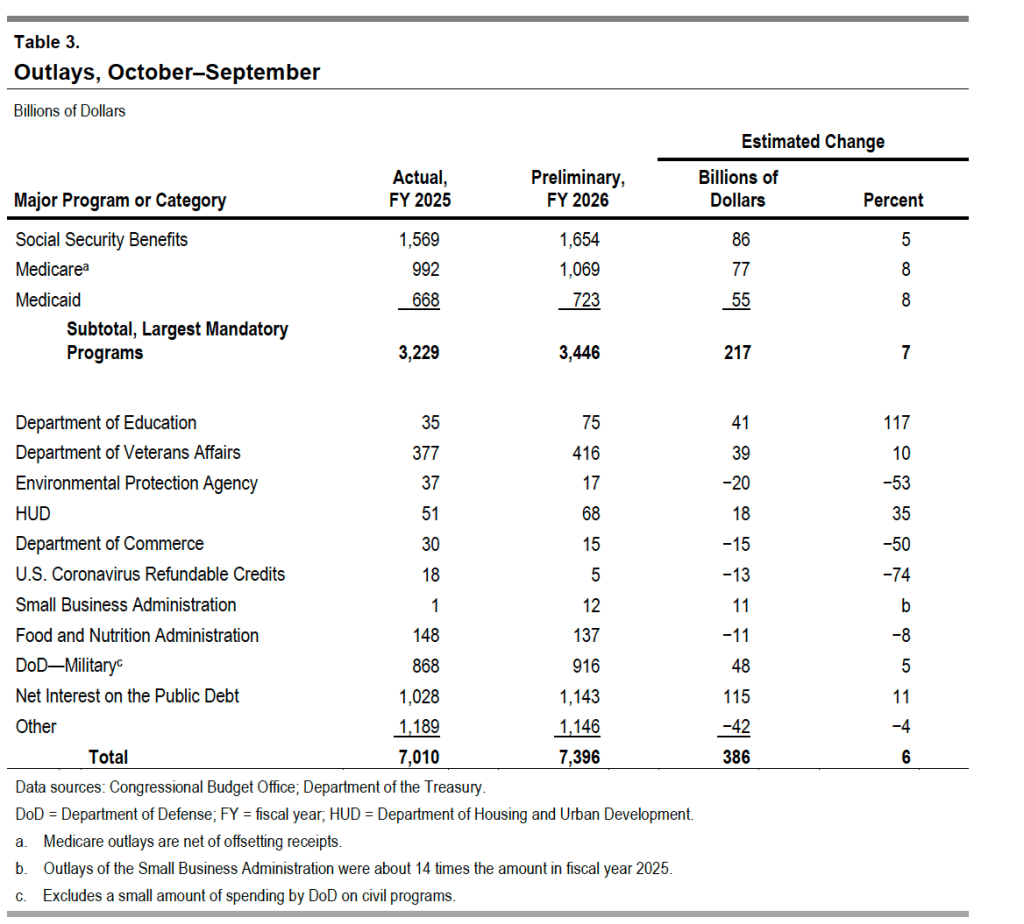
The next table shows the changes in the major categories of federal outlays. Spending on the Social Security, Medicare (health insurance for older people), and Medicaid (health insurance for lower-income people) programs continue to steadily increase. Spending on Medicare is now more than $150 billion greater than spending on defense. Interest on the public debt continues to increase as the debt grows and interest rates remain well above their pre-2021 levels.