Are Stablecoins about to Become an Important Part of the U.S. Financial System?

Image illustrating stablecoins generated by ChatGTP4-o

Recently, U.S. Treasury Secretary Scott Bessent testified before Congress that the value of stablecoins could reach $2 trillion. In a post on X (formerly Twitter) he stated that “that stablecoins could grow into a $3.7 trillion market by the end of the decade.” Those amounts are far above the $250 billion estimated value of stablecoins in June 2025, yet still small relative to the value of M2—currently $21.9 trillion. But if the value of stablecoins were to rise to $2 trillion, that would be large enough to have a noticeable effect on the U.S. financial system.

As we discuss in Macroeconomics, Chapter 24 and in Money, Banking, and the Financial System, Chapter 2, stablecoins are a type of cryptocurrency—bitcoin is the best-known cryptocurrency—that can be bought and sold for a constant number of units of a currency, usually U.S. dollars. Typically, one stablecoin can be exchanged for one dollar. 

Tether CEO Paolo Ardoino (photo from Bloomberg news via the Wall Street Journal)

Firms that issue stablecoins will redeem them in the underlying currency, which—as already noted—is nearly always the U.S. dollar. To make the promise to redeem stablecoins in dollars credible, firms that issue stablecoins hold reserve assets that are safe and highly liquid, such as U.S. Treasury bills or U.S. dollar bank deposits. Tether, which is headquartered in El Salvador, is the largest issuer of stablecoins, with about two-thirds of the market. As with bitcoins and other cryptocurrencies, stablecoins are stored and traded on public blockchains, which are decentralized networks of ledgers that record transactions. This system avoids the use of financial intermediaries—such as banks—which advocates for cryptocurrencies see as a key advantage because it eliminates the possibility that the intermediary might reject the transaction. But it also increases the appeal of stablecoins to people engaged in illegal activities.  

Advocates for stablecoins believe that they can become a digital medium of exchange, which is a role that initially bitcoin was intended to play. The swings in the value of bitcoin turned out to be much larger than most people expected and made that crypto currency unsuitable for use as a medium of exchange. Stablecoins avoid this problem by keeping the value of the stablecoins fixed at one dollar. To this point, though, stablecoins have been primarily used to buy and sell bitcoin and other crypto currencies. As Federal Reserve Governor Christopher Waller put it in a speech earlier this year: “By their tie to the dollar, stablecoins are the medium of exchange and unit of account in the crypto ecosystem.” According to Waller, more than 80 percent of trading in cryptocurrencies is conducted using stablecoins.

One drawback to stablecoins is that firms that issue them charge a fee to redeem them. For instance, Tether requires that a minimum of $100,000 of stablecoins be redeemed and charges a fee of 0.1 percent of the amount redeemed with a minimum charge of $1,000. The redemption fee would be less important if stablecoins are used in large dollar transactions, such as occur in international trade. Advocates for stablecoins believe that they are particularly well suited for use in cross-border transactions because they don’t involve banks, as typically is necessary when firms buy or sell goods or services in foreign countries. The fees stablecoin issuers charge are generally lower than the fees banks charge for foreign exchange transactions.

The main source of profit for firms issuing stablecoins is the interest they earn on the assets they use to back the stablecoins they issue. Note, though, that firms issuing stablecoins have an incentive to buy riskier assets in order to increase the return on the stablecoins they issue. The incentives are similar to those banks face in investing depositors’ funds in assets that are riskier than the depositors would prefer. However, the risk that commercial banks take on is limited by bank regulations, which don’t yet apply to firms issuing stablecoins, although they may soon.

On June 17, the U.S. Senate moved to provide a regulatory framework for stablecoins by passing the Guiding and Establishing National Innovation for U.S. Stablecoins Act (Genius Act). The act requires that firms issuing stablecoins in the United States back them 100 percent with a limited number of reserve assets: dollar deposits in banks, Treasury securities that mature in 93 days or less, repurchase agreements backed by Treasuries (we discuss repurchase agreements in Macroeconomics, Chapter 15; Economics, Chapter 25; and Money, Banking, and the Financial System, Chapter 10), and money market funds that invest in eligible Treasury securities and repurchase agreements. Issuers of stablecoins will be subject to audits by U.S. federal regulators. To become law, the Genius Act must also be passed by the U.S. House and signed by President Trump.

Passage of the Genius Act would potentially provide a regulatory framework that would reassure users that the stablecoins they hold can be readily redeemed for dollars. Passage is also expected to lead some large retail firms, such as Walmart and Amazon, to issue stablecoins that could be used to make purchases on their sites. If enough consumers are willing to use stablecoins, these large retailers could save the fees they currently pay to credit card companies. In addition, stablecoin transactions can be cleared instantly, as opposed to the several days it can take for credit card payments to clear. Why would a consumer want to use stablecoin rather than a credit card to pay for something? Apart from the familiarity of using credit cards, the cards often provide rewards, such as points that can be redeemed for airline tickets or hotel stays. To attract consumers, stablecoin issuers would likely have to offer similar rewards to consumers who use stablecoins to make purchases.

As Waller notes, it will likely take years before consumers and firms routinely use stablecoins for day-to-day transactions. Today, very few retail firms are equipped to accept stablecoins and very few consumers own stablecoins.

Passage of the Genius Act would pose potential problems for Tether. Tether has held a wide range of reserve assets to back its stablecoins, including bitcoin and precious metals. It has also not been willing to be fully audited. Either Tether would have to change its business model to fit the requirements of the Genius Act or it would have to issue a separate stablecoin that would be used only in the United States and would meet the Genius Act requirements.

We noted earlier that Treasury Secretary Bessent believes that over the next few years, the value of stablecoins could increase to several trillions dollars. If that happens, the demand for Treasury securities would increase substantially as firms issuing stablecoins accumulated reserve assets. The result could be higher prices on Treasury securities and lower interest rates, which would eventually reduce the interest payments the Treasury makes on the federal government’s debt.

Finally, as we note in the text, Barry Eichengreen of the University of California, Berkeley as been a notable skeptic of stablecoins. As he wrote back in 2018, when the idea of stablecoins was just beginning to be widely discussed, when someone exchanges a dollar for a stablecoin, “one of us then will have traded a perfectly liquid dollar, supported by the full faith and credit of the U.S. government, for a cryptocurrency with questionable backing that is awkward to use. This exchange may be attractive to money launderers and tax evaders, but not to others.”

Could issuers of stablecoins be subject to runs like the one that led to the failure of Silicon Valley Bank in the spring of 2023?

In a recent opinion column in the New York Times, Eichengreen wrote that he is concerned about the possibility of runs on stablecoins. As we discuss in Macroeconomics, Chapter 14, and in Money, Banking, and the Financial Systems, Chapter 10, a commercial bank can be subject to a run if the bank’s depositors believe that the value of the bank’s assets are no longer sufficient to pay off the bank’s depositors. As we discuss in this blog post, Silocon Valley Bank experienced a run in the spring of 2023 that affected several other banks. Runs on commercial banks are unusual in the United States because of deposit insurance and the willingness of the Federal Reserve to act as lender of last resort to banks suffering liquidity problems. Eichengreen raises the question of whether stablecoins could experience runs if holders of the stablecoins come to doubt that the value of issuers’ reserve assets is sufficient to redeem all the coins.

Although the Genius Act provides for regulation of stablecoin issuers, Eichengreen believes that if enough firms begin issuing stablecoins, it’s likely that at some point one of them will experience a decline in the value of its reserve assets, which will cause a run. If the run spreads from one issuer to many in a process called contagion, stablecoin issuers will have to sell reserve assets, including Treasury securities. The result could be a sharp fall in the prices of those asset and an increase in interest rates. It’s possible that the outcome could be a wider financial panic and a deep recession. To head off that possibility, the Federal Reserve might feel obliged to intervene to save some, possibly many, stablecoin issuers from failing. The result could be that taxpayer dollars would flow to firms issuing stablecoins, which would likely cause a significant political backlash.

Many people see stablecoins as an exciting development in the financial system. But, as we’ve noted, there still remain some substantial roadblocks in the way of stablecoins becoming an important means of transacting business in the U.S. economy.
Is Zimbabwe Now on the Gold Standard?

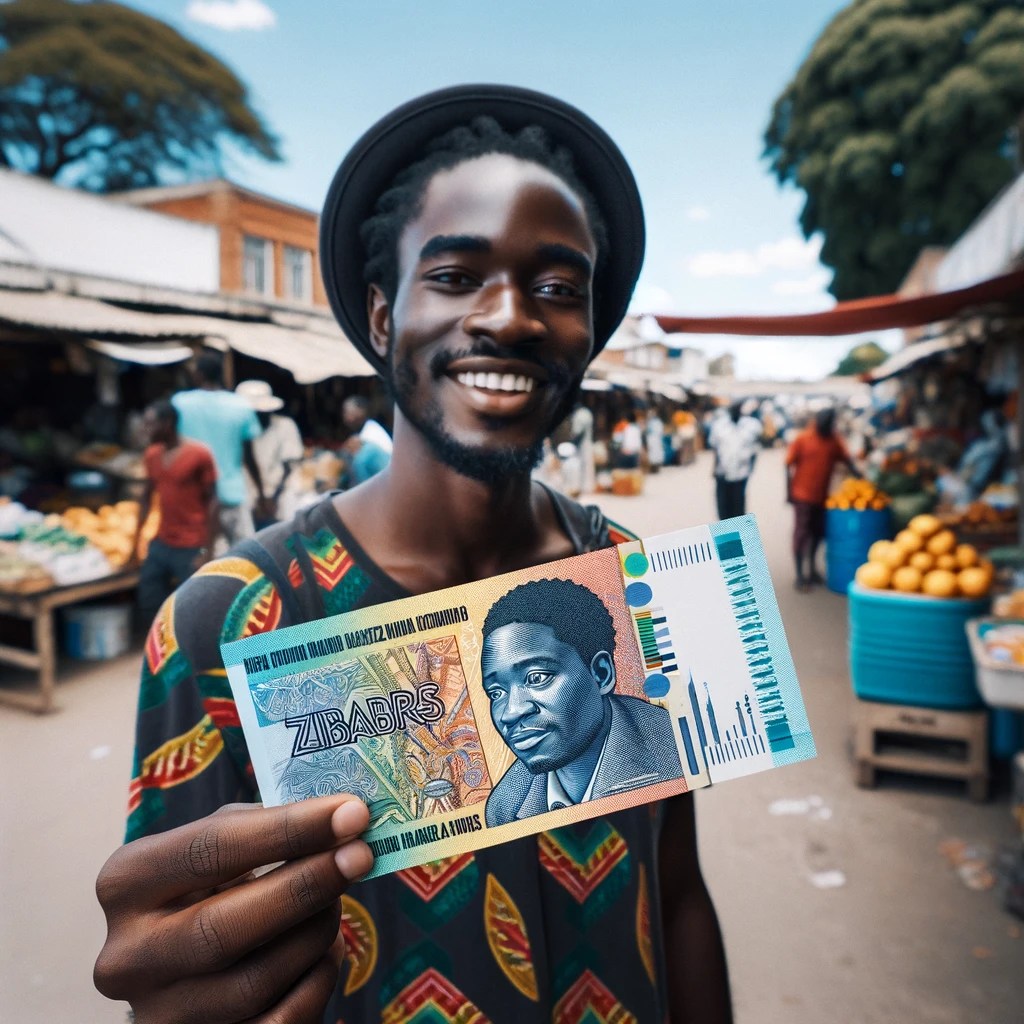
Image of “someone in Zimbabwe holding the new ZiG currency” generated by ChatGPT 4o.

The classical gold standard lasted from 1880 until the outbreak of World War I in 1914 disrupted the global financial system. Under the gold standard, countries stood ready to redeem their paper currencies in gold and many business contracts contained “gold clauses” that allowed the receiver of funds to insist on being paid in gold. The countries shaded in yellow in the following figure were on the gold standard at the beginning of 1914.

After World War I, the United States remained on the gold standard but the very high inflation rates during and immediately after the war made it difficult for most European countries to resume redeeming their domestic currencies in gold. The United Kingdom didn’t return to the gold standard until 1925—seven years after the end of the war—at which time several other countries participated with the United Kingdom and the United States in what was called the gold exchange standard. In this system, countries fixed their exchange rates against the U.S. dollar and the British pound and held their international reserves in either pounds or dollars. By fixing the value of their currencies against the dollar and the pound—which were both convertible into gold—the currencies effectively fixed the value of their currencies against gold.  The gold exhange standard ended in 1931 when, as the result of financial problems caused by the Great Depression, the United Kingdom stopped the convertibility of pounds into gold. The United States stopped the convertiblity of dollars into gold in 1933. (We discuss the gold standard in the online appendix to Macroeconomics, Chapter 18 and Economics, Chapter 28, and in Money, Banking, and the Financial System, Chapter 16, Section 16.4).

In 1944, near the end of World War II, several countries meeting at Bretton Woods New Hampshire agreed to fix the exchange rates between their currencies. Under the Bretton Woods system, the United States agreed to convert U.S. dollars into gold at a price of $35 per ounce—but only in dealing with foreign central banks. U.S. citizens continued to be prohibited from redeeming dollars for gold. The central banks of all other members of the system pledged to buy and sell their currencies at fixed rates against the dollar but not to exchange their currencies for gold either domestically or internationally. As can be seen, the Bretton Woods system was not actually a gold standard because no members of the system allowed their currencies to be freely convertible into gold. The difficulty of keeping exchange rates fixed over long periods led to the collapse of the Bretton Woods system in 1971. (We discuss the Bretton Woods system in the places referenced at the end of the last paragraph.)

Although over the decades there have been various proposals to return to the gold standard, it seems unlikely that the United States or other high-income countries will ever do so. Current day advocates of returning to the gold standard often mention the check the gold standard can place on inflation because the size of a country’s money supply is limited by the country’s gold reserves. In the United States and most other high-income countries the central bank attempts to regulate the inflation rate by controlling short-term interest rates. In lower-income countries, central banks are often not able to act independently of the government. That has been the situation in the African country of Zimbabwe, which has frequently experienced hyperinflation—that is, rates of inflation exceeding 50 percent per month. The inflation rate in 2008 reached a staggering 15 billion percent. As a result, most people in Zimbabwe lost faith in Zimbabwean currency and instead used U.S. dollars for most buying and selling.

That most of the currency in circulation in Zimbabwe is U.S. dollars causes two problems: 1) The supply of available U.S. dollars is limited—so much so that some businesses carefully wash dollars to try to prolong their usability; and 2) few U.S. coins are available, making it difficult for businesses to make change for purchases that aren’t priced in even dollar amounts. Some businesses give customers change in the form of candy or other small food items. The government has made several attempts to resume printing Zimbawean dollars but has had trouble getting consumers and businesses to accept them.

In late April, the Zimbabwean tried a different approach, introducing a new currency, the ZiG, which is short for Zimbabwe Gold. The new paper currency is “backed” by the government’s gold supply, which has a value of about $185 million U.S. dollars. We put the word “backed” in quotation marks because the government isn’t backing the ZiG in the way that governments backed their currency during the period of the classical gold standard. Under the gold standard, paper currency was freely convertible into gold, so anyone wishing to exchange currency for gold was able to do so. The ZiG isn’t convertible into gold. The government is backing the currency with gold only in the sense that it pledges not to issue more currency than it has gold. In other words, the government is essentially promising to put a limit on the total value of the ZiG currency it will issue. Zimbabwean governments have made similar promises in the past that they have ended up breaking.

In its first weeks, the ZiG was having trouble finding acceptance among consumers and businesses, despite efforts by the government to require most businesses to accept it. An article in the Financial Times quoted the owner of a grocery store in the capital of Harare as stating that he won’t accept the ZiG because “My business is alive because I stick to the US dollar.” Similarly, the web site of the BBC quoted the owner of a market stall as saying that “Everything, absolutely everything, is still in US dollars.”

As we discuss in Macroeconomics, Chapter 24, the key to the acceptance of any paper currency is that households and firms have confidence that if they accept the paper currency in exchange for goods and services, the currency will not lose much value during the time they hold it. Without this confidence, currency can’t fulfill the key function of serving as a medium of exchange. In Zimbabwe, as a post on the web site of the World Economic Forum puts it: “It remains to be seen whether the new ZiG can gain the confidence of the public and become a stable local currency, which would allow officials to regain control over monetary policy.”

Where Did Dark Age English Kings Obtain the Metal for Their Coins?

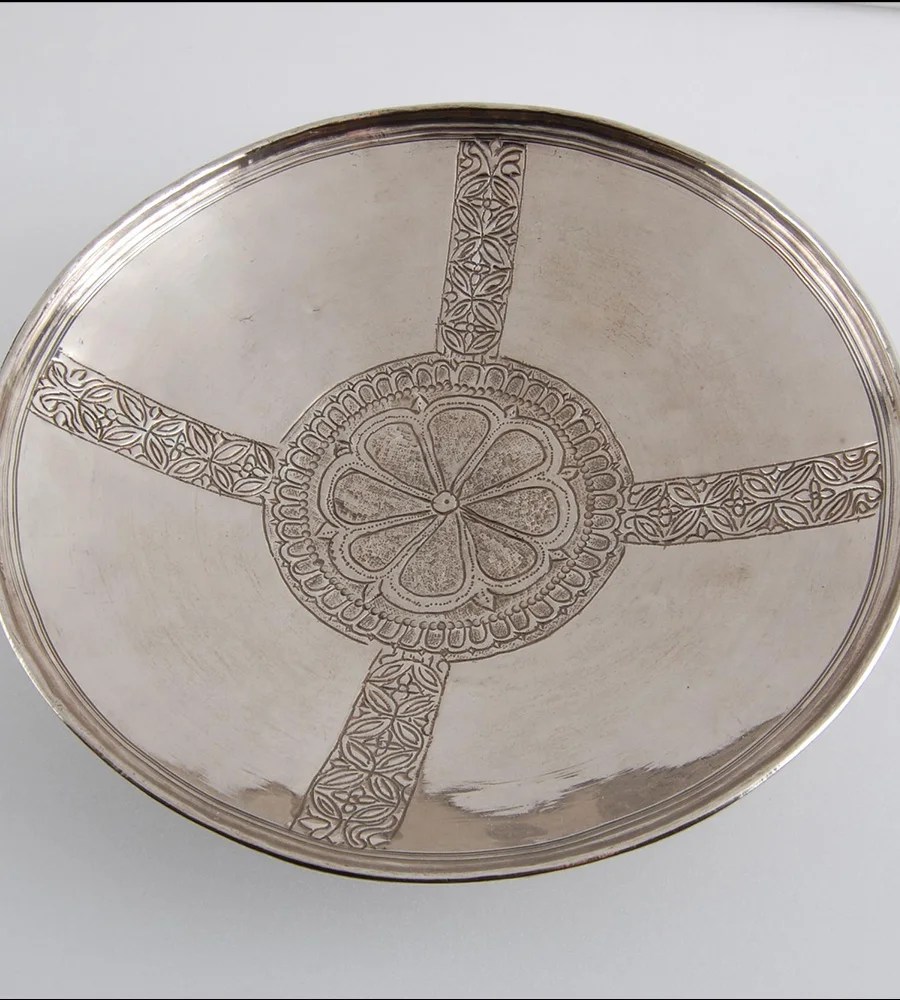
Silver pennies used in England during the 600s. (Image from Jane Kershaw, et al.)

As economies move from subsistence agriculture towards specialization and trade, the inefficiency of barter exchange pushes them toward developing money. Any commodity that is widely accepted in payment for goods and services—that is, any commodity that can function as a medium of exchange—can be used as money. As we discuss in a recent blog post, in frontier America animal hides were used as money. In a World War II German prisoner of war camp, the British prisoners used cigarettes as money.  Most economies made a transition from using commodities like animal skins to using coins made of precious metals, such as copper, silver, and gold. (We discuss the development of money in Macroeconomics, Chapter 14, Section 14.1, Economics, Chapter 24, Section 24.1, and Essentials of Economics, Chapter 16, Section 16.1.)

Coins were typically minted by kings, local warlords, bishops, or other people with control over a sufficient sized territory to make minting coins worthwhile. Where did they get the metal needed to mint coins? During the height of the gold standard in the 1800s and early 1900s, governments could rely on supplies of precious metals from domestic mines or from trade with other countries. In earlier periods, access to sufficient supplies of precious metals could be more difficult.

A recent academic paper by Jane Kershaw, of the University of Oxford; Stephen W. Merkel and Paolo D’Imporzano, of Vrije Universiteit Amsterdam; and Rory Naismith the University of Cambridge, examined the case of coins minted by kings of England during the year 660 to 820. During the time from the year 43 to the year 409, most of modern England and Wales was part of the Roman Empire. (A non-technical summary of the paper, with a video, is here. A timeline of Roman Britain is here.) During that time, the Roman province of Britannia used the same gold, silver, and copper coins used throughout the empire. After the withdrawal of the last Roman legions, England experienced waves of invasions from Saxons, Angles, and other Germanic tribes that destroyed most of Roman civilization on the island. Very few written records have survived from 409 through the end of the 500s. But it’s likely that few, if any, coins were minted during this period.

As trade within England began to revive in the second half of the 600s, the demand for coins increased. Given the inefficiency of barter, the absence of a sufficient supply of coins would have hobbled the growth of trade. With more than 200 years having passed since the end of Roman rule, Roman coins were no longer available in significant quantities. The increased demand for coins was met by silver pennies, like those shown in the photo at the top of this post.

Where did the rulers of the various English kingdoms get the silver to mint pennies, given that there were no known silver mines operating during this period? Searching for clues, Jane Kershaw and her colleagues analyzed the composition of the silver used in the pennies. Surprisingly, the silver turned out to have the same composition as silver used in the Byzantine Empire in the eastern Mediterranean. Because in this period there was little to no trade between England and the Byzantine Empire, Kershaw and colleagues believe that the silver was likely obtained from melting silver objects, like the plate shown above, obtained from trade with the Byzantine Empire in earlier periods.

The work of these researchers has provided insight into an historical example of governments supplying the money needed to facilitate the transition away from barter.

Can Counterfeits of Coins That Never Existed Function as Money?

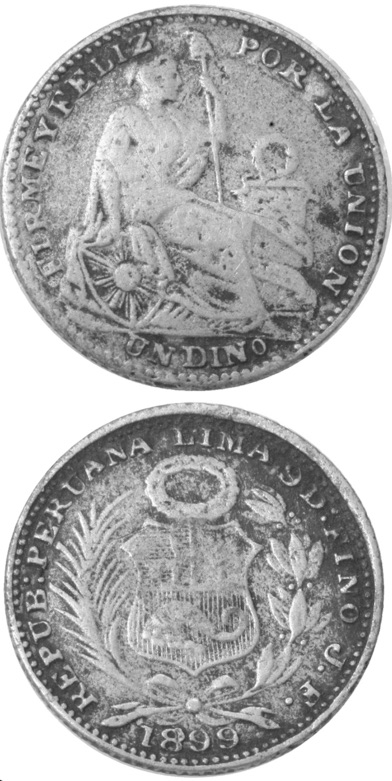
Counterfeit 1899 Peruvian dinero. (Image from Luis Ortega-San-Martín and Fabiola Bravo-Hualpa article.)

What counts as money is an interesting topic. For instance, in Macroeconomics, Chapter 14, Section 14.2 (Economics, Chapter 24, Section 24.2, and Essentials of Economics, Chapter 16, Section 16.2), we discuss whether bitcoin is money (spoiler alert: it isn’t).  

Of the four functions of money that we discuss in Chapter 14, the most important is that money serves as a medium of exchange. Anything can be used as money if most people are willing to accept it in exchange for goods and services.  In that chapter, we mention that at one time in West Africa cowrie shells were used as money. In the early years of the United States, animal skins were sometimes used as money. For instance, the first governor of Tennessee received an annual salary of 1,000 deerskins.

In a famous article in the academic journal Economica, economist Richard A. Radford who had been captured in 1942 by German troops while fighting with the British Army in North Africa described his experiences in a prisoner-of-war camp. The British prisoners in the camp developed an economy in which cigarettes were used as money:

“Everyone, including nonsmokers, was willing to sell for cigarettes, using them to buy at another time and place. Cigarettes became the normal currency .… Laundrymen advertised at two cigarettes a garment …. There was a coffee stall owner who sold tea, coffee or cocoa at two cigarettes a cup, buying his raw materials at market prices and hiring labour ….”

In Chapter 24, in end of chapter problem 1.8, we note that according to historian Peter Heather, during the time of the Roman Empire, German tribes east of the Rhine river used Roman coins as money even though Rome didn’t govern that area. Roman coins were apparently also used as money in parts of India during those years even though the nearest territory the Romans controlled was hundreds of miles to the west. Again we have an example of something—roman coins in this case—being used as money because people were willing to aceept it in exchange for goods and services even though the government that issued the coins didn’t control that area.

Even more striking case is the case of Iraqi paper currency issued by the government of Saddam Hussein. This currency continued to circulate even after Saddam’s government had collapsed following the invasion of Iraq by U.S. and British troops. U.S. officials in Iraq had expected that as soon as the war was over and Saddam had been forced from power, the currency with his picture on it would lose all its value. This result had seemed inevitable once the United States had begun paying Iraqi officials in U.S. dollars. However, for some time many Iraqis continued to use the old currency because they were familiar with it. According to an article in the Wall Street Journal, the Iraqi manager of a currency exchange put it this way: “People trust the dinar more than the dollar. It’s Iraqi.” In fact, for some weeks after the invasion, increasing demand for the dinar caused its value to rise against the dollar. Eventually, a new Iraqi government was formed, and the government ordered that dinars with Saddam’s picture be replaced by a new dinar. Again we see that anything can be used as money as long as people are willing to accept it in exchange for goods and services, even paper currency issued by a government that no longer exists.

Finally, there is the case of the coin shown at the beginning of this post. The coin looks like the dineros—small denomination silver coins—issued by the Peruvian government. But the coin is dated 1899, a year in which the Peruvian government did not issue any dineros. An analysis of one of these coins by Luis Ortega-San-Martín, Fabiola Bravo-Hualpa, and their students at the Pontifical Catholic University of Peru showed that it was made of copper, nickel, and zinc, in contrast to deniros from other years, which where made primarily of silver with a small amount of copper. They concluded that the coin was a counterfeit made around 1900:

“It is our belief that this counterfeit coin was not made as a numismatic rarity to deceive modern collectors … but rather to be used as current money (its worn state indicates ample use) …. [C]ounterfeiters usually make common coins that do not draw attention expecting them to pass unnoticed.”

In other words, as long as people are willing to accept counterfeit coins—which they likely will do if they do not recognize them as being counterfeit—they can serve as money. In fact, even if coins are easily recognizable as being counterfeit, they might still be used as money—particularly in a time and place where there is a shortage of government issued coins. In the British North American colonies, there was frequently a shortage of coins. Some people would clip small amounts off gold and silver coins, either selling the metal or having it minted into coins. The clipped coins, while not actually counterfeit, contained less precious metal than did unclipped coins, yet they continued to be used in buying and selling because of the general shortage of coins.

Do ATMs that Dispense Gold Rather Than Currency Make Economic Sense?

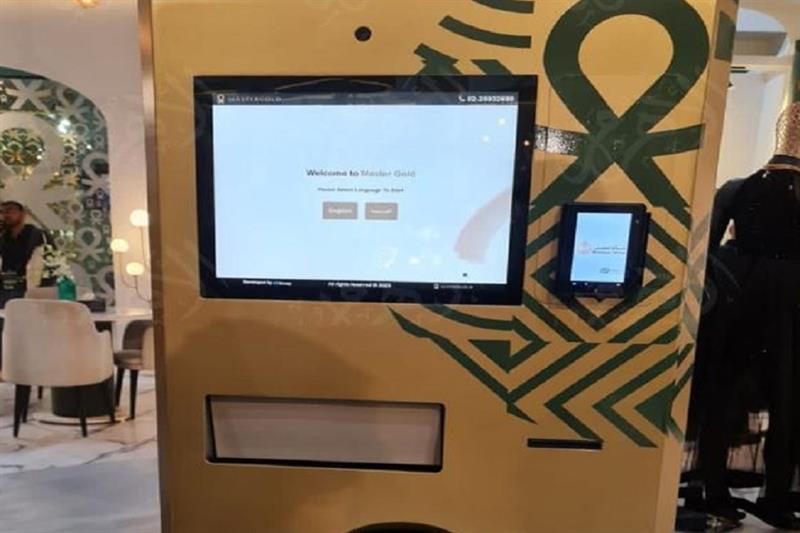
An Automated Teller Machine (ATM) located in Egypt that dispenses gold bars rather than currency. (Photo from ahrm.org.)

A recent article in the New York Times (available here, but a subscription may be required) discusses how consumers in Egypt are dealing with inflation.  According to statistics from the International Monetary Fund, consumer prices in Egypt rose 23.5 percent in 2023 and are projected to increase by 32.2 percent in 2024, although in early 2024 inflation may have been running at an annual rate of 50 percent. In response to the inflation, many Egyptian businesses have begun quoting prices in U.S. dollars rather than in Egyptian pounds. The value of the Egyptian pound has declined from about 18 pounds to the U.S. dollar in early 2022 to about 48 pounds to the dollar today. In practice, many Egyptian consumers can have difficulty obtaining dollars except on the black market, where the exchange rate is generally worse than the rate quoted by the Egyptian central bank. 

According to the article, many Egyptians, losing faith in value of the pound and unable to easily obtain U.S. dollars, have turned to gold as a potentially “safe financial harbor.” The article notes that: “The market [for gold] grew so fevered that the government announced in November that it was partnering with a financial technology company to install A.T.M.s [Automated Teller Machines] that would dispense gold bars instead of cash.” That ATM is shown in the photo above.

This episode raises two questions:

  1. Is gold a good hedge (a “safe harbor”) against inflation?
  2. Are ATMs that dispense gold rather than currency a good idea?

As we discuss in Chapter 14, Section 14.3 of Money, Banking, and the Financial System, gold has not been a good hedge against inflation for U.S. investors. Although many people believe that the price of gold can be relied on to increase if the general price level increases, in fact, the data show that the price of gold can’t be counted on to keep up with increases in the general price level. In the following figure, the blue line shows the market price of gold during each month since January 1976. The red line shows the real price of gold, which is calculated by dividing the nominal price of gold by the consumer price index (CPI). (For convenience, we set the value of the CPI equal to 100 in January 1976.) The price of gold is measured in dollars per ounce. 

The figure shows that the market price of gold can fall even as the price level rises. For example, the price of gold rose from $132 per ounce in January 1976 to $670 per ounce in September 1980. As a result, during that period the real price of gold more than tripled, and holding gold during this period was a good hedge against inflation. Unfortunately, the market price of gold then went into a long decline and didn’t again reach its September 1980 value until April 2007, a period during which the CPI more than doubled. In other words, over this more than 25-year period gold provided no hedge at all against the effects of inflation. Consumers in India today shouldn’t count on buying gold as way to protect the real value of their savings from being reduced by inflation.

The New York Times article refers to only a single ATM in Egypt that dispenses gold bars rather than Egyptian pounds. Would we expect that the number of these ATMs will increase in Egypt and other countries experiencing very high inflation rates? Does the existence of these ATMs indicate that people in Egypt are now—or will likely begin—using gold bars rather than currency for routine buying and selling?

The answer to both questions is likely “no.” Although the article refers to an “ATM,” it might be better to think of this facility as instead being a vending machine. Similar ATMs/vending machines that dispense gold bars are available in the United States (as indicated here, here, and here), and, most likely, in other countries as well.

We usually think of vending machines as selling soda and water or snacks. But there are many vending machines that sell other products as well. For instance, most large airports have vending machines that sell small electronic products, such as cell phone batteris or earphones. The term ATM is usually reserved for machines that enable people who have deposits at a bank or other financial firms to withdraw currency. So, the article seems to be describing something that is more a vending machine than an ATM. The article discusses the many small businesses in Egypt that buy and sell gold, which makes it likely that most consumers will continue to rely on those businesses rather than on a machine when they want to buy and sell gold.

It seems unlikely that people in Egypt will beging using gold bars for routine buying and  selling—that is, using gold as a medium of exchange. Most goods in Egypt have their prices denominated in either Egyptian pounds or in U.S. dollars or in both. Anyone attempting to buy goods with gold bars would need first to determine the market price of gold at that time before making the purchase and would have to locate a seller who was willing to accept gold in exchange for their goods. In effect, sellers would be engaging in two transactions at the same time: buying gold from the buyer and selling goods to the buyer. Although in a time of high inflation a seller takes on the risk that currency he accepts for a purchase may decline in value while the seller is holding it, a seller accepting gold also takes on the risk that the market price of gold may fall while the seller is holding it.

It’s interesting that the Egyptian government reacted to consumers buying gold as a hedge against inflation by partnering with a financial firm to make available an “ATM” that dispenses gold bars. But it probably doesn’t represent a significant development in the Egyptian financial system.