
Is the iPhone Air Apple’s “New Coke”?

Image created by GPT

Most large firms selling consumer goods continually evaluate which new products they should introduce. Managers of these firms are aware that if they fail to fill a market niche, their competitors or a new firm may develop a product to fill the niche. Similarly, firms search for ways to improve their existing products.

For example, Ferrara Candy, had introduced Nerds in 1983. Although Nerds experienced steady sales over the following years, company managers decided to devote resources to improving the brand. In 2020, they introduced Nerds Gummy Clusters, which an article in the Wall Street Journal describes as being “crunchy outside and gummy inside.” Over five years, sales of Nerds increased from $50 millions to $500 million. Although the company’s market research “suggested that Nerds Gummy Clusters would be a dud … executives at Ferrara Candy went with their guts—and the product became a smash.”
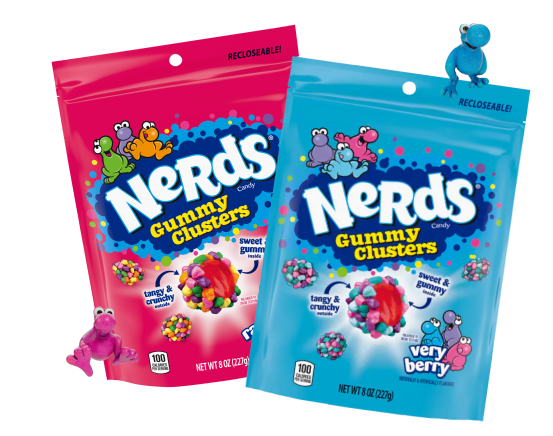
Image of Nerds Gummy Clusters from nerdscandy.com

Firms differ on the extent to which they rely on market research—such as focus groups or polls of consumers—when introducing a new product or overhauling an existing product. Henry Ford became the richest man in the United States by introducing the Model T, the first low-priced and reliable mass-produced automobile. But Ford once remarked that if before introducing the Model T he had asked people the best way to improve transportation they would probably have told him to develop a faster horse.  (Note that there’s a debate as to whether Ford ever actually made this observation.) Apple co-founder Steve Jobs took a similar view, once remaking in an interview that “it’s really hard to design products by focus groups. A lot of times, people don’t know what they want until you show it to them.” In another interview, Jobs stated: “We do no market research. We don’t hire consultants.”

Unsurprisingly, not all new products large firms introduce are successful—whether the products were developed as a result of market research or relied on the hunches of a company’s managers. To take two famous examples, consider the products shown in image at the beginning of this post—“New Coke” and the Ford Edsel.

Pepsi and Coke have been in an intense rivalry for decades. In the 1980s, Pepsi began to gain market share at Coke’s expense as a result of television commercials showcasing the “Pepsi Challenge.” The Pepsi Challenge had consumers choose from colas in two unlabeled cups. Consumers overwhelming chose the cup containing Pepsi. Coke’s management came to believe that Pepsi was winning the blind taste tests because Pepsi was sweeter than Coke and consumers tend to favor sweeter colas. In 1985, Coke’s managers decided to replace the existing Coke formula—which had been largely unchanged for almost 100 years—with New Coke, which had a sweeter taste. Unfortunately for Coke’s managers, consumers’ reaction to New Coke was strongly negative. Less than three months later, the company reintroduced the original Coke, now labeled “Coke Classic.” Although Coke produced both versions of the cola for a number of years, eventually they stopped selling New Coke.

Through the 1920s, the Ford Motor Company produced only two car models—the low-priced Model T and the high-priced Lincoln. That strategy left an opening for General Motors during the 1920s to introduce a variety of car models at a number of price levels. Ford scrambled during the 1930s and after the end of World War II in 1945 to add new models that would compete directly with some of GM’s models. After a major investment in new capacity and an elaborate marketing campaign, Ford introduced the Edsel in September 1957 to compete against GM’s mid-priced models: Pontiac, Oldsmobile, and Buick.

Unfortunately, the Edsel was introduced during a sharp, although relatively short, economic recession. As we discuss in Macroeconomics, Chapter 13 (Economics, Chapter 23), consumers typically cut back on purchases of consumer durables like automobiles during a recession. In addition, the Edsel suffered from reliability problems and many consumers disliked the unusual design, particularly of the front of the car. Consumers were also puzzled by the name Edsel. Ford CEO Henry Ford II was the grandson of Henry Ford and the son of Edsel Ford, who had died in 1943. Henry Ford II named in the car in honor of his father but the unusual name didn’t appeal to consumers. Ford ceased production of the car in November 1959 after losing $250 million, which was one of the largest losses in business history to that point. The name “Edsel” has lived on as a synonym for a disastrous product launch.
Screenshot

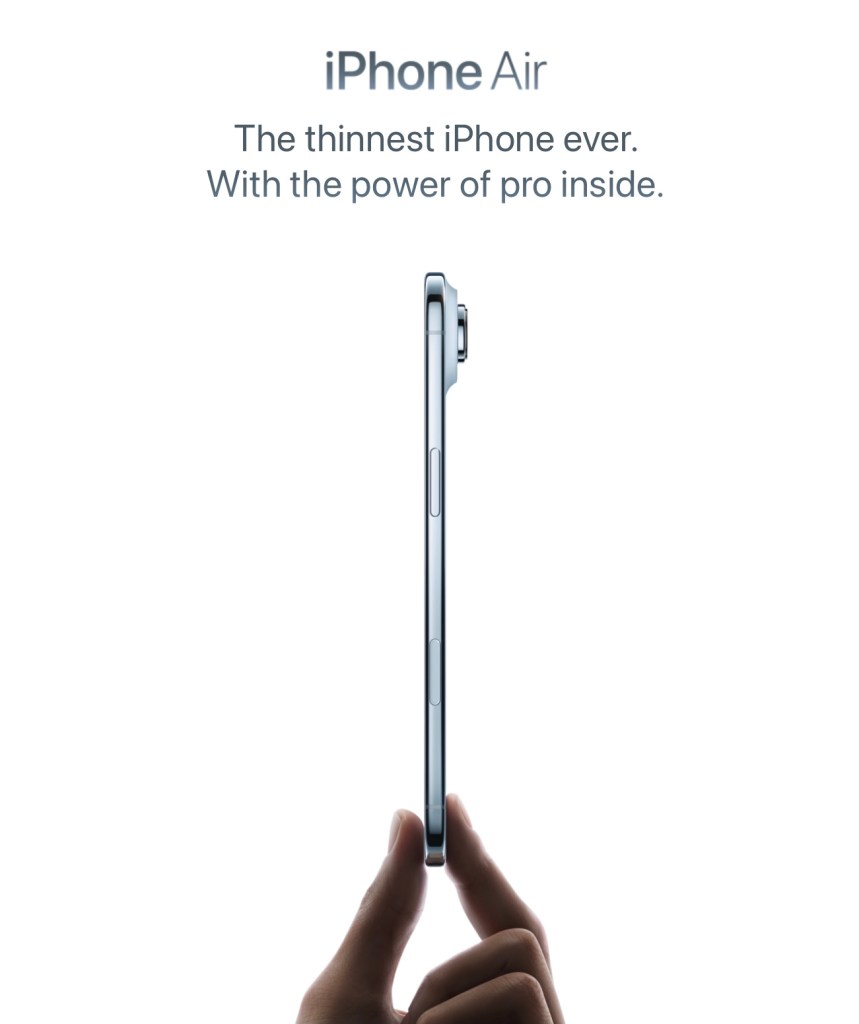
Image of iPhone Air from apple.com

Apple earns about half of its revenue and more than half of its profit from iPhone sales. Making sure that it is able to match or exceed the smartphone features offered by competitors is a top priority for CEO Tim Cook and other Apple managers. Because Apple’s iPhones are higher-priced than many other smartphones, Apple has tried various approaches to competing in the market for lower-priced smartphones.

In 2013, Apple was successful in introducing the iPad Air, a thinner, lower-priced version of its popular iPad. Apple introduced the iPhone Air in September 2025, hoping to duplicate the success of the iPad Air. The iPhone Air has a titanium frame and is lighter than the regular iPhone model. The Air is also thinner, which means that its camera, speaker, and its battery are all a step down from the regular iPhone 17 model. In addition, while the iPhone Air’s price is $100 lower than the iPhone 17 Pro, it’s $200 higher than the base model iPhone 17.

Unlike with the iPad Air, Apple doesn’t seem to have aimed the iPhone Air at consumers looking for a lower-priced alternative. Instead, Apple appears to have targeted consumers who value a thinner, lighter phone that appears more stylish, because of its titanium frame, and who are willing to sacrifice some camera and sound quality, as well as battery life. An article in the Wall Street Journal declared that: “The Air is the company’s most innovative smartphone design since the iPhone X in 2017.”  As it has turned out, there are apparently fewer consumers who value this mix of features in a smartphone than Apple had expected.

Sales were sufficiently disappointing that within a month of its introduction, Apple ordered suppliers to cut back production of iPhone Air components by more than 80 percent. Apple was expected to produce 1 million fewer iPhone Airs during 2025 than the company had initially planned. An article in the Wall Street Journal labeled the iPhone Air “a marketing win and a sales flop.” According to a survey by the KeyBanc investment firm there was “virtually no demand for [the] iPhone Air.”

Was Apple having its New Coke moment? There seems little doubt that the iPhone Air has been a very disappointing new product launch. But its very slow sales haven’t inflicted nearly the damage that New Coke caused Coca-Cola or that the Edsel caused Ford. A particularly damaging aspect of New Coke was that was meant as a replacement for the existing Coke, which was being pulled from production. The result was a larger decline in sales than if New Coke had been offered for sale alongside the existing Coke. Similarly, Ford set up a whole new division of the company to produce and sell the Edsel. When Edsel production had to be stopped after only two years, the losses were much greater than they would have been if Edsel production hadn’t been planned to be such a large fraction of Ford’s total production of automobiles.

Although very slow iPhone Air sales have caused Apple to incur losses on the model, the Air was meant to be one of several iPhone models and not the only iPhone model. Clearly investors don’t believe that problems with the Air will matter much to Apple’s profits in the long run. The following graphic from the Wall Street Journal shows that Apple’s stock price has kept rising even after news of serious problems with Air sales became public in late October.


So, while the iPhone Air will likely go down as a failed product launch, it won’t achieve the legendary status of New Coke or the Edsel.
Solved Problem: The Price Elasticity of Demand for iPhones in China

SupportsMicroeconomics and Economics, Chapter 6, and Essentials of Economics, Chapter 7.

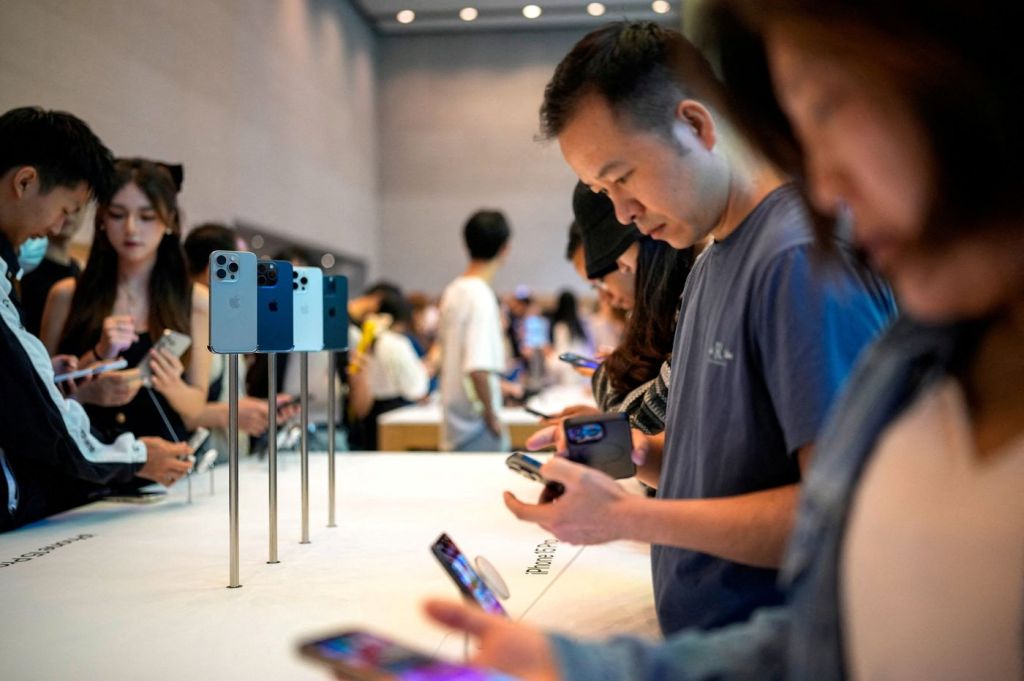
Photo from from Reuters via the Wall Street Journal.

An article on bloomberg.com noted that in China after Apple cut by 10 percent the price of its iPhone 15 Pro Max—the most expensive iPhone model—sales of this model increased by 12 percent.

a. Based on this information, is the demand in China for this model iPhone price elastic or price inelastic? Briefly explain.

b. Do you have enough information to be confident in your answer to part a.? Briefly explain.

c. Assuming that the price elasticity you calculated in part a. is accurate, should managers at Apple be confident that if they cut the price of this iPhone model by an additional 10 percent they would sell 12 percent more? Briefly explain.

Solving the Problem

Step 1: Review the chapter material. This problem is about the price elasticity of demand, so you may want to review Microeconomics (and Economics), Chapter 6, Sections 6.1, 6.2 and 6.3 (Essentials of Economics, Chapter 7, Sections 7.5, 7.6, and 7.7)

Step 2: Answer part a. by using the information provided to determine whether the demand for this iPhone model in China is price elastic or price inelastic. In Section 6.1, we define the price elasticity of demand as being equal to (Percentage change in quantity demanded)/(Percentage change in price). From the information given, the price elasticity of demand for this iPhone model in China equals 12%/–10% = –1.2. Because this value is greater than 1 in absolute value, we can conclude that demand for this iPhone model in China is price elastic.

Step 3: Answer part b. by discussing whether you have enough information to be confident in your answer to part a. If we have values for the change in price and the change in the quantity demanded, we can calculate the price elasticity of demand provided that nothing that would affect the willingness of consumers to buy the good—other than the price of the good—has changed. In this case, if other factors that are relevant to consumers in making their decision about buying that iPhone model have changed, then the demand curve will have shifted and the 12 percent increase in iPhones sold will be a mixture of the effect of the price having decreased and the effects of other factors having changed. For example, if the prices of smartphones sold by Vivo and Huawei—two Chinese firms whose smartphones compete with the iPhone—had increased, then the demand curve for the iPhone 15 Pro Max will have shifted to the right and our calculation in part a. will not give us an accurate value for the price elasticity of demand for the iPhone 15 Pro Max.

Step 4: Answer part c. by explaining whether, assuming that the price elasiticity you calculated in part a. is accurate, Apple’s managers can be confident that if they if they cut the price of this iPhone model by an additional 10 percent they would sell 12 percent more of this model. The first price cut for this iPhone model caused a movement down the demand curve. For Apple’s managers to be confident that that the same percentage price cut would result in the same percentage increase in the quantity sold, the price elasticity would have to be constant along the demand curve for this model. As we show explicitly for a linear demand curve in Section 6.3, the price elasticity of demand is unlikely to be constant along the demand curve (although in an unusual case it would be). In general, we expect that in moving further down the demand curve the price elasticity of demand will decline in absolute value. If that result holds in this case, then an additional 10 percent cut in price is likely to result in less than a 12 percent increase in the quantity demanded.

The Economics of Apple’s Vision Pro

Photo from apple.com.

On Friday, February 2, Apple released Vision Pro, its long-awaited, much discussed virtual reality (VR) headset. The Vision Pro headset allows users to experience either VR, in which the user sees only virtual objects, as for instance when the user sees only images from a video game; or augmented reality (AR), in which the user sees virtual objects, such as icon apps or web pages superimposed on the real world (as in the two photos below). Apple refers to people using the headsets as being engaged in “spatial computing” and sometimes refers to the headsets as “face computers.”

Photo from Apple via the Wall Street Journal.

Photo from Apple via the Wall Street Journal.

Vision Pro has a price of $3,499, which can increase to more than $4,000 when including the cost of the insert necessary for anyone who wears prescription eyeglasses or contact lenses and who chooses to buy additional storage capacity. The price is much higher than Meta’s Quest Pro VR headset (shown in the photo below), which has a price of $999.

Photo from meta.com.

In this post, we can briefly discuss some of the economic issues raised by the Vision Pro. First, why would Apple charge such a high price? In her review of the Vision Pro in the Wall Street Journal, Joanna Stern, the site’s personal technology writer, speculated that: “You’re probably not going to buy the $3,500 Apple Vision Pro. Unless you’re an app developer or an Apple die-hard ….”  

There are several reasons why Apple may believe that a price of $3,499 is profit maximizing. But we should bear in mind that pricing any new product is difficult because firms lack good data on the demand curve and are unsure how consumers will respond to changes in price. In our new ninth edition of Economics and Microeconomics, in Chapter 6 on price elasticity we discuss how Elon Musk and managers at Tesla experimented with the cutting the price of the Model 3 car as they attempted to discover the effect on price changes on the quantity demanded. Managers at Apple are in similar situation of lacking good data on how many headsets they are likely to sell at $3,499.

If Apple lacks good data on how consumers are likely to respond to different prices, why pick a price four times as high as Meta is charging for its Quest Pro VR headsets?

First, Apple expects to be able to clearly differentiate its headset from Meta’s headset. If consumers considered the two headsets to be close substitutes, the large price difference would make it unlikely that Apple would sell many headsets. Apple has several marketing advantages over Meta that make it likely that Apple can convince many consumers that the Meta headset is not a close substitute for the Vision Pro: 

  1. Apple has a history of selling popular electronic products, such as the iPhone, iPad, Air Pods, and the Apple Watch. It also owns the most popular app store. Apple has succeeded in seamlessly integrating these electronic products with each other and with use of the app store. As a result, a significant number of consumers have a strong preference for Apple products over competitors. Meta has a much more limited history of selling popular electronic products. For instance, it doesn’t produce its own smartphone.
  2. Apple has an extensive network of retail stores inside and outside of the United States. The stores have been successful in giving consumers a chance to try a new electronic product before buying it and to receive help at the stores’ Genius Bars with setting up the device or dealing with any later problems.  Meta operates few retail stores, relying instead on selling through other retailers, such as Best Buy, or through  its online site. For some consumers Meta’s approach is less desirable than Apple’s.

Second, as we discuss in Economics and Microeconomics, Chapter 15, Section 15.5, charging a high price for a new electronic product is common, partly because doing so allows firms to price discriminate across time. With this strategy, firms charge a higher price for a product when it is first introduced and a lower price later. Some consumers are early adopters who will pay a high price to be among the first to own certain new products. Early adopers are a particularly large segment of buyers of Apple products, with long lines often forming at Apple stores on the days when a new product is released. That firms price discriminate over time helps explain why products such as Blu-ray players and 4K televisions sold for very high prices when they were first introduced. After the demand of the early adopters was satisfied, the companies reduced prices to attract more price-sensitive customers. For example, the price of Blu-ray players dropped by 95 percent within five years of their introduction. Similarly, we can expect that Apple will cut the price of Vision Pro significantly over time.

Third, because Apple is initially producing a relatively small number of units, it is likely experiencing a high average cost of producing the Vision Pro. The production of the components of the headset and the final assembly are likely to be subject to large economies of scale. (We discuss economies of scale in Economics and Microeconomics, Chapter 11, Section 11.6.) Apple hasn’t released information on how many units of the headset it intends to produce during 2024, but estimates are that it will be fewer than 400,000 and perhaps as few as 180,000. (Estimates can be found here, here, and here.) Compare that number to the 235 million iPhones Apple sold during 2023. We would expect as Apple’s suppliers increase their production runs, the average cost of production will decline as Apple moves down its long-run average cost curve. As a result, over time Apple is likely to cut the price.

In addition, when producing a new good, firms often experience learning as managers better understand the most efficient way to produce and assemble the new good. For example, the best method of assembling iPhones may not be the best method of assembling headsets, but this fact may only become clear after assembling several thousand headsets. Apple is likely to experience a learning curve with the average cost of producing headsets declining as the total number of headsets produced increases. While economies of scale involve a movement down a static long-run average cost curve, learning results in the long-run average cost curve shifting down. This second reason why Apple’s average cost of producing headsets will decline contributes to the liklihood that Apple will cut the price of the Vision Pro over time.

Finally, we can discuss a key factor that will determine how successful Apple is in selling headsets. In Chapter 11 of the new ninth edition of Economics and Microeconomics, we have a new Apply the Concept, “Mark Zuckerberg … Alone in the Metaverse?” In that feature, we note that Meta CEO Mark Zuckerberg has invested heavily in the metaverse, a word that typically means software programs that allow people to access either AR or VR images and information. Zuckerberg believed so strongly in the importance of the metaverse that he changed the name of the company from Facebook to Meta. The metaverse, which is accessed using headsets likes Meta’s Quest Pro or Apple’s Vision Pro, is subject to large network externalities—the usefulness of the headsets increases with the number of consumers who use them. The network externalities arise because many software applications, such as Meta’s Horizon World, depend on interactions among users and so are not very useful when there aren’t many users.

Meta hasn’t sold as many headsets as they expected because they have had difficulty attracting enough users to make their existing software useful and the failure to have enough users has reduced the incentive for other firms to develop apps for Meta’s headsets. Initially, some reviewers made similar comments about Apple’s Vision Pro. For instance, even though streaming films in 3D is one of the uses that Apple promotes, some streaming services, including Netflix and YouTube, have not yet released apps for Vision Pro. Some important business related apps, such as FaceTime and Zoom, aren’t yet available. There are also currently no workout apps. As one reviewer put it “there are few great apps” for Vision Pro. Another reviewer wondered whether the lack of compelling software and apps might result in the Vision Pro headset suffering the fate of “every headset I test [which] ends up in my closet collecting dust.”

So, a key to the success of the Vision Pro will be the ability of Apple to attract enough users to exploit the network externalities that exist with VR/AR headsets. If successful, the Vision Pro may represent an important development in the transition to spatial computing.

COVID-19 Update – Impact on Supply Chains: Will Apple Start Making iPhones in the United States?

Supports:  Chapter 2, Trade-offs, Comparative Advantage, and the Market System [Econ, Micro, Macro, and Essentials]; Chapter 9, Comparative Advantage and the Gains from International Trade     [Econ and Micro; Macro Chapter 7; and Essentials Chapter 19]; Chapter 22, Aggregate Expenditure and Output in the Short Run   [Macro Chapter 12].

WILL APPLE START MAKING IPHONES IN THE UNITED STATES?

Apple, like many U.S. firms, relies on a global supply chain (sometimes also called a global value chain) comprised of firms in dozens of countries to make the components used in Apple’s products. (See Hubbard/O’Brien Chapter 2, Section 2.3 of Hubbard and O’Brien Economics and Microeconomics).  This strategy has allowed Apple to take advantage of both lower production costs and the engineering and manufacturing skills of firms in other countries to produce iPhones, iPads, iWatches, and MacBooks. But during the coronavirus pandemic, Apple found its supply chain disrupted because many of its suppliers located in China were forced to close for several months.

            Because of the coronavirus pandemic and the trade war between the United States  and China, many U.S. firms, including Apple, were considering moving some of their operations out of China. (The trade war is discussed in Chapter 9, section 9.5 of Hubbard and O’Brien Economics and Microeconomics, Chapter 7, Section 7.5 of Macroeconomics.)  As an article on bloomberg.com put it, these firms were “actively seeking ways to diversify their supply chains and reduce their dependence on any single country, no matter how attractive.” For example, two Taiwanese firms, Wistron and Pegatron, which had used factories in China to assemble iPhones were moving some factories to India, Vietnam, and Taiwan.

            It seemed unlikely, though, that production of iPhones would move back to the United States. Why not?  First, manufacturing employment has been in decline in the United States since long before U.S. firms began using suppliers based in China. In 1947, shortly after the end of World War II, 33 percent of U.S. workers were employed in manufacturing. By 2001, when China became a member of the World Trade Organization, that percentage had already declined to 12 percent. In 2019, it was 9 percent.

Manufacturing production in the United States has held up better than manufacturing employment. The Federal Reserve’s index of manufacturing production increased more than 250 percent between the beginning of 1972 and the beginning of 2020. U.S. manufacturing has been able to increase output while employment has declined because of increases in productivity. The increases in productivity have relied, in part, on increased use of robotics, particularly in assembly line work, such as the production of automobiles.  The United States has a comparative advantage in producing goods and services that require skilled labor and involve artificial intelligence, machine learning, and the use of other sophisticated computer programing. Manufacturing that relies on lower-skilled labor, such as textile and shoe production, has been mostly moved overseas. 

            The Taiwanese firms Foxconn, Wistron, and Pegatron assemble iPhones, primarily in factories in China and elsewhere in Asia where large quantities of unskilled labor are available.  Some components of the iPhone that require skilled labor and sophisticated engineering, including the screens, the touchscreen controller, and the Wi-Fi chip, are produced by U.S. firms and shipped to China for final assembly. In fact, surprisingly, the value of the U.S.-made components exceeds the value of assembling the iPhone in Chinese factories. (See Hubbard and O’Brien Economics, Chapter 22, Section 22.3 and Macroeconomics, Chapter 12, Section 12.3).

            Factory assembly lines, like those in China making iPhones, need to be flexible to respond quickly to Apple introducing new models. So, in addition, to hundreds of thousands of unskilled workers in its assembly plants, Foxconn and other firms operating in China hire thousands of engineers. Typically, these engineers do not have college degrees, but they have sufficient training to rapidly redesign and reconfigure assembly lines to produce new models. In 2010, when President Barack Obama pressed Steve Jobs, the late Apple CEO, to produce iPhones in the United States, Jobs pointed to lack of sufficient workers with engineering skills to make such production possible. Jobs stated that he would need 30,000 such engineers if Apple were to make iPhones in the United States, but “You can’t find that many in America to hire.”

            The situation hasn’t changed much in the past 10 years. As an article in the Wall Street Journal observed in March 2020, in addition to a large number of unskilled workers, Foxconn employs in China, “Tens of thousands of experienced manufacturing engineers [to] oversee the [production] process. Finding a comparable amount of unskilled and skilled labor [elsewhere] is impossible.”

            Although some firms were attempting to reduce their reliance on Chinese factories in response to the coronavirus pandemic, because the United States lacks a comparative advantage in the assembly of consumer electronics, it seemed unlikely that those factories would be relocated here.  But the coronavirus pandemic may lead some U.S. firms to change their supply chains in other ways.  For instance, firms may now put greater value on redundancy. Apple might underwrite the cost to its suppliers of building facilities in several Asian countries to assemble iPhones. In the event of problems occurring in one country, this redundant capacity would allow production to switch from factories in one country to factories in other countries.

            Similarly, some firms may rethink their inventory management. Before the 1970s, most manufacturing firms kept substantial inventories of parts and components. Retail firms often kept substantial inventories of goods in warehouses. This approach began to change during the 1970s, as Toyota pioneered just-in-time inventory systems in which firms accept shipments from suppliers as close as possible to the time they will be needed. Most manufacturers in the United States and elsewhere adopted these systems, as did many retailers.

            For example, at Walmart, as goods are sold in the stores, this point-of-sale information is sent electronically to the firm’s distribution centers to help managers determine what products to ship to each store. This distribution system allows Walmart to minimize its inventory holdings.  Because Walmart sells 15 to 25 percent of all the toothpaste, disposable diapers, dog food, and other products sold in the United States, it has involved many manufacturers in its supply chain. For example, a company such as Procter & Gamble, one of the world’s largest manufacturers of toothpaste, laundry detergent, and toilet paper, receives Wal-Mart’s point-of-sale and inventory information electronically. Procter & Gamble uses that information to determine its production schedules and the quantities and timing of its shipments to Walmart’s distribution centers.

            But as the pandemic disrupted supply chains, many manufacturers had to suspend production because they did not receive timely shipments of parts. Similarly, Walmart and other retailers experienced stockouts—sales lost because the goods consumer want to buy aren’t on the shelves.

            In 2020, firms were reconsidering their supply chains as they evaluated whether to underwrite the building of redundant capacity among their suppliers and whether to reduce the extent to which they relied on just-in-time inventory systems.

Sources: Debby Wu, “Not Made in China Is Global Tech’s Next Big Trend,” bloomberg.com, March 31, 2020; Yossi Sheffi, “Commentary: Supply-Chain Risks From the Coronavirus Demand Immediate Action,” Wall Street Journal, February 18, 2020; Tripp Mickle and Yoko Kubota, “Tim Cook and Apple Bet Everything on China. Then Coronavirus Hit,” Wall Street, March 3, 2020; and Walter Isaacson, Steve Jobs, New York: Simon & Schuster, 2011, pp. 544-547.

Question:  Suppose that you’re a manager at Apple. Given the coronavirus pandemic, Apple is considering whether to underwrite the cost to its suppliers, such as Foxconn, of building redundant factories in countries outside of China.. The goal is to reduce the production problems that occur when factories are concentrated in a single country during a pandemic or other disaster. Your manager asks you to prepare a brief evaluation of this idea.  What factors should you take into account in your evaluation?