
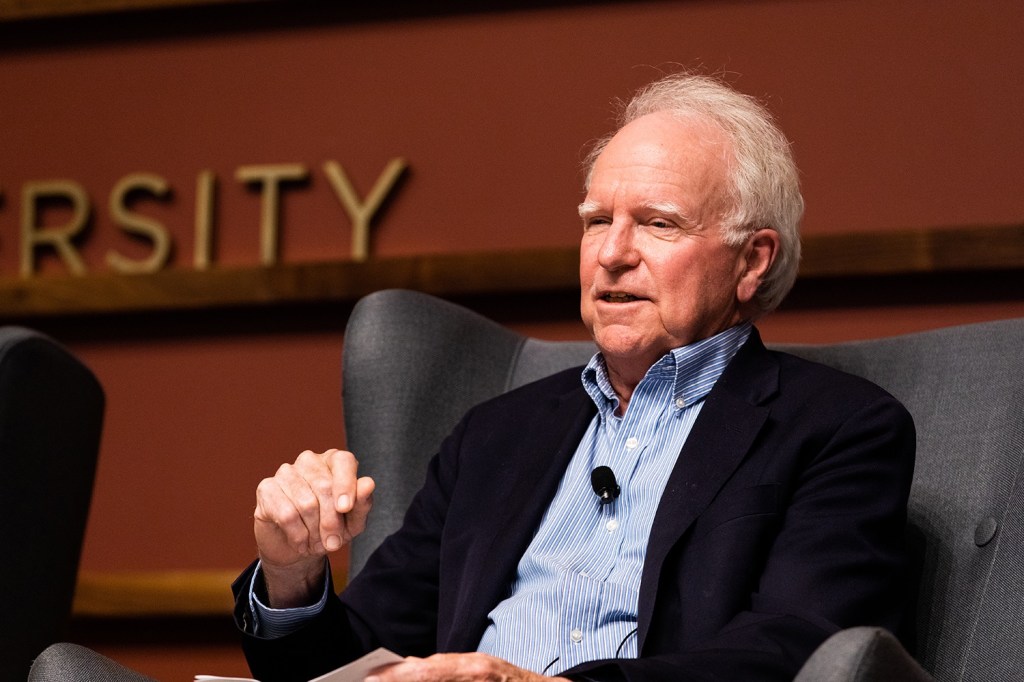
Photo of Robert Hall from news.stanford.edu

Photo of Michael Woodford from politicaleconomy.columbia.edu
Robert Hall of Stanford and Michael Woodford of Columbia have been awarded the 2026 Nobel Prize in Economics. Their careers have helped define the evolution of macroeconomics during the past 50 years.
Principles of economics is often taught as one semester of microeconomics and one semester of macroeconomics. In microeconomics we focus on analyzing the decisions households make on which products to buy and on the decisions firms make on which products to sell and what prices to charge. In macroeconomics we switch the focus to the economy as a whole, analyzing what determines total production in the economy, as measured by GDP, and what determines the price level, as measured by the consumer price index (CPI) or the personal consumption expenditures (PCE) price index. An important part of macroeconomics is analyzing the effects of the federal government’s monetary and fiscal policies on production, employment, and prices.
Microeconomics and macroeconomics are connected because macroeconomic aggregates (like GDP, the unemployment rate, and the price level) ultimately depend on the decisions of households and firms. Similarly, the effects of fiscal and monetary policies on the economy depend on how households and firms react to the policies.
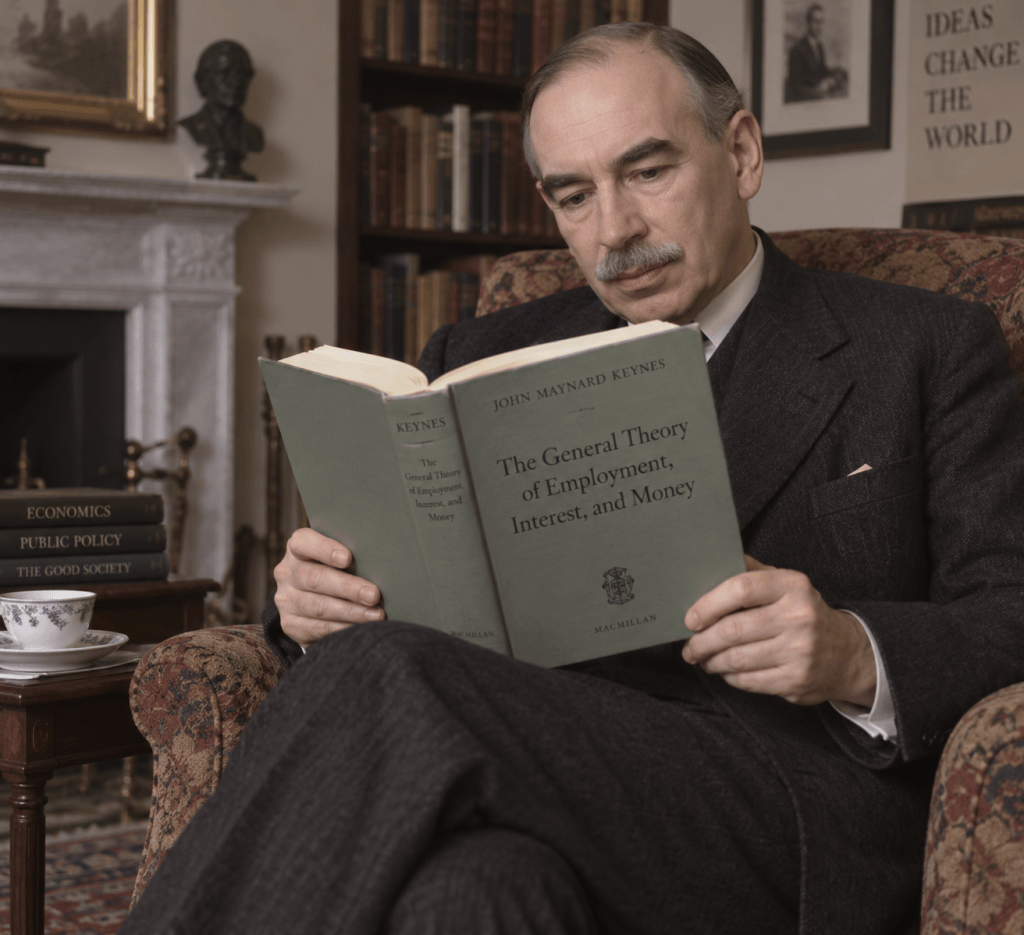
Image of John Maynard Keynes created by ChatGPT
The focus on economic aggregates in macroeconomics dates back to the publication of John Maynard Keynes’s General Theory of Employment, Interest, and Money in 1936. Keynes’s book was long and complicated, which led shorter, more straightforward, interpretations of his ideas by Nobel laureate John Hicks of Oxford and Alvin Hansen of Harvard to become widely accepted. The Hicks-Hansen interpretation was embodied in the IS-LM model, which focused on the relationships among a few macroeconomic variables. (We discuss the IS-LM model in the appendix to Chapter 18 of Money, Banking, and the Financial System.)
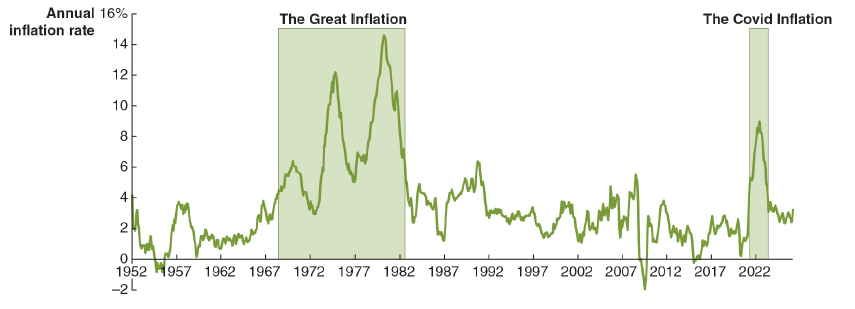
During the Great Inflation of the 1970s of the 1970s and early 1980s, many economists concluded that the basic IS-LM model was no longer a good guide to understanding events in the U.S. economy. That conclusion increased the interest in grounding macroeconomics in the basic decision making of households and firms. This approach became known as the microfoundations of macroeconomics.
This new focus on microeconomics led some economists to reject the idea that discretionary monetary and fiscal policy was able to stabilize the economy by reducing fluctuations in aggregate output and employment. This approach is called the New Classical Macroeconomics. (We discuss the New Classical Macroeconomics in the appendix to Macroeconomics, Chapter 13.) Other economists argue that discretionary policy can play a role in stabilizing the economy, which is a key argument advanced by Keynesians since the 1930s, but believe that policymakers need to take into account how households and firms react to policy. This approach is called the New Keynesian economics. The work of Hall and Woodford contributed to the development of New Keynesian economics.
Early in his career, Hall published an academic article making a major contribution to understanding the microfoundations of consumption spending. Hall’s work elaborated Milton Friedman’s permanent income hypothesis. As we discuss in Macroeconomics, Chapter 12, Section 12.2 and Chapter 16, Section 16.5, consumers are forward looking, which means their consumption decisions take into account not just their current income but also their expected future income—which Friedman called permanent income. For example, a real estate agent might have a high income in a year when she earns a commission on the sale of 15 houses and a much lower income in a year when the local housing market is weak and she earns a commission on only 2 houses. Most people like to smooth out their consumption over time, so the agent is likely to spend less of her current income in good sales years and more of her current income in the bad sales years.

Image created by ChatGPT
Hall formalized Friedman’s insight using the tools of dynamic optimization and also showed that the model fit the macroeconomic data well. One important implication of Hall’s work is that households are unlikely to significantly adjust their spending in response to temporary policy changes, such as a temporary cut in personal income taxes. Hall made a number of additional contributions to macroeconomics, including by analyzing why prices and wages don’t always respond quickly to changes in total spending. As we discuss in Macroeconomics, Chapter 10, Section 10.3, the federal government produces many statistics that make it possible to monitor the state of the economy, but the federal government does not officially decide when a recession begins or when it ends. Instead, most economists and policymakers accept the decisions of the Business Cycle Dating Committee of the National Bureau of Economic Research (NBER), a private research group located in Cambridge, Massachusetts. Hall served as chair of the committee for 46 years, from 1978 to 2024.

Image of the NBER building from the Wikipedia Commons
Woodford has made wide-ranging contributions to the development of New Keynesian economics. In particular, he developed a model that synthesized the contributions of a number of other economists to provide a general framework for understanding macroeconomics and for evaluating the effects of monetary policy. His 2003 book, Interest and Prices: Foundations of a Theory of Monetary Policy, has been particularly influential.
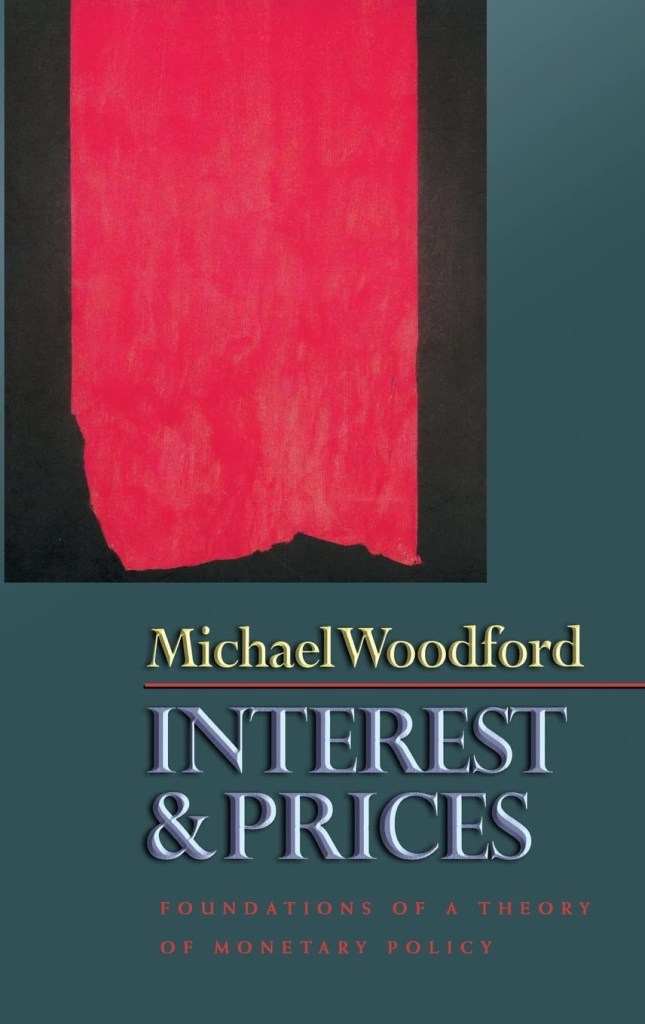
Image from amazon.com
The Nobel Committee’s announcement of the prize can be found here. A longer discussion of the Hall and Woodford’s work can be found here. The scope of their research can be seen by reviewing their curricula vitae, which can be found here and here. The amount of the prize this year is 12 million Swedish kronor (about $1.2 million).

