
Glenn on the Economic Policies Necessary to Increase Growth

Image showing scientific research generated by GTP-4o

Note: The following op-ed first appeared in the Wall Street Journal.

The Trump Economic Awakening

Traditional policies like tax cuts, targeted aid and responsible spending can deliver stronger growth.

Political scientists will debate the forces that shaped Donald Trump’s victory, but one thing is clear: Americans yearn for a change in economic policy. Voters have rejected the interventionist policies that brought inflation and high deficits. They want an economic awakening, a new way forward that uses traditional economic policies to achieve Mr. Trump’s goal of more jobs for Americans whose fortunes have been harmed by technological change and globalization.

Any economic path to a successful awakening begins with growth: the engine that powers individual income and our collective ability to support the nation’s defense, economy, education and healthcare industry. To pursue this growth, the new administration should consider at least three measures:

First, by working with Congress, it should build on the successes of the Tax Cuts and Jobs Act of 2017 to make permanent the expensing of business investment. Second, it should increase support for science and defense research, which would have significant spillover to the commercial sector, particularly in space exploration. Third, it should build on this research by constructing applied research centers around the country, linked to regional university and city hubs. Like the land-grant colleges of the 19th century, these centers would generate and distribute knowledge, improving local capabilities in manufacturing and services.

Opportunity is also a pillar of the awakening. Community colleges are an underfunded source of skill-building and mobility. As Austan Goolsbee, Amy Ganz and I proposed in a 2019 report, a modest federal block grant to support community colleges on the supply side—rather than a demand-side emphasis on financial aid—can help these schools push more Americans toward better jobs by working with local employers on skill needs and curriculum development. Targeted aid to places with depressed economic activity can help distribute opportunity to communities better than one-size-fits-all Washington-directed programs.

Corporate tax reform can play a role, too, by improving incentives for companies to settle and invest in the U.S. This can magnify opportunities for Americans, all without having to rely on costly tariffs.

Working a job doesn’t merely generate income; it also promotes human dignity. Enlisting more people into the workforce is thus another element of the economic-policy awakening. While growth and opportunity policies can boost labor-force participation, strengthening the earned-income tax credit to boost the incomes of childless workers can help attract younger people to the workforce. Maintaining the child tax credit can also provide parents with easier pathways toward economic participation.

These ideas share several important themes with Mr. Trump’s campaign and the traditional conservative playbook. They emphasize that policy ideas should be practical and workable, not merely rhetorical. Each makes use of America’s federalist system and innovative ethos. Making a priority of strong local involvement in applied research centers and community colleges and as tailoring place-based aid are more effective approaches than Washington diktats. Programs need to be held accountable for results, not simply allocated money.

This economic-policy awakening requires a clear-eyed assessment of budget trade-offs. Profligate spending with little regard for debt and inflation—à la the American Rescue Plan—contributed to Mr. Trump’s victory. It is possible to accomplish the steps above in a fiscally responsible way by offsetting spending and tax changes.

Organizing for the policy awakening’s success will be essential. Lack of communication among cabinet agencies can stymie creative ideas for expanding the economic pie for American workers. Like the president’s Working Group on Financial Markets, created by Ronald Reagan in 1988 to convene disparate agencies, the new administration would benefit from a senior executive team that can coordinate economic ideas and learn from leaders in business, labor and social services. Such a body, unlike the National Economic Council, could more adeptly cut across silos related to tax, trade, regulatory and industrial policy.

Voters have signaled they’re ready for an economic awakening. The president-elect, equipped with a new playbook and vision, should seize the opportunity.

Continue reading “Glenn on the Economic Policies Necessary to Increase Growth”
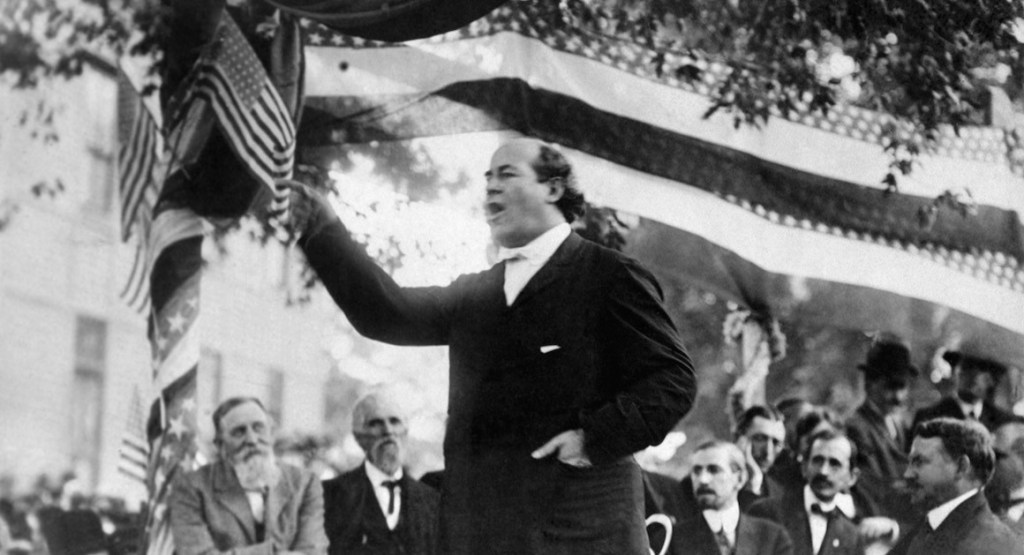
Glenn on Economic Populism

Ninteenth century populist William Jennings Bryan delivering a campaign speech. (Photo from the AP via politico.com)

The following op-ed originally appeared in the Wall Street Journal.

The Economic Populists Have a Point

Many issues divide voters heading into the November election, but the economy may be the most crucial. Sound economic policy can foster prosperity and high living standards and affect income and opportunities. Economic resources can also enable society to fund defense or address social and environmental concerns.

Conservative economic policy traditionally has emphasized the openness of markets and growth. By contrast, the populist conservative ideas under discussion at the Republican National Convention focus on people and places hard hit by the disruption that accompanies openness and growth. While many commentators emphasize the differences between the two approaches, a modern conservative economic agenda should build on elements of both.

To begin, a conservative economic agenda should include policies that advance economic growth and living standards. That means supporting research and development, maintaining pro-investment business tax provisions in the Tax Cuts and Jobs Act of 2017, and making regulations that benefit everyone. Such an economy lets businesses and individuals get the most out of the opportunities they seize.

Populist conservatives argue that this traditional approach to policy misses an important objective: a disruptive, rough-and-tumble economy, guided by technological advances and globalization, one that brings everyone along. Populist conservatives want more emphasis on protecting jobs and communities.

There’s more to the populist conservatives’ skepticism than traditional conservatives acknowledge. But backward-looking protectionist measures such as inflationary tariffs or industrial policy aren’t the answer.

However, there is a conservative economic agenda that can unite these groups. The shortcomings of Bidenomics give conservatives an opening to push beyond both market-only neoliberalism and the statist tendencies of industrial policy and protectionism, with their attendant economic inefficiencies. To do so, conservative economic policy needs three ingredients.

The first is agreeing with populist conservatives that markets don’t always work perfectly and that a hands-off approach isn’t always the solution. The state can play a useful role in the market economy. Supply-chain restrictions and export controls can be tools to deny national-security-sensitive technologies to adversaries such as China. But an economic agenda requires more than a sound bite to avoid overreach—such as using “national security” as a pretext for slapping steel tariffs on Canada.

The second essential is competition—the linchpin of economic possibilities for classical economic thinkers from Adam Smith onward. While competition at home and abroad expands the economic pie, it says little about the relative sizes of the slices, a point noted by populist conservatives. A modern conservative economic approach would not only promote competition but also prepare more individuals to compete in a changing economy. One avenue could be supporting community colleges that understand local job needs rather than establishing more government training programs.

Third and most important, a conservative economic platform should recall why conservatives have stressed the benefits of markets. The goal, as my Columbia colleague and Nobel laureate Edmund Phelps puts it, is “mass flourishing.” That is why we want markets to work—to advance innovation and productivity and allow communities to make that flourishing possible.

As far as government’s role, a contemporary economic agenda should recognize a limited measure of successful industrial policy. Two roads should be on offer. The first is to provide more general support for basic and applied research, while letting market forces determine winners and losers. The second is to assign specific goals to particular interventions. The Apollo program’s goal was to put a man on the moon in a decade. The Trump administration’s Operation Warp Speed sought vaccines against Covid. 

Populist conservatives are right that there is a role in a conservative economic agenda for helping areas hard hit by disruption. But that role isn’t a mercantilist blunderbuss of protectionism and industrial policy to turn back the economic clock. Rather, place-based aid could support business services for firms trying to create local jobs.

The economic ideas under discussion at the Republican National Convention have populist features that haven’t figured in earlier conservative economic agendas. Populists have some reasonable skepticism about excessive deference to markets. But avoiding excessive meddling from tempting protectionism and the mushy mercantilism of Bidenomics is important, too. Under a conservative economic agenda, growth can flourish.