
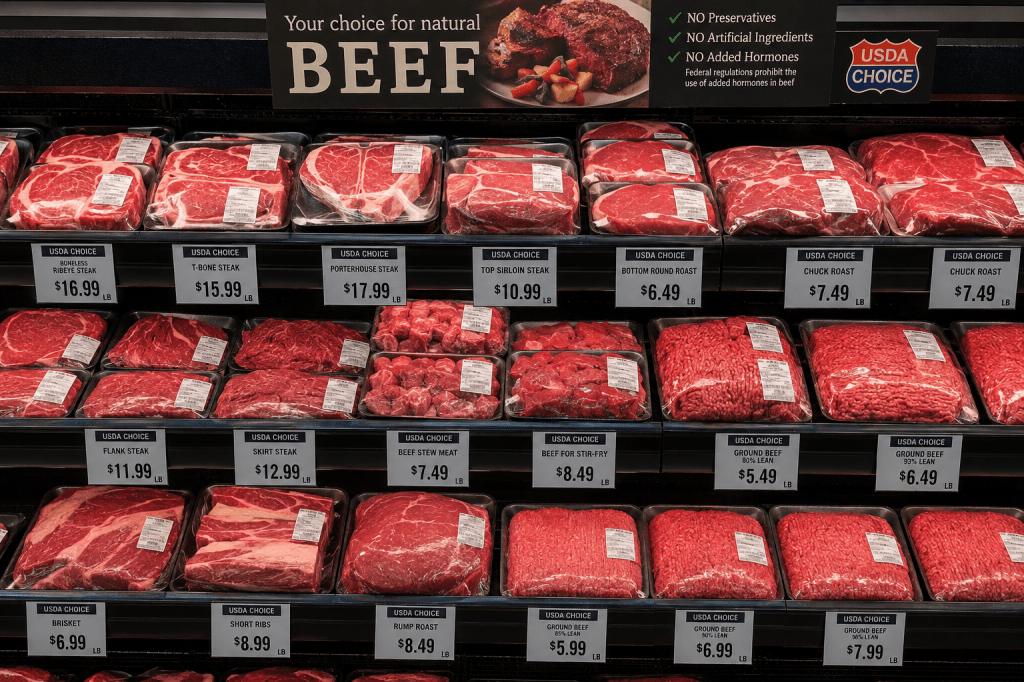
Image created by ChatGPT
The following was the first sentence of an article yesterday on axios.com discussing the market for beef: “Beef sales are plunging, but processors continue to raise prices as a yearslong cattle shortage strains the industry.”
The sentence seems to be describing a paradox: Why would meat processors, such as Tyson, JBS, and Cargill, raise beef prices if their sales are falling? The key to resolving the apparent paradox is the reference to a “cattle shortage.” The number of cattle raised in the United States has been declining for several reasons, including severe drought in cattle-raising states—which has reduced the pasture that cattle forage on—and a reduction in beef imports from Mexico as the United States Department of Agriculture (USDA) tries to limit the spread of screwworm.
In other words, using the model of demand and supply we develop in Chapter 3 of Microeconomics, the supply curve for beef in the United States has shifted to the left. The result is shown in the following figure:
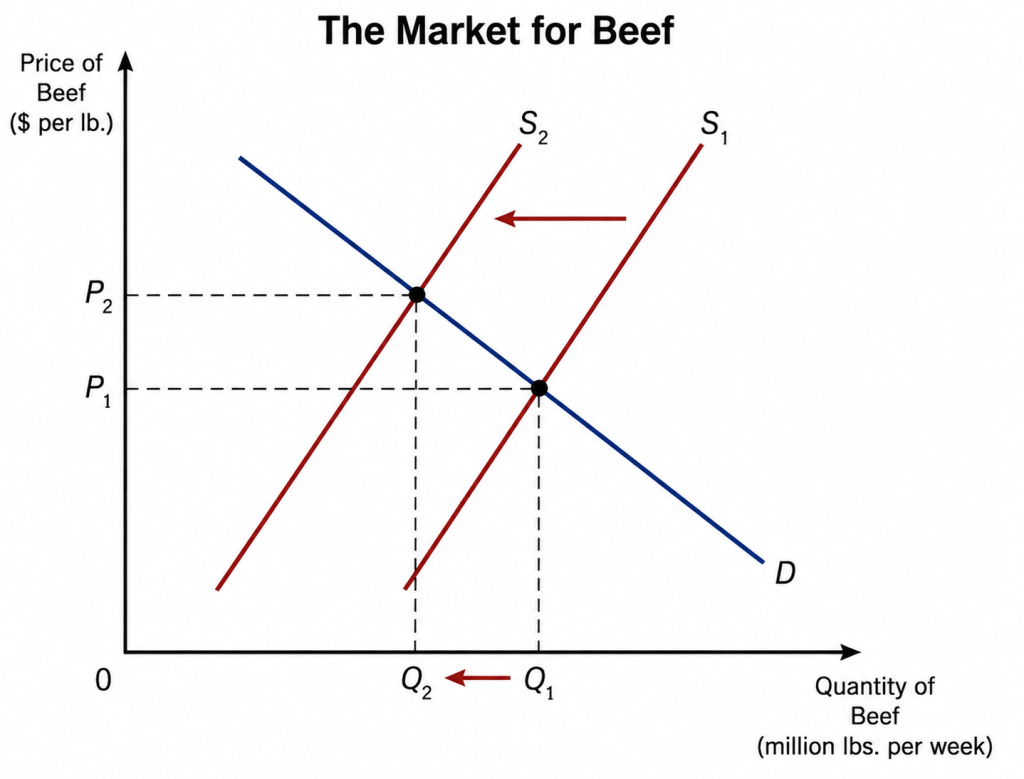
When the supply curve shifts to the left from S1 to S2, the price of beef rises from P1 to P2 and the equilibrium quantity of beef falls from Q1 to Q2. In other words, when a market experiences a decline in supply, we would expect to observe both higher prices and falling sales. So, the situation described in the first sentence of the article is not a paradox, but instead reflects the normal working of demand and supply in a market. You can explain a lot just by knowing that demand curves slope downward!
The article also observes with respect to Tyson Foods that: “In its most recent quarter, ended June 27, beef volumes declined by 15.9% from a year ago, while prices Tyson charged grocery stores, restaurants and other customers rose 12.1%.” The USDA estimates that the retail price elasticity of demand for beef is about –1. If we assume that no other factors affecting the demand for Tyson’s beef changed during this three-month period, then the price elasticity of demand for Tyson’s beef is –15.9%/12.1% = –1.3. (Note that the USDA elasticity estimates are for beef sold in supermarkets and other retail venues. So the estimates may not directly apply to sales to restaurants and “other customers.”)
We would expect that the price elasticity of demand for Tyson’s beef would be larger (in absolute value) than the price elasticity of demand for beef as a good. As we discuss in Chapter 6 of Microeconomics, if the price of one brand of a good increases, consumers can switch to another brand. In this case, if the price of Tyson’s beef increases, some consumers will switch to Cargill’s or some other firm’s beef. But if the price of beef as a good increases, consumers would have to eat a different protein to avoid the price increase.

