
Supports: Microeconomics, Macroeconomics, Economics, and Essentials of Economics, Chapter 4, Section 4.3
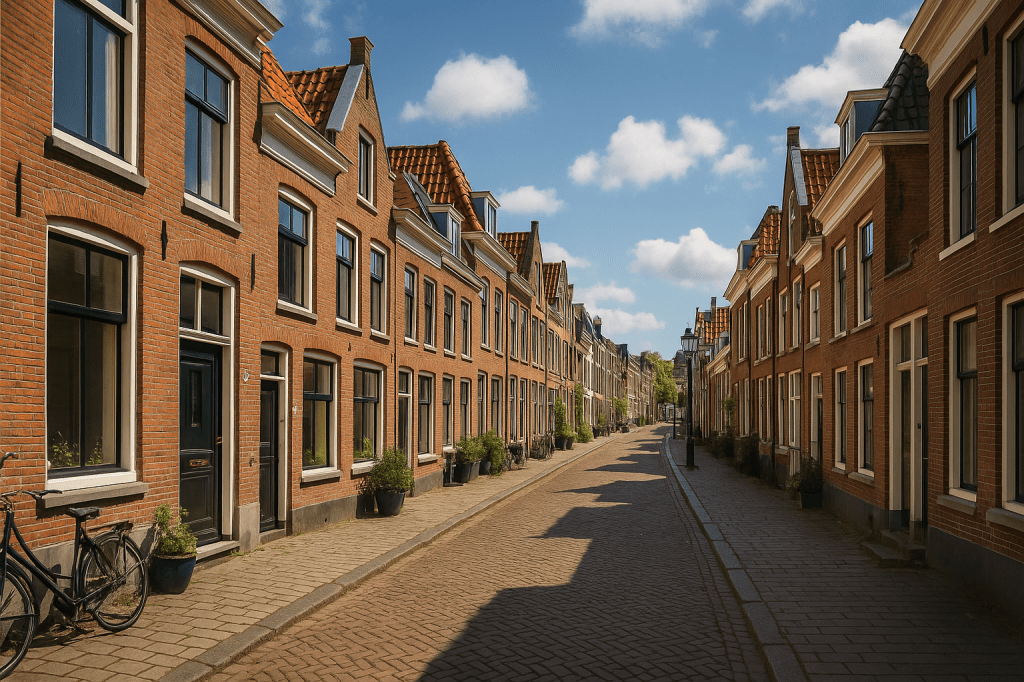
Image generated by ChatGTP-40 of a street in a Dutch city.
An article on bloomberg.com has the headline “How Rent Controls Are Deepening the Dutch Housing Crisis.” The article’s subheadline states that: “A law designed to make homes more affordable ended up aggravating an apartment shortage.” According to the article, the Dutch government passed a law that increased the number of apartments subject to rent control from 80% of all apartments to 96%.
- Why might the Dutch government have seen expanding rent control as a way to make apartments more affordable?
- Why might the law have aggravated the shortage of apartments in Holland?
Solving the Problem
Step 1: Review the chapter material. This problem is about the effects of rent control, so you may want to review Chapter 4, Section 4.3, “Government Intervention in the Market: Price Floors and Price Ceilings.”
Step 2: Answer part a. by explaining why the Dutch government may have seen expanding rent control as a way to make apartments more affordable. Figure 4.10 from the textbook shows the effects of rent control. In the example illustrated in the figure, after the government imposes rent control, the 1,900,000 people who are still able to rent an apartment pay $1,500 per month rather than $2,500 per month. For these people, rent control has made apartments more affordable.
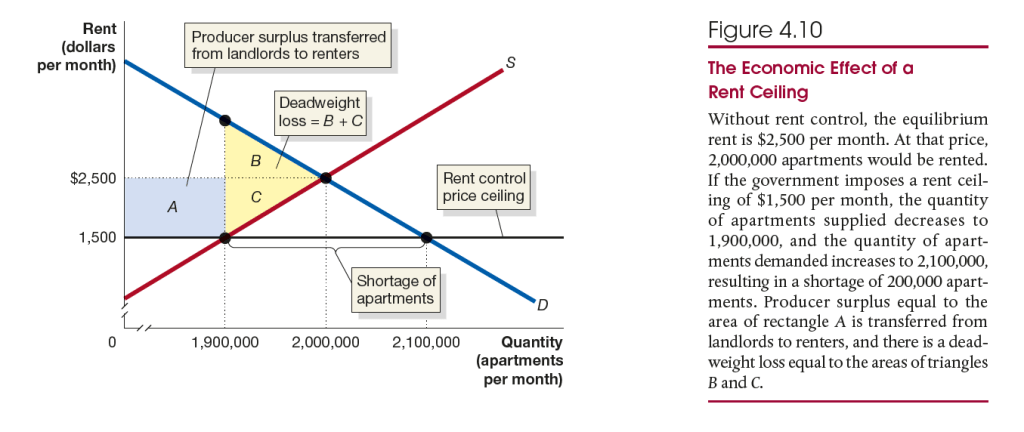
Step 3: Answer part b. by explaining why rent control laws can make an apartment shortage worse. As Figure 4.10 shows, rent control laws impose a price ceiling below the equilibrium market rent. The result is that the quantity of apartments supplied is less than the quantity of apartments demanded, causing a shortage of apartments. In the case of the Dutch law discussed in the article, existing rent controls were expanded to cover more apartments, forcing the rents charged by landlords for these apartments to fall below what had been the equilibrium market rent, thereby adding to the shortage of apartments in Holland.
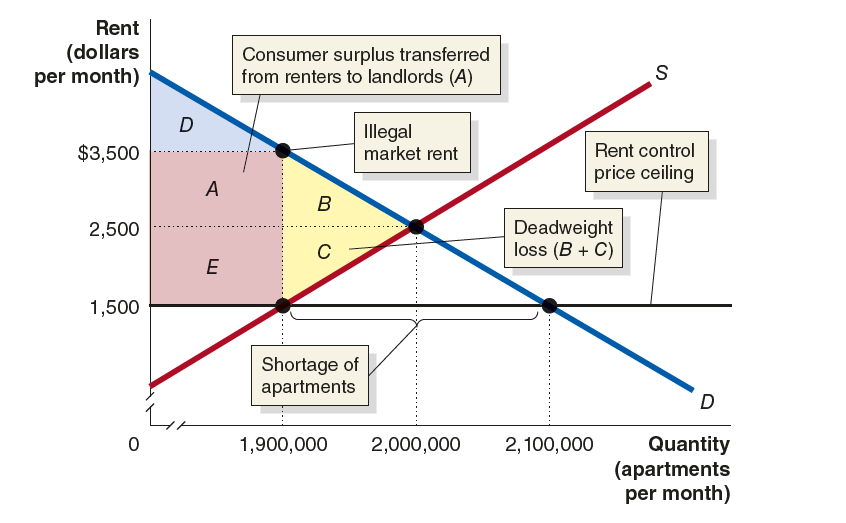
Extra credit: The article notes that as a result of the law, some owners of apartments that had previously not been subject to rent control had decided to sell their apartments, taking them off the rental market. That result is common when governments impose rent control or expand the scope of an existing rent control law. One important aspect of rent control is that a shortage of apartments gives landlords a greater opportunity to pick and choose the tenants they prefer. The article notes that a provision of the new law requires that rental contracts be open-ended, rather than for only one or two years, as is more common. As a result, landlords have more difficulty evicting tenants who might be noisy or causing other problems. The law thereby gives landlords an incentive to rent to foreign tenants who would be more likely to give up their apartments voluntarily after a year or two. The result is even fewer apartments available for Dutch residents to rent.
A recent article on bloomberg.com notes that the negative consequences of the law expanding rent control has led the Dutch government to propose modifying the law to allow landlords to charge higher rents on at least some apartments. If passed by the Dutch parliment, the changes would go into effect January 1, 2026.

 HubbardOBrienEconomics.com Blog