The pool at the All-Star Movie resort at Walt Disney World in Orlando, Florida (Photo from touringplans.com)
A recent article in the Wall Street Journal has the headline “Even Disney Is Worried About the High Cost of a Disney Vacation.” According to the article, “Some inside Disney worry that the company has become addicted to price hikes and has reached the limits of what middle-class Americans can afford ….”
As we discuss in Microeconomics, Chapter 15, the Walt Disney Company engages in price discrimination in a number of ways, by, for instance, charging more for ticket prices to its theme parks during the end-of-year holidays than on other days. Disney also offers hotels at different price levels, ranging from deluxe hotels like the Grand Floridian to more basic value hotels like the All-Star Movie Resort. In the case of hotels, some of the price difference is explained by differences in operating cost. Luxury hotels tend to have more amenities, including larger pools and restaurants on site, which raises their costs. Part of the difference in price, though, is the result of Disney estimating that people with higher incomes have a more inelastic demand for hotels than do people with lower incomes.
The Wall Street Journal article relies in part on data provided by Len Testa on his site touringplans.com. He notes that between 2018 and 2025, the percentage increase in the price Disney charged for staying at a value resort was less than the rate of inflation. In other words, the real price—the nominal price corrected for the effects of inflation—of staying at a Disney value resort decreased during that period. On the other hand, the percentage increase in the price Disney charged for staying at a deluxe was more than the rate of the inflation. So, the real price of staying at a Disney deluxe resort increased during this period.
One interpretation of these data is that over this period, Disney increased the extent of the price discrimination it was practicing with respect to hotel prices. It increased the gap between the price the families with more inelastic demand for Disney hotels pay and the price families with more elastic demand for Disney hotels pay. The article quotes Josh D’Amaro, who is the Disney executive in charge of the company’s theme parks, as saying “we intentionally offer a wide variety of ticket, hotel and dining options to welcome as many families as possible, whatever their budget.”
Supports: Microeconomics and Economics, Chapter 6, and Essentials of Economics, Chapter 7.
Photo from the New York Times.
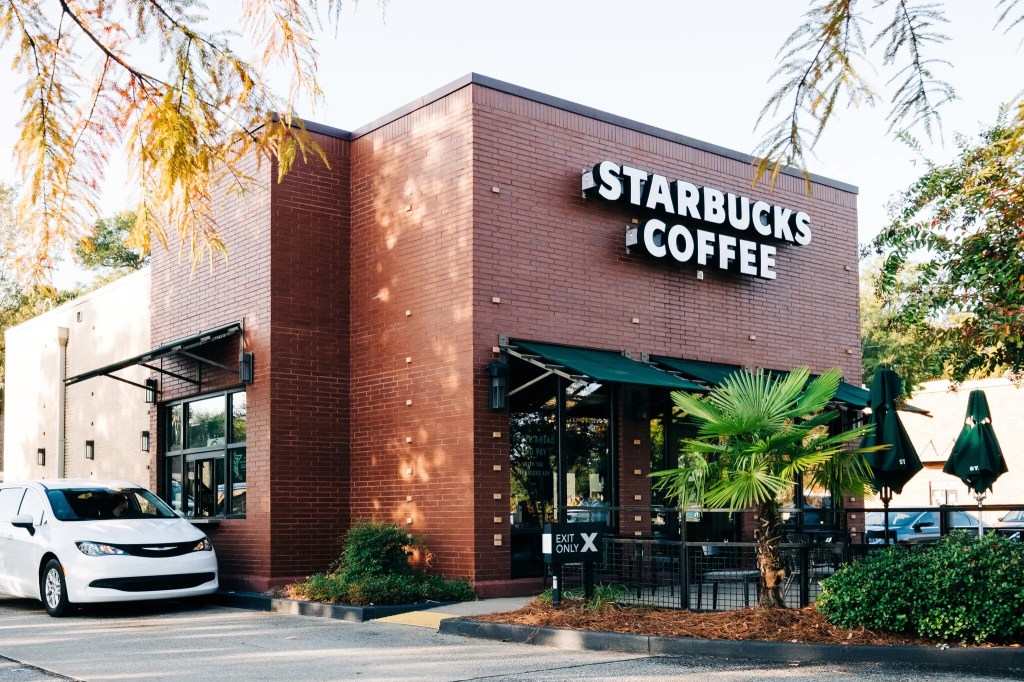
An article in the Wall Street Journal reported that Starbucks during certain periods is cutting by 50 percent the prices of many of its coffees, including its Frappuccino. The article also noted that: “Many restaurant chains are pumping out new deals this year in a bid to reverse weak traffic.” The article also quoted a Starbucks spokesman as saying that Starbucks is cutting prices “to ensure that consumers who are facing a challenging economic environment continue to visit its cafes.”
What is Starbucks likely assuming about the price elasticity of demand for Frappuccinos?
Suppose that after cutting its price of Frappuccinos by 50 percent, the quantity of Frappuccinos sold increases by 20 percent. Ignoring any information other than the values of the price cut and the quantity increase, calculate the price elasticity of demand for Frappuccinos. Considering only the value of the price elasticity of demand you calculated, will Starbucks earn more revenue or less revenue from selling Frappuccions as a result of the price cut? Briefly explain.
Suppose that during the time that Starbucks cuts the price of Frappuccinos, competing coffee houses also cut the prices of their coffees. How will this fact affect your answer to part b.? Briefly explain.
Does the fact that, because of inflation, some consumers are facing a “challenging economic environment” affect your answer to part b.? Briefly explain.
Solving the Problem
Step 1: Review the chapter material. This problem is about the determinants of the price elasticity of demand and the effect of the value of the price elasticity of demand on a firm’s revenue following a price change, so you may want to review Chapter 6, Section 6.2 and Section 6.3.
Step 2: Answer part a. by explaining what Starbucks is likely assuming about the price elasticity of demand for Frappuccinos. Starbucks appears to be assuming that the demand for Frappuccions is price elastic, in which case a cut in the price will result in a more than proportional increase in the quantity of Frappuccions demanded.
Step 3: Answer part b. by using the values given to calculate the price elasticity of demand for Frappuccions and explain whether as a result of the price cut Starbucks will earn more or less revenue from selling Frappuccinos.If all other factors affecting the demand for a product are held constant, the price elasticity of demand equals the percentage change in the quantity demanded divided by the percentage change in price. Therefore, in this case the price elasticity of demand for Frappuccinos equals 20%/–50% = –0.4. Therefore, relying just on the information on the changes in the price and quantity demanded, the demand for Frappuccinos is price inelastic. As explained in Section 6.5, when demand is price inelastic, a cut in price will result in a decrease in revenue.
Step 4: Answer part c. by explaining whether other coffee houses cutting the prices of their coffees will affect your calculation from part b. of the price elasticity of demand for Frappuccinos. The calculation in part b. assumes that during the time that Starbucks cuts the price of Frappuccinos, nothing else that affects demand will have changed. We know that the coffees sold by other coffee houses are substitutes for Frappuccinos. So we would expect that if other coffeehouses cut the prices of their coffees, the demand curve for Frappuccinos will shift to the left. The 20 percent increase in the quantity of Frappuccions sold reflects the effects of both the price cut and the shift in the demand curve for Frappuccinos. Therefore our calculation of the price elasticity of demand for Frappuccinos is inaccurate. It’s likely that the price elasticity is larger (in absolute value) than the value we caculated in part b.
Step 5: Answer part d. by explaining whether the fact that some consumers are facing a “challenging economic environment” affects your answer to part b. The answer to part d. is similar to the answer to part c. If the fact that some consumers are facing a “challenging economic environment” means that these consumers are less likely to be buying coffee and other products away from home, then the demand curve for Frappuccinos will have shifted to the left during the period that Starbucks cut the price of these coffees. As a result, the value we computed for the price elasticity of demand in part b. will be inaccurate. Taken together, the factors mentioned in parts c. and d. indicate the difficulties that firms have in calculating the price elasticity of demand for their products during a time period when several factors that affect the demand for the products may be changing.
Supports: Microeconomics and Economics, Chapter 6.
Photo from the New York Times.
Blogger Matthew Yglesias made the following observation in a recent post: “If you look at gasoline prices, it’s obvious that if fuel gets way more expensive next week, most people are just going to have to pay up. But if you compare the US versus Europe, it’s also obvious that the structurally higher price of gasoline over there makes a massive difference: They have lower rates of car ownership, drive smaller cars, and have a higher rate of EV adoption.” (The blog post can be found here, but may require a subscription.)
What does Yglesias mean by Europe having a “structurally higher price” of gasoline?
Assuming Yglesias’s observations are correct, what can we conclude about the price elasticity of the demand for gasoline in the short run and in the long run?
Currently, the federal government imposes a tax of 18.4 cents per gallon of gasoline. Suppose that Congress increases the gasoline tax to 28.4 cents per gallon. Again assuming that Yglesias’s observations are correct, would you expect that the incidence of the tax would be different in the long run than in the short run? Briefly explain.
Would you expect the federal government to collect more revenue as a result of the 10 cent increase in the gasoline tax in the short run or in the long run? Briefly explain.
Solving the Problem
Step 1: Review the chapter material. This problem is about the determinants of the price elasticity of demand and the effect of the value of the price elasticity of demand on the incidence of a tax, so you may want to review Chapter 6, Section 6.2 and Solved Problem 6.5. (Note that a fuller discussion of the effect of the price elasticity of demand on tax incidence appears in Chapter 17, Section 17.3.)
Step 2: Answer part a. by explaining what Yglesias means when he writes that Europe has a “structurally higher” price of gasoline. Judging from the context, Yglesias is saying that European gasoline prices are not just temporarily higher than U.S. gasoline prices but have been higher over the long run.
Step 3: Answer part b. by expalining what we can conclude from Yglesias’s observations about the price elasticity of demand for gasoline in the short run and in the long run. When Yeglesias is referring to gasoline prices rising “next week,” he is referring to the short run. In that situation he says “most people are going to have to pay up.” In other words, the increase in price will lead to only a small decrease in the quantity demanded, which means that in the short run, the demand for gasoline is price inelastic—the percentage change in the quantity demanded will be smaller than the percentage change in the price.
Because he refers to high gasoline prices in Europe being structural, or high for a long period, he is referring to the long run. He notes that in Europe people have responded to high gasoline prices by owning fewer cars, owning smaller cars, and owning more EVs (electric vehicles) than is true in the United States. Each of these choices by European consumers results in their buying much less gasoline as a result of the increase in gasoline prices. As a result, in the long run the demand for gasoline is price elastic—the percentage change in the quantity demanded will be greater than the percentage change in the price.
Note that these results are consistent with the discussion in Chapter 6 that the more time that passes, the more price elastic the demand for a product becomes.
Step 4: Answer part c. by explaining how the incidence of the gasoline tax will be different in the long run than in the short run. Recall that tax incidence refers to the actual division of the burden of a tax between buyers and sellers in a market. As the figure in Solved Problem 6.5 illustrates, a tax will result in a larger increase in the price that consumers pay for a product in the situation when demand is price inelastic than when demand is price elastic. The larger the increase in the price that consumers pay, the larger the share of the burden of the tax that consumers bear. So, we can conclude that the tax incidence of the gasoline tax will be different in the short run than in the long run: In the short run, more of the burden of the tax is borne by consumers (and less of the burden is borne by suppliers); in the long run, less of the burden of the tax is borne by consumers (and more of the burden is borne by suppliers).
Step 5: Answer part d. by explaining whether you would expect the federal government to collect more revenue as a result of the 10 cent increase in the gasoline tax in the short run or in the long run. The revenue the federal government collects is equal to the 10 cent tax multiplied by the quantity of gallons sold. As the figure in Solved Problem 6.5 illustrates, a tax will result in a smaller decrease in the quantity demanded when demand is price inelastic than when demand is price elastic. Therefore, we would expect that the federal government will collect more revenue from the tax in the short run than in the long run.
Supports: Microeconomics and Economics, Chapter 6, and Essentials of Economics, Chapter 7.
Photo from from Reuters via the Wall Street Journal.
An article on bloomberg.com noted that in China after Apple cut by 10 percent the price of its iPhone 15 Pro Max—the most expensive iPhone model—sales of this model increased by 12 percent.
a. Based on this information, is the demand in China for this model iPhone price elastic or price inelastic? Briefly explain.
b. Do you have enough information to be confident in your answer to part a.? Briefly explain.
c. Assuming that the price elasticity you calculated in part a. is accurate, should managers at Apple be confident that if they cut the price of this iPhone model by an additional 10 percent they would sell 12 percent more? Briefly explain.
Solving the Problem
Step 1: Review the chapter material. This problem is about the price elasticity of demand, so you may want to review Microeconomics (and Economics), Chapter 6, Sections 6.1, 6.2 and 6.3 (Essentials of Economics, Chapter 7, Sections 7.5, 7.6, and 7.7)
Step 2: Answer part a. by using the information provided to determine whether the demand for this iPhone model in China is price elastic or price inelastic. In Section 6.1, we define the price elasticity of demand as being equal to (Percentage change in quantity demanded)/(Percentage change in price). From the information given, the price elasticity of demand for this iPhone model in China equals 12%/–10% = –1.2. Because this value is greater than 1 in absolute value, we can conclude that demand for this iPhone model in China is price elastic.
Step 3: Answer part b. by discussing whether you have enough information to be confident in your answer to part a. If we have values for the change in price and the change in the quantity demanded, we can calculate the price elasticity of demand provided that nothing that would affect the willingness of consumers to buy the good—other than the price of the good—has changed. In this case, if other factors that are relevant to consumers in making their decision about buying that iPhone model have changed, then the demand curve will have shifted and the 12 percent increase in iPhones sold will be a mixture of the effect of the price having decreased and the effects of other factors having changed. For example, if the prices of smartphones sold by Vivo and Huawei—two Chinese firms whose smartphones compete with the iPhone—had increased, then the demand curve for the iPhone 15 Pro Max will have shifted to the right and our calculation in part a. will not give us an accurate value for the price elasticity of demand for the iPhone 15 Pro Max.
Step 4: Answer part c. by explaining whether, assuming that the price elasiticity you calculated in part a. is accurate, Apple’s managers can be confident that if they if they cut the price of this iPhone model by an additional 10 percent they would sell 12 percent more of this model. The first price cut for this iPhone model caused a movement down the demand curve. For Apple’s managers to be confident that that the same percentage price cut would result in the same percentage increase in the quantity sold, the price elasticity would have to be constant along the demand curve for this model. As we show explicitly for a linear demand curve in Section 6.3, the price elasticity of demand is unlikely to be constant along the demand curve (although in an unusual case it would be). In general, we expect that in moving further down the demand curve the price elasticity of demand will decline in absolute value. If that result holds in this case, then an additional 10 percent cut in price is likely to result in less than a 12 percent increase in the quantity demanded.




 HubbardOBrienEconomics.com Blog